Activity
Mon
Wed
Fri
Sun
Mar
Apr
May
Jun
Jul
Aug
Sep
Oct
Nov
Dec
Jan
Feb
What is this?
Less
More
Owned by Edoardo
Elite DW Foiling knowledge accessible to all. Technique, training, breakthroughs, and mindset to perform at your best. Learn, rise, and fly together.
Memberships
Skoolers
190.1k members • Free
11 contributions to Downwind University

1d •
New Content Coming
Hi everyone! I’m filming a new lesson right now and will be posting it shortly. Is there any specific topic you’d like me to cover? So far, I’ll be analyzing a pop ups and giving tips on how to pop up more efficiently, especially the importance of lunging forward. I’ll also share a drill that helps you stay high on the mast. The wind here on Oahu has abandoned us for nearly 2 months... But it seems to be picking up this weekend, and I can't wait to start filming more downwind runs for you all! Let me know what you’d like to see next 🤙🏼 Aloha, Edo
13d •
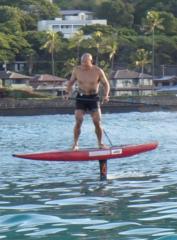
Flat water popup
Can you give me some pointers from this video? It doesn’t seem like I even have a chance to get pumping! Thanks

0 likes • 6d
Thanks for sending Egan, I will include it in next week's paddle-up analysis.
7d •
Paddle question
Edo! Epic content and all so helpful! Can you breakdown paddle length and size preferences and advantages to going larger vs smaller surface area as well longer or shorter paddle?
0 likes • 6d
Hey Galen, great question. For paddle length, it is generally best at head height to one or two inches above head. If you’re on a board that’s roughly 20 liters over your bodyweight in kilograms, head height usually works well. If you’re on a higher volume board, say 20 to 40 liters over your bodyweight, going one to two inches above head height helps account for the extra height off the water. It’s always best to cut the paddle long first, hot glue it, and then shorten it in small increments, since you can always go shorter but never longer. A shorter paddle gives you a higher cadence and quicker acceleration but less leverage and power, and if it’s too short it can load your lower back because you end up hinging more. A longer paddle gives you more leverage and power per stroke, but it can stress your shoulder and force you to overreach or pull the blade out awkwardly. Blade size follows a similar logic, a larger blade gives more power per stroke but can fatigue your shoulders faster if it’s oversized, while a slightly smaller blade allows higher cadence, is easier on the joints, but less power. I use a Black Project paddle L size. If you want one I can help with discount code!
Dec '25 •
Member Video Analysis #1
In this video I analyze this week’s member submissions and break down key areas for improvement. Topics include reaching further forward to increase stroke range, shortening paddle length to improve cadence and power, finding the optimal mast position on the board tracks, continuing to paddle longer through the pop up, and synchronizing paddling and pumping to maximize power and torque.

1 like • 12d
Stoked on your commitment, Primoz!! Most people wouldn’t even get out there in that weather. Huge respect... When you move your mast back and stand further toward the tail, your balance changes, so for the board to paddle evenly and not feel like it’s sinking the tail, you need to shift more weight onto your front leg. As you pump up, focus on shifting your weight and launching your hips forward on every pump to counter the foil lifting you up, bring the nose back down, and generate forward drive. Don’t forget to keep adjusting your weight distribution as you shift your stance, otherwise it’ll just feel like you’re stalling out and the foil blowing you up.
15d •
Pop-up analysis #2
In this session I’m analysing paddle up videos from: Brad, Harold, and Eli. Emphasis on: - Mast positioning relative to your board — Why throwing your mast all the way forward for “more lift” often works against you. - Using your legs — Pumping is a huge part of the pop-up, not just paddling. - Full forward extension with a clean paddle entry and full engagement. - Using your lats for power instead of muscling it with your arms. I also added an example of my own paddle-up so you can see how it should all come together. Watch the breakdown and drop any questions or comments below!

1 like • 14d
Hey Brad, stoked this helps you! When I say “use your legs more” I really mean pump the board harder. Think of it like an ollie: You pop off the back leg to project the board forward, then transfer onto the front leg to create glide and drive. It’s a bounce where the board slaps the water, rebounds, and you get as much air under it as possible so you reduce board drag and let the foil glide down from height. Right now, your feet and mast position look a bit too far forward, in the middle of the board, which limits that pop and glide effect. By moving your feet and mast slightly back, you gain leverage to get higher, generate more rebound, and carry more glide between pumps. So “using your legs more” simply means pumping the board harder and more effectively, with the back leg initiating and the front leg carrying the glide, while the paddle supports the motion instead of doing all the work. 🤙🏽
0 likes • 12d
@Bradley Reber So stoked for you Brad, I just watched one of your latest pop up videos. You’re absolutely killing it. Your reach and paddling look way better 👏 Next step: try moving the mast back and really launching your hips forward to get more drive out of the pump. Fired up to keep watching your journey!
1-10 of 11
@edoardo-tanas-7469
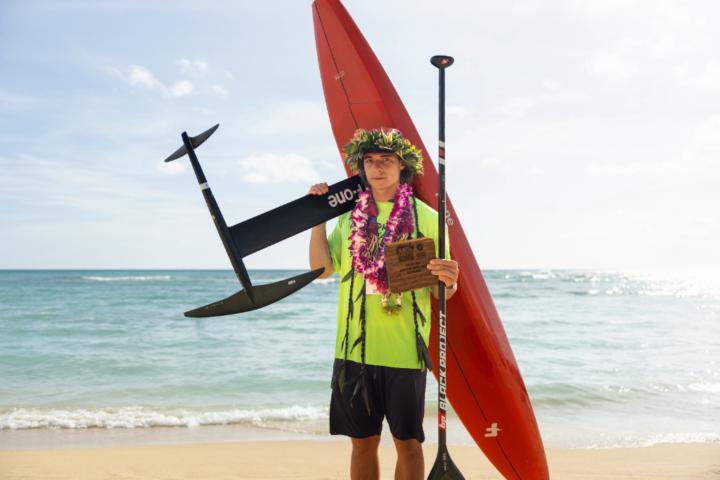
The fastest hydro foiler in the world, trying to grow the sport, and teach how to fly.
Active 5h ago
Joined Nov 25, 2025
Powered by