Activity
Mon
Wed
Fri
Sun
Dec
Jan
Feb
Mar
Apr
May
Jun
Jul
Aug
Sep
Oct
Nov
What is this?
Less
More
Kettle & Candle
103
Free
20 contributions to Kettle & Candle
12d •
WORDS MATTER. ESPECIALLY WHEN WE ARE TALKING ABOUT DEATH.
I opened an article this morning about the death of Oscar-nominated actress Barbara Barrie, who died at age 95 after choosing Medical Aid in Dying (MAID), and I was absolutely appalled by the headline: "Oscar-Nominated Actor Dies in Assisted Suicide at 95." I have spent more than 50 years working with people who are dying, supporting families, and educating others about end-of-life choices. And I am deeply troubled by the continued use of the term "assisted suicide" to describe a legal, medically supervised end-of-life option chosen by a terminally ill person. Barbara Barrie had terminal cancer. She had lived a long and remarkable life. She was an advocate for New York's Medical Aid in Dying law, and when her own death approached, she made an informed decision to use that option. Her family has described her final moments surrounded by love. She deserved to have her story told with accuracy, context, and dignity. There is an important distinction between suicide and Medical Aid in Dying, even though people hold differing ethical, religious, and philosophical views about that distinction. In jurisdictions where Medical Aid in Dying is legal, it is an end-of-life option available only to people who meet specific medical and legal requirements. It is not a casual decision, nor is it available simply because someone is tired of living. You do not have to agree with Medical Aid in Dying to understand why language matters. You do not have to choose it for yourself to respect that another person may make a different choice. And you certainly do not have to abandon your personal beliefs to have a compassionate, informed conversation about death. As an end-of-life educator, I believe our responsibility is to educate, not sensationalize; to understand, not immediately condemn; and to recognize that dying people are human beings, not headlines. We need more conversations about mortality, suffering, quality of life, advance care planning, hospice, palliative care, and the choices available to people approaching death.
2 likes • 9d
I wanted to share this podcast I came across this morning. It’s Dr Sanjay Gupta’s podcast “Chasing Life” and the episode is “We’re Living Longer. Here’s How to Die Better.” He is having a conversation with Dr BJ Miller, a palliative care and hospice physician. They discuss the difficulty of accepting death, yet we are all dying. About 15 minutes into the episode they discuss MAID, assisted suicide, and hastening death. I found the conversation illuminating and wanted to share. Honestly I believe in honoring individual autonomy and until I’m faced with this decision I don’t know how I will feel, but I’d like to know I have a choice. https://podcasts.apple.com/us/podcast/chasing-life-with-dr-sanjay-gupta/id1501029683?i=1000798667807
15d •
Advance Directives
I found a great website that explains from a physician’s point of view, medical modalities at end of life,, DNR and the litmus test, choosing a health care agent, etc. https://advancedirectivemd.com/
2
0
22d •
The litmus test
I found quite by accident a very informative link to articles about end of life values and choices. The attached is an article about DNR.
0
0
29d •
Hypodermaclysis
I went to my lawyer today to review and update my Trust, Will, and Living Will. Apparently there is another method of hydration being used that infuses saline under the skin called hypodermclysis. This needs to be added or excluded to your Advance Directive when considering artificial nutrition at the end of life.
5
0
Oct 9 •
New model of care for dementia.
I wanted to share this as I had never heard of it. It is an innovative program through CMS with over 400 approved providers. It was started, I believe, in 2024. https://www.primaryrecord.com/understanding-medicares-guide-model-a-new-hope-for-dementia-care/
1-10 of 20
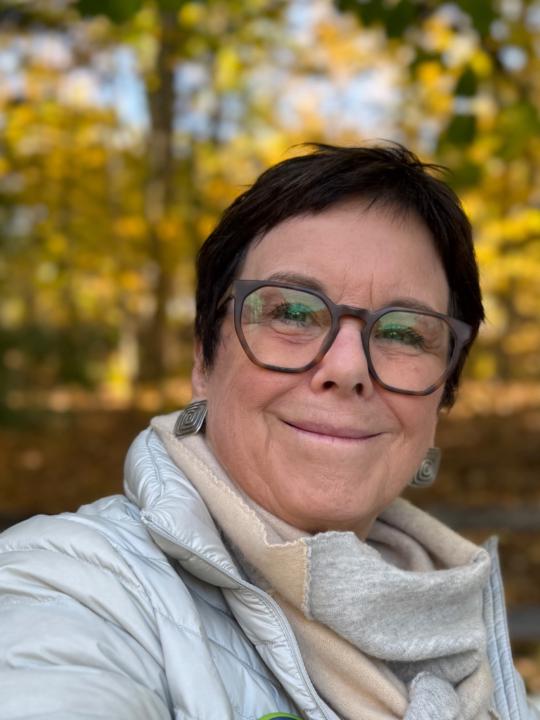
@donna-masotti-5538
At the age of 70, I want to infuse my life with joy and live fully so I can die well. I have lots to be grateful for & want to feel that in my bones.
Active 1d ago
Joined Jan 6, 2026
Westbrook, CT
Powered by