Activity
Mon
Wed
Fri
Sun
Jun
Jul
Aug
Sep
Oct
Nov
Dec
Jan
Feb
Mar
Apr
May
What is this?
Less
More
Memberships
Mind and Body Solutions
303 members • Free
15 contributions to Mind and Body Solutions

9d •
Cleaner Kids' Snacks
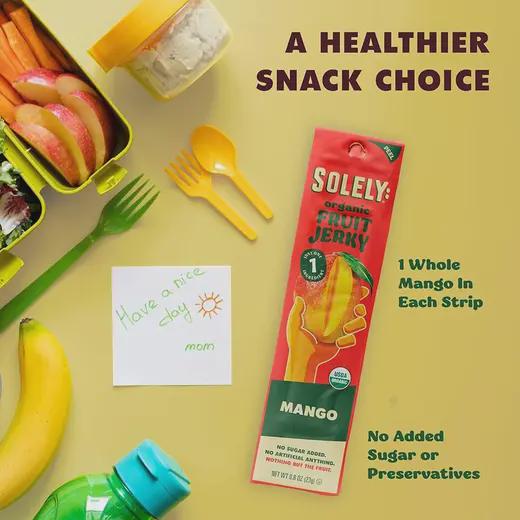
What can you do when you're stuck in the car with a toddler screaming "I'm hungry!" ?? Any parent knows how important it is to have snacks at the ready. But with all the options out there, how do you find good snacks? Clean meat sticks like Archer or Chomps are great as the protein will tie them over longer! However, for those "better" swaps, I've also included some sweeter fruit based snacks as well. What would you add to this list?? Pure Organic Fruit Bars (Walmart) Fruit Crisps (walmart) Solely Mango Gummies (Target) Bear Fruit Strips (Target, HEB) Archer Mini Beef Sticks (Walmart, Costco, Target, HEB) Simple Mills Peanut Butter Cookies (Kroger, HEB) Perfect Mini Protein Bars, contains some dairy, (Target) Larabar Fruit and Nut Bars (Walmart, Kroger, HEB, Target) Simple Mills Cheddar Puffs (Target, HEB, Walmart)

3 likes • 8d
https://www.thatsitfruit.com/?tw_source=google&tw_adid=709915323258&tw_campaign=20765617914&tw_kwdid=kwd-2339824698904&gad_source=1&gad_campaignid=20765617914&gbraid=0AAAAADb-FlZlTxxZ-vo9UBMWRhgPnosm5&gclid=CjwKCAjw-8vPBhBbEiwAoA39WhpZUSBbCqY5gEg5PNREzqIk1hevji1Cy4g3oe9aIm2_QtFP7wZ0mBoCpSsQAvD_BwE I love this company's fruit bars for the grandkids and myself.

21d •
How bread promotes weight gain even when total calories stay the same
A new study in Molecular Nutrition & Food Research offers a close look at how refined wheat flour promotes weight gain through a mechanism most people don't consider: reduced energy expenditure rather than excess calorie intake. Researchers gave mice free access to standard chow alongside wheat-based foods including bread and baked wheat flour. The mice strongly preferred the wheat foods and showed significant weight gain by the fourth week. Total caloric intake was comparable between groups throughout the study. What differed was how efficiently the mice burned energy: indirect calorimetry showed reduced oxygen consumption during both the active and resting phases, with no difference in physical activity levels. Wheat-fed mice also developed elevated insulin and leptin, with patterns consistent with leptin resistance emerging over time. Blood metabolite analysis revealed reduced levels of all eight essential amino acids in males (likely because mice were eating wheat instead of more nutritionally complete chow) and elevated fatty acids including palmitic and oleic acid. Liver gene expression confirmed upregulated fat synthesis and lipid transport, suggesting the body was converting excess carbohydrate to fat and packaging it for circulation. When mice stopped eating wheat, weight gain halted within one week and metabolic changes reversed. This is animal data and needs to be interpreted with appropriate caution, but the mechanisms identified here align closely with what we know about refined carbohydrate metabolism in humans.
1 like • 15d
@Gabriele Zimmerman we will check him on the next visit.
15d •
Do Cabbage Leaves Really Relieve Pain?
In 2022, researchers with Thailand's Princess Srisavangavadhana College of Medicine put cabbage leaves' effectiveness for osteoarthritis (OA) to the test against a cooling gel pad or diclofenac gel. One group used a cooling gel pad for 20 minutes once a day, while another group used diclofenac gel four times a day. The third group applied a cabbage leaf for one hour daily. After four weeks, both the cabbage leaf group and the cooling gel pad group had significant improvements in pain as well as Oxford Knee Score, which measures pain and function in the knee. Outcomes were similar for the cooling pad and cabbage leaf groups, and outperformed diclofenac gel. According to the team: "Their therapeutic effectiveness was better than that of diclofenac gel … our cabbage leaf therapy demonstrated substantial pain reduction in patients with knee OA with no side effects. Furthermore, our cabbage leaf therapy is an easily accessible and safe option with a low economic burden in terms of hospital expenses for patients with OA undergoing costly treatments with substantial clinically associated side effects and adverse events." Previous research has also found cabbage leaf wraps to be more effective for knee osteoarthritis than usual care. In one study, women who applied cabbage leaf wraps for four weeks reported significantly less pain than those who received usual care. The researchers noted, "Although it is more convenient to use a cooling gel pad to treat OA knee, it is more beneficial to use cabbage leaf in some areas, especially rural areas where it is an inexpensive home remedy to relieve knee pain." Further, the cabbage leaf resulted in no side effects, while diclofenac gel can cause burning, itching and redness, along with headaches, eye pain, skin ulcers, chest pain and other adverse effects. Cabbages leaves are also useful for relieving pain, engorgement and hardness that can occur during breastfeeding. One systematic review found cold cabbage leaves may work better than routine care for breast pain and breast hardness, while room temperature cabbage leaves may relieve breast engorgement better than a hot water bag.
3 likes • 15d
Cabbage leaf really do help with the relief. I personally used them after child birth the then engorged breast and was really surprised at the great results.

0 likes • Feb 21
Welcome. We are happy you have chosen to have us be a part of this health journey.
Dec '25 •
Do shoes shorten lifespan?
Your feet are incredibly sophisticated machines. 200,000 nerve endings. 26 bones. 33 joints. Over 100 muscles, tendons, and ligaments working together. They're designed to be shock absorbers, stabilizers, and your primary sensory connection to the world around you. But modern shoes - with their cushioned soles, narrow toe boxes, elevated heels, and "arch support" - are weakening them. And weak feet don't just cause foot pain... They're connected to a cascade of problems throughout your entire body. Barefoot feet maintain their natural shape - toes spread, bones aligned. High heels (and most modern shoes) compress everything, forcing your toes into unnatural positions and throwing off your entire skeletal alignment. Which got me thinking... Weak feet may = shorter lifespan I know that sounds kind of crazy, but hear me out. There's research showing that people who can't balance on one leg for 10 seconds have an 84% higher risk of death within the next decade (PMID: 35728834). And what determines your ability to balance? Your feet. Specifically, your toe strength. Studies show that older adults who fall have significantly weaker toe flexor strength than those who don't — and fallers displayed 21% less hallux (big toe) strength and 19% less lesser toe strength compared to non-fallers (PMID: 19751956). Falls are the leading cause of injury-related death in older adults, with over 38,000 deaths per year in the US alone (PMID: 37651272). But here's what you need to understand... This isn't just about preventing falls when you're 75. The weakness is building NOW. Research shows that toe flexor strength decreases by 27-32% as we age compared to younger adults (PMID: 17207439). It’s literally sarcopenia happening in your feet! And guess what accelerates this? Modern footwear. Plus, during winter, most of us spend even MORE time in thick, cushioned boots and shoes. We're indoors more. We're wearing socks and slippers constantly. Our feet get zero stimulation, zero challenge, zero opportunity to do what they evolved to do.
0 likes • Jan 28
@Julie Treadwell I know. I have been doing this since I was a kid. My sister use to get mad at me for it. 🤣
1-10 of 15

Active 1d ago
Joined Oct 20, 2025
Powered by