Activity
Mon
Wed
Fri
Sun
Jul
Aug
Sep
Oct
Nov
Dec
Jan
Feb
Mar
Apr
May
Jun
What is this?
Less
More
Owned by David
Giving you the skills and confidence to set and achieve MASSIVE Goals.
Memberships
Skool Growth Free Training Hub
8.5k members • Free
UK Skoolers
409 members • Free
Synthesizer: Free Skool Growth
44.3k members • Free
Social Selling on LinkedIn
1k members • Free
Skoolers
170.3k members • Free
237 contributions to Achieve Your MASSIVE GOALS



2d •
Genuinely life-changing
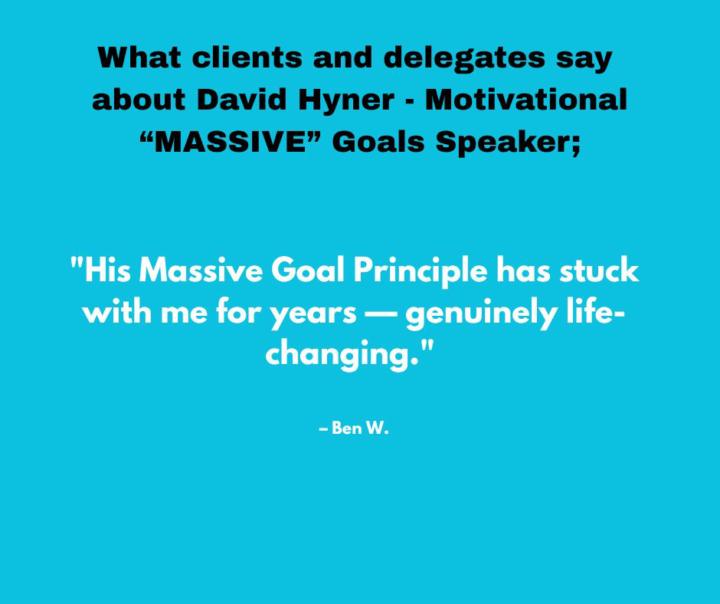
Hear it from those who’ve taken action on their MASSIVE Goals: “His Massive Goal Principle has stuck with me for years — genuinely life-changing.” If you or your team is ready to achieve more, then why not get in touch ?
0
0

3d •
Making a great first impression.
Making a great first impression is one of those tricky lessons that appear, and reappear throughout our whole life. Whether it be asking someone out on a first date, delivering a keynote or meeting the boss with a view to promotion, first impressions are vitally important. You also only get one shot at it! Forget the old philosophy- “you have 10 minutes to make a first impression.” With the increasing pace of life and the ease of accessibility to everything and everybody, you now have just 7 seconds to make yourself memorable. Seven seconds is the time it takes to cement your relationship or forever be forgotten. Daunting isn’t it! Luckily, there are manageable ways to ensure you leave a great impression- every time! My online course, ‘How to Make a Great First Impression’ will walk you through each step, explaining the methodology and illustrating the skills in a simple to replicate manner. This course offers you the opportunity to:- ● Appear more confident in public and in meetings ● Be more aware of your own body language and how it makes you appear to others ● Learn how to introduce yourself with a few carefully chosen words ● Be comfortable holding eye contact with people you deem to be superior to yourself The First 3 Steps Step 1- Eye Contact: Holding eye contact for some people is on a par with riding a penny farthing down the cobbled streets of Stratford- painful! It is however, the first step in making that great first impression. If you meet someone who seems incapable of looking you in the eye whilst talking, it is unfortunately in our nature to deem that person untrustworthy. At the very least we may feel uncomfortable with that person. It’s also important to remember not to stare for too long- as that can have an equally unsettling effect. Step 2- Smile: Holding eye contact with a dour look on your face can make someone feel very awkward indeed. Turning that frown upside down will bring instant rapport between two people. The effect a smile can have on a person is metamorphic, instantly calming a situation, bringing a warm, friendly atmosphere into any situation. Smiles are also infectious, so make eye contact and smile at the person you wish to impress. It will be very hard for the recipient not to smile back!
0
0
1-10 of 237

@david-hyner-6620
David Hyner is a 25yr experienced Professional Motivational Speaker, having presented to over 1.3 MILLION people globally. Multiple award winning.
Active 1d ago
Joined Sep 24, 2025
UK
Powered by