Activity
Mon
Wed
Fri
Sun
Dec
Jan
Feb
Mar
Apr
May
Jun
Jul
Aug
Sep
Oct
What is this?
Less
More
Her Wealth Society
47
Free
Bellator Legacy Collective
211
Free
Resiliency Reset
40
Free
Spirited Food
188
Free
Margaret Lynch Raniere
940
Free
The Grow Renaissance Skool
840
Free
50 contributions to The Grow Renaissance Skool

4d •
If you’ve been watching GROW from the sidelines....
"Love watching the GROW project reach the top 200 crypto projects in the world!! Very few ever climb this high and in such a short time!! " ~ Community member If you’ve been watching GROW from the sidelines, now is a great time to explore what we’re building. Get your GROW Wallet and join the ecosystem: https://web.connectunited.com/enroll?r=093669&p=5asdfhjdu15s9dfha Explore The Nourish Mart: https://thenourishmart.com Discover the entire GROW ecosystem and NourishPay: https://growecosystem.com The future of food commerce isn’t just about what we buy. It’s about how we buy, who benefits and how we reconnect the people producing our food with the people consuming it. Let’s Nourish the World. #GROW #NourishMart #NourishPay #GROWToken #FutureOfFood #Blockchain #RegenerativeAgriculture

1 like • 3d
This is so great to see!! Go GROW 💚💚💚
Sep 18 •
Nourishing the world
Good food. A clear plan. An annual healthy-food rewards program. Real Food.Regenerative farms.Blockchain. Food programs, farm pilots, and blockchain. Something exciting is coming....Make sure you grab your FREE Grow Wallet and be part of what’s being built. Join the Grow ecosystem, get connected, and come along for the ride. 🌱 👉 Get your free Grow Wallet here: https://web.connectunited.com/enroll?r=093669&p=5asdfhjdu15s9dfha

0 likes • Sep 21
Looking forward to hear what’s coming next! @Neil Smith

1 like • Aug 2
I didn't know that, thanks for sharing!
Jul 12 •
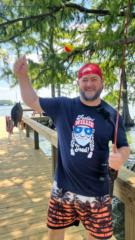
Farmer's Markets and Farmstands!
Had a great morning of visiting farmer's markets and farmstands people have set up in their yards. Excited to connect directly with the people growing and making my food.

0 likes • Jul 13
Awesome haul @Scott Touchton
Jul 12 •
Salt…
I’ve been living in Puerto Rico on and off for the past three weeks and four days, and I’ve come to one conclusion… There’s something deeply wrong with me. 😂 I picked up a 500-page book about salt as a bit of a joke. Now I can’t sit through a meal without giving an unsolicited TED Talk. It started innocently: “Did you know Roman soldiers were often paid in salt? That’s where the word salary comes from.” People found it interesting. That was my first mistake. Because then I learned that salt wasn’t just a seasoning, it was infrastructure. It shaped trade routes, built empires, financed economies, sparked wars, preserved food, healed wounds, sustained armies, and even inspired Gandhi’s Salt March, one of history’s most powerful acts of civil disobedience. It’s the only rock we willingly eat… and for thousands of years it quietly influenced the course of civilization. Now every time I pass a salt shaker, I don’t just see seasoning, I see history, economics, politics, biology, chemistry, and human ingenuity all sitting on the table. The biggest lesson wasn’t actually about salt. It was this: Nothing is boring. There are only things we haven’t looked at closely enough. Every object, every person, every business, every technology has layers of history and meaning waiting to be uncovered. The more curious we become, the more extraordinary the ordinary becomes. Curiosity changes how you see the world. And that’s a habit worth cultivating. Now, if you’ll excuse me, I have an overwhelming urge to tell someone where the word salary comes from… #Curiosity #Learning #History #Innovation #Leadership #LifelongLearning #Perspective #Growth
2 likes • Jul 13
I’d love to hear that Ted talk sometime @Neil Smith 😂 who knew there was so much to know about salt!
1-10 of 50
@colleen-williamson-9494
Clinical EFT Practitioner / Somatic Healing and Transformation Breakthrough Coach / Blockchain Project Node Owner / Decentralization
Active 2h ago
Joined Oct 22, 2025
Edmonton Alberta Canada
Powered by