Activity
Mon
Wed
Fri
Sun
Sep
Oct
Nov
Dec
Jan
Feb
Mar
Apr
May
Jun
Jul
Aug
What is this?
Less
More
Studio Botanica
57 members • Free
HM
Herbal Medicine Academy
92 members • Free
Natural Living Lab
7.9k members • Free
Oasis Builders
147 members • Free
HolisticAmerican-HealthAcademy
3.7k members • Free
Immune Resilience Lab
8 members • Free
The Potted Garden Society
3.2k members • Free
Profit Academy
1k members • $349/month
GOOSIFY: Skool Made Fun
13.1k members • Free
270 contributions to Immune Resilience Lab

May 22 •
Contact info
To reach me: [email protected] YouTube: https://youtube.com/@patrickmckenna1974 Website: www.patrickjmckenna.com


1 like • May 22
Yes, I am too!
May 20 •
🙏
Hey everyone, After a lot of thought, I’ve decided to officially close down the Immune Resilience Lab group. I truly appreciate every person who joined, participated, supported, and took part in the journey. Unfortunately, I’m no longer able to maintain the group consistently, and financially it hasn’t been profitable enough for me to continue operating it the way I’d like to. That said, this isn’t the end of my entrepreneurial journey. I’ve decided to shift my focus into other pursuits, specifically Amazon KDP publishing and Amazon Merch, where I’ll be putting more of my time and energy moving forward. My hope is that this group provided value, encouragement, education, and inspiration along the way. If even a few people benefited from the content, conversations, recipes, and health discussions we shared, then I consider that a win. Thank you again for being part of the community and for all of your support. Wishing everyone continued health, success, and growth moving forward.
4 likes • May 20
I'm truly sad to see this. But I wish you well in whatever you do. I can say I've absolutely benefited a lot so thanks so much for all you did! You've helped me the most so far and I truly do appreciate it all!

3 likes • May 16
Its being used as a political control tool. So many people don't research but blindly follow. Sadly, that does work. Just look at the AI thing. Is the timed release of that intentional? Because most know how AI works and just doesn't care because its a lazy way to get information and many just want to let others do the work for them. Media is in control in one way or another. Being bombarded with things like the virus is no doubt attempting control.
2 likes • May 17
@Ana Suri i feel laziness and confirmation bias are learned human faults over. The low efeffort consumption, still points to a laziness or at minimum a follower that doesn't want to do due diligence. The tech itself is only a program algorithm written by a human. Nothing artificial about that. Nor intelligent. There is basically at the core of programming a 1 or a 0. Standing for either on or off. There is absolutely no program, computer, or machine that has the ability to actually think for itself. No brain or lifeblood, no thinking.
May 10 •
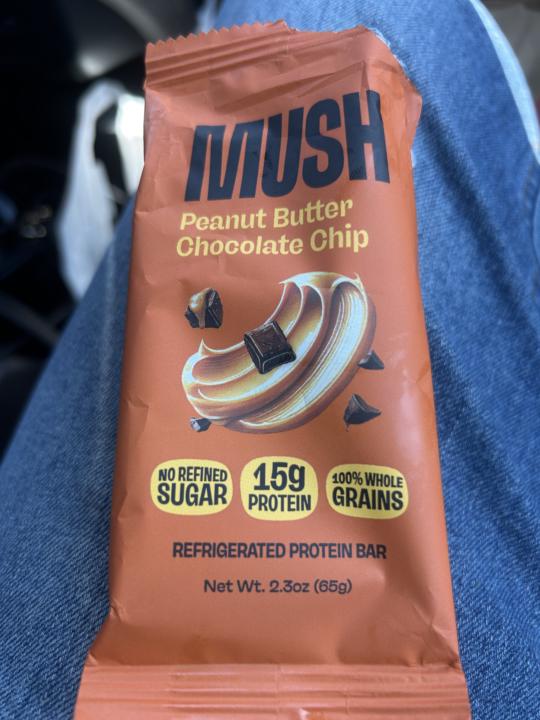
Mush
Found this brand on our trip to Chicago. Pretty clean and tastes better than most protein bars. What is your go to bar?👇🏻
1 like • May 10
I generally dont eat any of the bars. But I do really love the taste. Im needing to, and trying hard to stay away from all sweet things including honey. But these kinds are very hard to resist!
May 9 •
Immune Resilience Power Bowl 🥣⚡
If your mornings feel rushed, your energy crashes by 10am, or you’re trying to stay consistent with healthy habits, this breakfast bowl is a strong go-to. It’s packed with: ✅ Protein for muscle + fullness ✅ Fiber for gut health ✅ Healthy fats for steady energy ✅ Antioxidants + micronutrients that support Base - 1 cup plain Greek yogurt (high protein) - 1/2 cup oats - 1 tbsp chia seeds - 1 tbsp ground flaxseed Fruit Toppings - Handful of blueberries - Handful of strawberries - 1/2 banana sliced Crunch + Healthy Fats - Small handful walnuts or almonds - Pumpkin seeds Immune Boost Add-Ons - Drizzle of raw honey - Sprinkle of cinnamon - Optional: turmeric + black pepper pinch Why This Bowl Works 🔹 Greek yogurt supports gut health and protein intake 🔹 Berries provide antioxidants that help combat oxidative stress 🔹 Chia + flax add omega-3s and fiber 🔹 Pumpkin seeds contain zinc, an important mineral for immune function 🔹 Cinnamon and turmeric support overall wellness and inflammation balance Quick Prep Tip Make the oat + seed mixture ahead of time in mason jars for grab-and-go mornings. Challenge 👇 Try this breakfast for 5 mornings this week and pay attention to: - Energy levels - Cravings - Focus - Afternoon crashes Small daily habits compound fast. Consistency beats perfection every time. 💪

2 likes • May 9
I have all these ingredients and will try this, I do prefer a whole milk Greek yogurt. And I love cinnamon, but it seems lately I cant find one that is a good cinnamon taste. It seems all are rather bland compared to the taste I use to get. I like the ceylon cinnamon for health but with it the flavor just isn't as strong as the standard kind. But now, that standard kind seems to have lost some of its strength too. Is it my taste buds? Its not something I use very often at all. I thought it may have just been old but the new I bought was the same. And my husband also noticed it.
2 likes • May 9
@Patrick McKenna I do have it. Its cinnamon taste is less noticeable compared to the Cassia. And I've found it will change to a gel (more slime like) type consistency. I used cassia to make a cinnamon vodka. And a separate one using ceylon. The difference without considering health, was Cassia has stronger cinnamon taste while ceylon was most slime consistency, less flavor. Neither overcame the nasty vodka taste. Both were difficult to strain completely. But since this wasn't for me, I mixed the 2 then added the cinnamon red hots. The final results of all 4 ingredients was very well received. And are already asking for more.
1-10 of 270

@carla-giddeons-6433
I'm trying to live a more healthy lifestyle. I'm learning about natural ways to address health care and I'm excited! Herbs are the way to go!
Active 9d ago
Joined Oct 8, 2025
Alabama