Activity
Mon
Wed
Fri
Sun
Oct
Nov
Dec
Jan
Feb
Mar
Apr
May
Jun
Jul
Aug
Sep
What is this?
Less
More
Studio Botanica
62
Free
Natural Living Lab
8k
Free
Oasis Builders
163
Free
HolisticAmerican-HealthAcademy
3.7k
5.0
Free
The Potted Garden Society
3.4k
Free
Profit Academy
1k
$4,999
GOOSIFY 🍎🐛🦋🌈⭐️🩷
13.1k
5.0
$3/y
Mohr Natural
395
$10/m
45 contributions to Oasis Builders

🔥
Jun 26 •
Preparedness Becomes Stronger When We Use the Pantry
Recently we looked at the home as a working system. Food, water, first aid, light, tools, and family need all work better when the family as a whole understands how the household actually runs. The next step is to practice with the pantry. A pantry is not just extra food on a shelf. A useful pantry is food the family typically eats and knows how to cook. One simple way to learn your pantry is to make preparing meals from the pantry a game. Look through the cabinets, refrigerator, freezer, and garden if you have one. Then ask, “How many meals could we make before we had to go to the store?” Not fancy meals, but life-giving, wholesome meals. Beans and rice, soup and bread, pasta and sauce, oats, tacos, eggs, tuna salad, fried potatoes, pancakes, or whatever your family already eats. As you do this, observe the shelf life and whether something could be bought in a larger quantity at a better price. For example, I like Ro-Tel. I found that the large can is considerably cheaper, although I used to buy the smaller cans because I did not want waste. Now I buy the large can, use what I need, and put the rest in a clean quart jar in the refrigerator to use in the next week or so. This is a simple example although the goal is not to make this complicated. The goal is to save food cost and set the household up to eat for a period without constantly running to the grocery store. These observations will show what foods you really use and what comes up missing frequently. Do we have enough salt, oil, seasoning, stock, sauce, flour, eggs, or other common items that turn stored food into normal meals? Then start noticing the small grocery runs. Did we go for milk, bread, eggs, coffee, butter, pet food, toilet paper, dish soap, onions, snacks, or something for lunches? Repeated runs are clues. Preparedness does not need to begin with special emergency food supplies. Sometimes it begins by keeping more of the normal things the household reaches for every week. If we use pasta sauce every week, one jar is fragile. Four or six jars give the home more breathing room. If we use rice, oats, coffee, peanut butter, canned tomatoes, beans, broth, or animal feed all the time, those are not random storage items. They are part of the household rhythm.
Poll
13 members have voted
3 likes • Jun 27
@Jim Flach yes. Ive read studies on white vs wheat and its amazing all the pitfalls of the white breads. One of the main ones is it has been linked with infertility. I use egg whites or whole eggs to make "bread like" replacements or even chard or romaine lettuce like a tortilla.
3 likes • Jun 27
@Jim Flach definitely. Thanks.
🔥
Jun 18 •
The Question That Changed How We Use Herbs
One of the most common questions I am asked is, "How do I prepare this herb?" That is a good question, but the first question I ask is, “What part of the plant are you using?” Once we know the part, the preparation often becomes much clearer. Leaves and flowers are usually infused as tea. Mineral-rich herbs like nettle and oatstraw often benefit from a longer infusion. Roots, barks, berries, and hard seeds are commonly simmered as a decoction. Aromatic seeds such as fennel and cardamom are often lightly crushed before use. Mucilaginous herbs like marshmallow root may work best as a cold infusion. Resins such as frankincense are often better suited to tinctures, powders, oils, rather than a simple tea. Herbal learning becomes much more approachable when we begin grouping plants by the parts we use. A simple notebook can be helpful: - Herb name - Part used - Preparation method - Steeping or simmering time - Taste - Notes and observations - Safety considerations Over time, that notebook becomes a personal herb guide built from real experience. What herb first made you realize that not every plant is prepared the same way?
2 likes • Jun 19
Dandelion. It was my first herb that drew me in to herbs and taught me the different parts for different things and different ways to prepare. So very versatile. Heart, skin and food!
1 like • Jun 19
@Jim Flach I need to gather more leaves. I've also used the flowers for skin.
🔥
Jun 17 •
Some Herbs Build Slowly
Last week we talked about what an herb is doing in the body. Now we need to add one more layer. Some herbs are gentle supports. They are not always used because something is wrong right now. They are used because they help the body stay nourished, steady, and resilient over time. Nettle is a good example. It is mineral-rich and often used when the body feels run down or depleted. Oatstraw is another steady herb. It supports the nervous system in a slow, nourishing way. Rosehips can bring gentle daily support through food-like nourishment. These herbs are more like compost in the garden. We do not add compost and expect the whole garden to change overnight. We use it because it helps build the ground. This week, pick one gentle herb and ask: Would this herb be useful as steady support, or am I expecting it to act like a quick fix? A strong home apothecary starts with simple herbs we can understand and use with care.
1 like • Jun 18
Its a little difficult to use a gental herb when the one thing you need to work is needing a complete overhaul lol.

Jun 7 •
Why scientists do controls
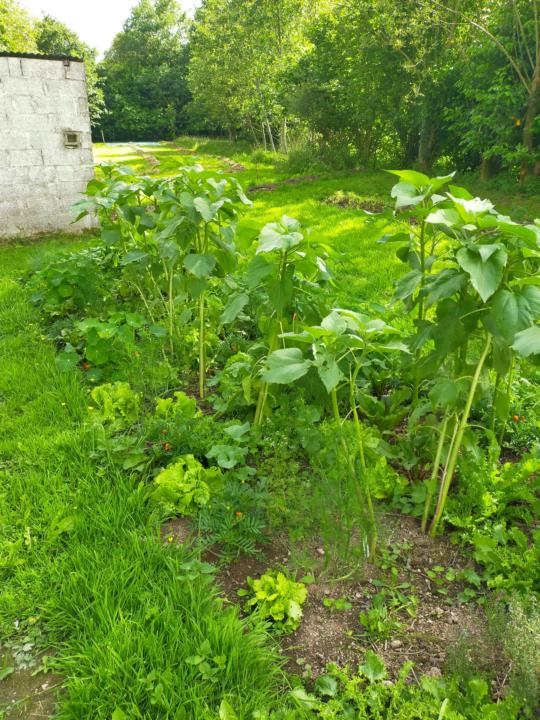
On the new project in the village, the test plot that was planted with a random mix of starts, and has never been a garden before or had any special treatment is doing remarkably well. Because this was a trial of the soil I didn't pay much attention to what I did, expecting problems to fix as the result, when in fact, it is growing better than the established garden plot at the farm(which is also doing well, just not as quick and lush). The only thing I can think of is that this site is naturally fertile soil and the conclusion is I have to do another trial bed. This bed was long grass and nettles and where an old fence ran.
1 like • Jun 16
So did you water both the same? What about the sun location throughout the day, is it the same? And are the plants you planted the same? Theres many variables besides soil so any one could have either made it or not. Sun, soil, and water are the 3 life sustaining necessaries. Each can vary from small to large ways. Great experiment! I love seeing different experiments. Then trying to work out what is going on. Like a puzzle.
1 like • Jun 16
@Phillip Greenwood is it a certain type of clay? I know different clays offer different nutrients too. I'd think the organic soil would work great. How about the time difference of the sun hitting on the plants? Possibly the other plant and animal difference between the 2 places? Im throwing out things that I think could possibly make a difference. Maybe im wrong but nature has a way of compensating things on its own. May not be what we want all the time. I'm really intrigued that a clay based has performed better than a highly organic base. If that holds the key, it would be well worth knowing!
🔥
Jun 14 •
Preparedness Works Better as a Weekly Rhythm
Last week I wrote that a prepared home is not just stocked, it is practiced. The next step is turning practice into a simple weekly rhythm. Preparedness gets overwhelming when we treat it like one giant project. Food storage, water, first aid, power outages, weather plans, household skills, and family communication can feel like too much when they are all stacked together. One week may be pantry week. Check what is low, move older food forward, and plan a few simple meals from what is already on hand. This is also the time to check your herbs on hand or needed as well. Keep in mind what foods you buy weekly so as you move forward, you can take one item and evaluate for buying in bulk... Another week may be water week. Refill containers, think through drinking water, toilet use, cooking, cleaning, pets, and what your family would need for a short disruption. Another week may be first-aid week. Check bandages, gloves, antiseptic, common medicines, herbs, and the supplies your household really uses. I also add a CPR mask and a tourniquet in my kits; either could be lifesaving. I also have about a dozen homeopathic remedies in my first aid kit. Another week may be skill week. Show someone where the flashlight and extra batteries are. Practice turning off the water and electrical breakers. Talk through the most likely weather issue for your area and what the family members would do if they were separated when the event happens. None of this has to be dramatic. Most homes do not need fear, they need small, repeatable steps that build stability over time. A prepared home is built by faithful attention to the ordinary things that keep life going. When the family understands their rhythm together, preparedness becomes less about storing stuff and more about building skills and confidence. This kind of preparedness serves the household when life gets interrupted.
1 like • Jun 15
How did the tulsi go? I ended up with 2 plants. Now I cant keep up with all the pruning. Between them, the basil, lemon balm, lavender, lemon thyme, rosemary, mints, and oregano. Oh my gosh I cant believe how that tulsi smells! Just what can I do with all of it? I should have spread all these out more. And the Marigolds didn't help keep bugs away. Their not extreem but I have to wonder if that tulsi smell has anything to do with it. I'll need to do something to get past that! The ashwagandha I'll save the seeds on, because i do think I should have had more of them than the others! My chard is almost done. I also have some passion flower growing in the raised beds and wild.
1 like • Jun 15
The lemon balm and tulsi look very similar. I'll make a post later today when I get caught up again.
1-10 of 45

@carla-giddeons-6433
I'm trying to live a more healthy lifestyle. I'm learning about natural ways to address health care and I'm excited! Herbs are the way to go!
Active 1d ago
Joined Mar 25, 2026
Alabama