Activity
Mon
Wed
Fri
Sun
Mar
Apr
May
Jun
Jul
Aug
Sep
Oct
Nov
Dec
Jan
Feb
What is this?
Less
More
Memberships
The Iron Forge Brotherhood
13.5k members • Free
Exploring Peptides Community
10.7k members • Free
OPTIMIZE & THRIVE
3.7k members • Free
Optimized Living
2.2k members • Free
Peptide Lab
447 members • Free
Pep Talk
283 members • Free
Peptide Researchers
6.1k members • Free
Project Biohacked
9.9k members • Free
Peptide Price
9k members • Free
26 contributions to Peptide Price

🔥
14d •
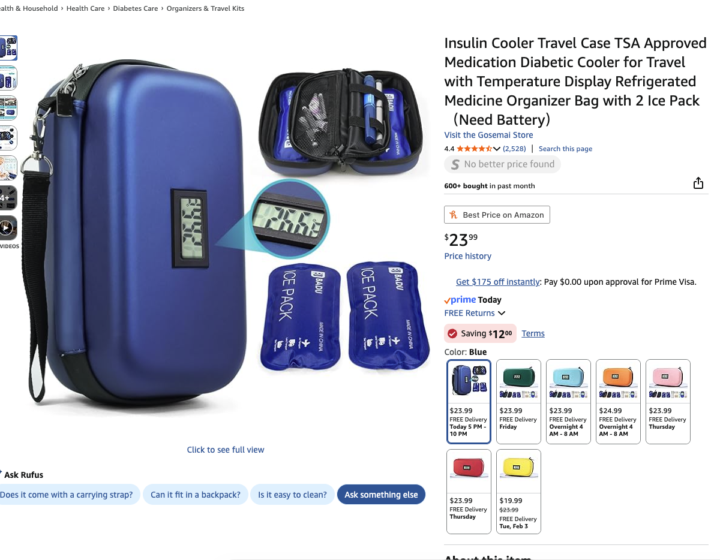
Another Insane Deal: Insulin Travel Cooler 12$ 🔥
I just found this crazy deal on the insulin travel cooler I personally use whenever I fly back to Buffalo or travel overseas. Right now it's only $11.99 with a $12 discount applied — basically getting it for nothing. You just have to apply the discount promotion if you have it. This thing is TSA approved, has a temperature display, comes with 2 ice packs, and keeps your peptides cold during travel. Game changer for anyone who needs to transport reconstituted vials. 🔗 Link: https://amzn.to/3ZzrpNk If you travel with peptides at all, grab one before this deal disappears.

1 like • 14d
Is the $12 applied automatically?
🔥
Jan 3 •
🚨 The Retatrutide Side Effect No One Talks About: Elevated Resting Heart Rate
Everyone's focused on the incredible fat loss results with retatrutide, but there's a critical side effect that's flying under the radar: significantly elevated resting heart rate. This isn't your typical GLP-1 nausea that goes away in a few days. This is a cardiovascular effect that demands respect and careful attention. What's Actually Happening in Your Research Models? Retatrutide is a triple agonist - GIP/GLP-1/glucagon. That third component, glucagon, is what sets it apart from tirzepatide and semaglutide, and it's also what's driving this side effect. Here's the mechanism: Glucagon receptor activation: - Dramatically increases metabolic rate and energy expenditure (great for fat loss) - Activates the sympathetic nervous system (your "fight or flight" response) - Stimulates thermogenesis (heat production) - Increases cardiac output to support elevated metabolism The result? Your heart starts beating faster to keep up with the increased metabolic demand. This isn't a bug - it's a feature of how the compound works. But it comes with real implications. The Clinical Trial Data In Eli Lilly's Phase 2 trials: - Average RHR increases of 5-10 bpm were common - Some subjects saw increases of 15+ bpm - The effect was dose-dependent (higher doses = higher RHR) - The elevation persisted throughout treatment duration - It didn't just "go away" after a few weeks like GI side effects To put this in perspective: if your baseline RHR is 65 bpm and you jump to 80 bpm, that's your heart beating an extra 21,600 times per day. Over a year? That's nearly 8 million extra heartbeats. Why This Matters More Than You Think An elevated RHR isn't just uncomfortable - it has real physiological implications: Cardiovascular strain: - Increased workload on the heart muscle - Higher oxygen demand - Potential for increased blood pressure - Greater stress on the cardiovascular system long-term Quality of life impacts: - Feeling "wired" or anxious - Poor sleep quality - Reduced exercise capacity - Palpitations or awareness of heartbeat

0 likes • Jan 3
I did not do good with Reta when I tried it getting off Mounjaro. Did not waste my time with it. Got right back on Mounjaro. Doing much better. My numbers just did not seem right and I was not ok with that.
🔥
Dec '25 •
Why Do Some People Feel Like Absolute GARBAGE When They Start SS-31?
Alright, let's talk about something that doesn't get discussed enough: that weird "feel worse before feeling better" phenomenon some RSs experience with SS-31 (Elamipretide). One would think a mitochondrial peptide would make an RS feel like Superman from day one, right? More mitochondrial efficiency = more energy = let's gooo! But here's what's actually happening... The Mitochondrial "Spring Cleaning" Effect SS-31 doesn't just make mitochondria work better - it literally helps the body identify and clear out the damaged, dysfunctional mitochondria that have been limping along. Think of it like this: The body has been running a factory with 100 machines. Maybe 40 of them are barely functional - smoking, sputtering, producing more waste than product. But hey, they're still contributing something to total energy output. Then SS-31 comes in like a new efficiency consultant and says "These 40 machines are actually COSTING more than they're producing. Time to shut them down and rebuild." What This Looks Like In Research Subjects: - Increased autophagy/mitophagy = the body is actively breaking down damaged mitochondria - Temporary energy deficit = just shut down 40% of the (admittedly crappy) energy production - Metabolic shifting = cells are reorganizing how they produce ATP - Possible "herx-like" reaction = all that cellular cleanup creates metabolic byproducts The Timeline: Most RSs report this sluggish phase lasting anywhere from 3-10 days. Some RSs don't experience it at all (lucky). But for those who do? It can feel like moving through molasses. What May Help: - Lower starting dose - perhaps starting at 2.5mg instead of 5mg - Support mitochondrial biogenesis - ensuring adequate B vitamins, CoQ10, magnesium - Hydration - helps flush metabolic byproducts - Light movement - not going hard, but not being completely sedentary either - Patience - this is actually a sign the peptide is WORKING The Payoff: Once the body clears out the damaged mitochondria and starts building fresh, efficient ones? That's when RSs report the real SS-31 benefits - sustained energy, better recovery, mental clarity, the works.

0 likes • Dec '25
How long should someone take SS-31?
🔥
Dec '25 •
How To Make VIP a Nasal Spray Reconstitution Guide
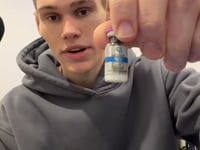
A lot of people overcomplicate making peptide nasal sprays. Here is the full walkthrough, uncut, of making a 10mg VIP nasal spray step by step. For those researching VIP (Vasoactive Intestinal Peptide) administration methods, here's a detailed protocol for creating a nasal spray solution using the Atomik Labz air dispersal unit. 🎥 Video Tutorial: https://vimeo.com/1143422313?share=copy&fl=sv&fe=ci 🧪 Materials Needed: - 10mg vial of VIP peptide - 10ml deionized water (included with Atomik kit) - Nasal spray bottle (100 spray capacity) - Mixing syringe - Alcohol wipes - Sterile workspace ⚗️ Step-by-Step Process: 1. Preparation Clean workspace with alcohol Wipe down all materials Ensure sterile technique throughout 2. Initial Reconstitution Draw 1ml of deionized water into syringe Inject into 10mg VIP vial slowly down the side Gently swirl (don't shake) until fully dissolved Let sit for 2-3 minutes 3. Transfer to Spray Bottle Draw the reconstituted solution from vial Transfer carefully into nasal spray bottle After transferring the reconstituted peptide, add the other 9ml of deionized water to the spray bottle 4. Final Preparation Gently mix by inverting bottle several times Prime pump with 2-3 test sprays Label with date and concentration 📊 Final Concentration: - Total volume: 10ml - Concentration: 100mcg per spray - Total sprays: ~100 doses 🔬 Research Notes: Store in refrigerator, use within 30 days of reconstitution. Always maintain sterile technique and proper storage protocols. This information is for research purposes only. Always consult with qualified professionals and follow proper laboratory protocols.
0 likes • Dec '25
So I want to do a mix for SEMAX and SELANK. Is it the same protocol as this video? Also I noticed that you only added the sterile water but no BacT water. I guess that’s ok?. Thanks
0 likes • Dec '25
@Derek Pruski so I have a 10mg of Semax and 10mg of Selank. Would I add 10ml of sterile water to each?
🔥
Nov '25 •
Proper Storage of Reconstituted Peptides: Light and Stability Considerations
When you reconstitute your peptides, proper storage becomes critical to maintaining their stability and potency. While most researchers know to refrigerate reconstituted peptides at 2-8°C (36-46°F), there are two often-overlooked factors that can significantly impact peptide degradation: light exposure and physical agitation. Light Exposure: The Silent Degrader Reconstituted peptides are particularly vulnerable to photodegradation. UV and visible light can break peptide bonds, causing oxidation and structural changes that compromise efficacy. This is why pharmaceutical-grade peptides often come in amber vials - the tinted glass filters harmful wavelengths. Best practices for light protection: - Store vials in their original boxes when possible - If boxes aren't available, wrap vials in aluminum foil or use an opaque container - Keep peptides away from the refrigerator light (yes, that matters during the 10 seconds the door is open multiple times per day) - Never leave vials on the counter under room lighting longer than necessary during dosing Some peptides are more photosensitive than others. Growth hormone peptides, for example, are notoriously susceptible to light degradation, while some others may be more stable. When in doubt, protect from light - there's no downside to being cautious. Physical Stability: Location Matters The placement of your peptides within the refrigerator affects their longevity more than most people realize. Constant vibration and temperature fluctuation accelerate degradation through several mechanisms. Optimal refrigerator placement: Choose a spot on the back of a middle or lower shelf - specifically a section that doesn't see much activity. Here's why this location is ideal: - Temperature stability: The back of the fridge maintains the most consistent temperature, while door shelves can fluctuate 5-10°F every time you open it - Reduced vibration: Door shelves experience constant movement and vibration from opening/closing, which can stress peptide bonds over time - Away from the freezer: The back wall near the freezer compartment can sometimes get too cold, risking accidental freezing

0 likes • Nov '25
I have a reconstituted ghk-cu peptide that I have been using but it is about close to two months old now. Is it still ok to use? Thanks
0 likes • Nov '25
@Derek Pruski thank you
1-10 of 26

Active 8h ago
Joined Aug 28, 2025