Activity
Mon
Wed
Fri
Sun
Mar
Apr
May
Jun
Jul
Aug
Sep
Oct
Nov
Dec
Jan
Feb
What is this?
Less
More
Owned by Derek
Premier peptide education hub. FREE courses on research peptides & GLP-1s. US supplier intel, safety protocols & expert community support. 🧬🚀
Memberships
Project Biohacked
9.9k members • Free
Peptira Partners
62 members • Free
2840 contributions to Peptide Price

🔥
10h •
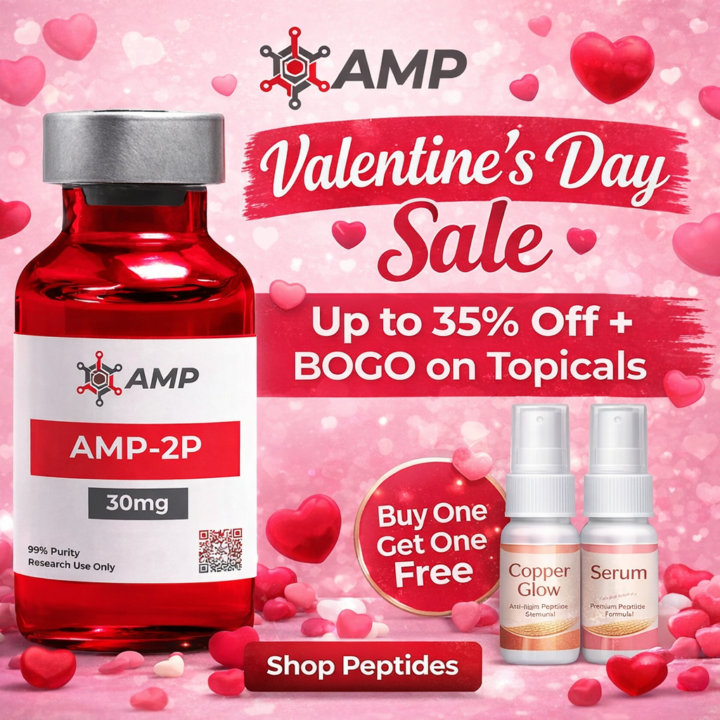
💘 AMP Valentine's Day Sale — Up to 35% Off + BOGO on Topicals
AMP is running their Valentine's Day sale and it's one of their best yet. Live now through February 15th. Genuinely, this is the most insane sale they've ever run, so take advantage because this will not be coming back for a long time. The Deal: 🔹 20% off sitewide (automatic) 🔹 Stack code DEREK15 for an extra 15% → 35% off total 🔹 ALL cosmetic/topical products are Buy One Get One FREE Compare AMP across 20+ vendors at peptideprice.store 💘 Topical BOGO — Buy One Get One FREE: 1. CopperGlow Cream — 100ml 2. Peptide Cream — 50ml 3. Peptide Eye Cream — 15ml 4. Resveratrol Booster Serum — 50ml 5. Retinal X Serum — 30ml 6. Sponge Microneedle Cream — 50ml 7. Sponge Microneedle Scalp Serum — 30ml 🔗 https://ameanopeptides.com/?ref=Derek15 🏷️ Code: DEREK15 📅 Feb 9 – Feb 15 🚚 Free shipping on orders over $200 Drop any questions below 👇
🔥
3 likes • 8h
@Michele Park I really like the ghk-cu and snap 8 cream. CopperGlow
🔥
0 likes • 32m
@Michele Park I'm not sure, the creams normally take a while. Probably not this sale.

23h •
Ruo?
Random question specifically for @Derek Pruski Ruo has been my go to peptide research company for a good while now. They have great COAs and great sales throughout each month. Is there a reason it’s not on the peptide price site? Just a question because I know they are pretty popular among other creators. Is there something I’m missing?
🔥
3 likes • 9h
Once you look into RUO a little bit, you realize they've only tested once and don't have COAs on all their products. I've looked into them as a company, but they don't meet the basic requirements. Over 50% of their products are missing COAs.
🔥
0 likes • 1h
@Pia Lawrence I vetted them and it was no go on the backend
🔥
Nov '25 •
🧠 Selank: The Solution to Anxiety Before Bed & Racing Thoughts?
Disclaimer: This post discusses research peptides for educational purposes only Let's talk about Selank - specifically how it's being researched for the most frustrating part of sleep optimization: that brain that just WON'T. SHUT. OFF. You know the feeling. You're exhausted, you're in bed, lights are off... and your brain decides it's the perfect time to replay every conversation from the day, plan tomorrow's meetings, remember that embarrassing thing from 2012, and solve world hunger all at once. What Is Selank? Selank is a synthetic peptide derived from tuftsin (an immune system peptide). It's primarily researched for its anxiolytic (anti-anxiety) properties and unique effects on mental clarity without sedation. Key mechanism: Selank appears to modulate GABA, serotonin, and dopamine neurotransmitter systems while also affecting BDNF (brain-derived neurotrophic factor). Racing Thoughts & Sleep Quality: What Research Suggests: Anxiolytic Without Sedation - Unlike traditional sleep aids, Selank doesn't force sedation - Research shows it reduces anxiety and mental hyperactivity - Helps quiet the "mental chatter" without making you feel drugged Evening Administration Effects - Users commonly report reduced racing thoughts 30-60 minutes post-administration - Mental "volume" decreases - thoughts still exist but aren't intrusive - Easier transition into natural sleep without feeling artificially tired Sleep Architecture - Research indicates Selank doesn't disrupt natural sleep cycles - May improve sleep quality by reducing anxiety-related sleep fragmentation - No next-day grogginess commonly reported with sleep medications Cognitive Effects - Maintains mental clarity (not a sedative) - Reduces stress response without cognitive impairment - Some research suggests improved stress resilience over time Research Considerations: Typical Research Protocols: - Common dosing: 300-600mcg - Evening administration: 30-60 minutes before intended sleep - Intranasal or subcutaneous routes studied - Effects may be cumulative over several days

🔥
1 like • Nov '25
@Lenni Jhonson internasal hasn't been great with any of these for me personally
🔥
0 likes • 2h
@Beth Laney pinealon or pe-22-28 might be good options

5h •
R3TA
Hey Everyone need some input here. Is there a need to ever cycle R3TA or is it safe to stay on it indefinitely at all times, just different doses? Been loving it during my gaining phase as well but want to be safe @Derek Pruski
🔥
1 like • 5h
Anecdotally in the research space, people have stayed on this at long term. My opinion on it is the amount you're using could cause issues. I would still recommend trying to come off it for 1-2 months a year, but I don't see a problem staying on it long-term in very small dosages. It's not medical advice, and the only reason I say we don't know is because we've had no studies that have really lapsed more than two to three years on any of these GLP-1s following the same group of individuals.
🔥
0 likes • 2h
@Shawn Monclova which glp were you using over 10 years ago?
🔥
6h •
📦 AMP Unboxing + Valentine's Day Sale — Up to 35% Off + BOGO on Topicals
Just unboxed some peptides along with the CopperGlow Cream and Resveratrol Booster Serum from AMP. These topicals are part of the BOGO deal right now, so it's a great time to try them out. AMP is running their Valentine's Day sale and it's one of their best yet. Live now through February 15th. This is the most insane sale they've ever run — take advantage because this won't be coming back for a long time. The Deal: 🔹 20% off sitewide (automatic) 🔹 Stack code DEREK15 for an extra 15% → 35% off total 🔹 ALL cosmetic/topical products are Buy One Get One FREE Compare AMP across 20+ vendors at peptideprice.store Topical BOGO — Buy One Get One FREE: 1. CopperGlow Cream — 100ml 2. Peptide Cream — 50ml 3. Peptide Eye Cream — 15ml 4. Resveratrol Booster Serum — 50ml 5. Retinal X Serum — 30ml 6. Sponge Microneedle Cream — 50ml 7. Sponge Microneedle Scalp Serum — 30ml 🔗 https://ameanopeptides.com/?ref=Derek15 🏷️ Code: DEREK15 📅 Feb 9 – Feb 15 🚚 Free shipping on orders over $200 Drop any questions below 👇

🔥
1 like • 5h
@Aquil Rafeeq Make sure to use the code DEREK15 on top it stacks.
🔥
1 like • 2h
@Aquil Rafeeq Yeah, I figured it would go quick.
1-10 of 2,840