Activity
Mon
Wed
Fri
Sun
Mar
Apr
May
Jun
Jul
Aug
Sep
Oct
Nov
Dec
Jan
Feb
What is this?
Less
More
Memberships
Oscar's Community
5.7k members • $39/m
Longevity & Beauty
111 members • $50/m
Peptide Price
9.2k members • Free
Mile High Compounds
282 members • $10/month
The Iron Forge Brotherhood
13.8k members • Free
Better Humanz Crypto
1.4k members • Free
50 contributions to Peptide Price

🔥
3d •
What's The ONE Energy Peptide Or Blend That Actually Worked For You?
General question for the group. I've put out a bunch of energy guides and energy peptide guides at this point — but now I want to hear from YOU. What is the one energy peptide that actually worked in your research protocol? Whether it was alongside your GLP-1 research or just in general — what actually gave you that boost? Not what you read about. Not what someone told you to try. What did YOU personally find worked in your own research? Drop it in the comments and tell me WHY. What were you dealing with before, what did you research, and what changed? The more detail the better — your experience might be exactly what someone else in here needs to hear right now. For research purposes only. 👇

2 likes • 3d
NAD and MotsC
🔥
5d •
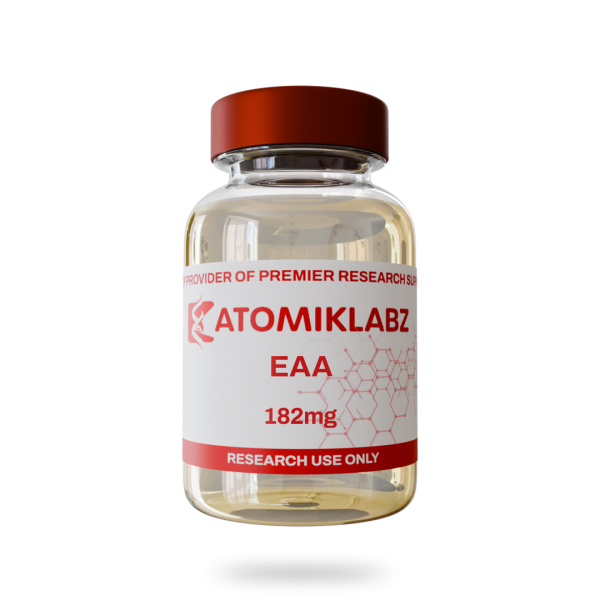
EAA Liquid Blend — What Is It, Why It Matters, and What the Research Shows
I want to preface this by saying I’m generally not a huge fan of traditional EAAs. While they’re interesting from a research standpoint, what actually moves the needle is still the basics: consistent weight training and hitting your daily protein targets. If those aren’t dialed in, EAAs are just noise. In most cases, simply adding more high-quality protein will do far more for results than any EAA stack ever will. The fundamentals matter first. That said, a lot of community members have been asking about them, so let’s take an objective look and break down the EAA formulations from Solution and Atomik Labs—what they’re doing well, where they differ, and where they realistically fit (if at all). You can find this product here, research use only: https://peptideprice.store/peptide/eaa Let's Start Simple: What Are Essential Amino Acids (EAAs)? The body needs 20 amino acids to function. Think of them as building blocks — they build muscle, repair tissue, produce hormones, support the immune system, and keep the brain working properly. Of those 20, 9 are "essential" — meaning the body CANNOT make them on its own. They must come from external sources. This blend contains all 9 of those essential aminos in a ready-to-use liquid form. 🔬 This product is sold for research purposes only and is not intended for human consumption. 🧪 What's In This Blend (And What Each One Does) Let me walk through each amino acid in plain English, starting with the highest dosed: Histidine — 45mg/mL (the star of this blend) This is the most heavily dosed amino in the formula, and for good reason. - Converts into histamine in the body, which regulates immune response, stomach acid, and inflammation - Acts as a powerful antioxidant — helps neutralize free radicals - Supports gut health and digestion - Plays a role in maintaining the myelin sheath (the protective coating around nerves) - Research links it to reduced inflammation markers and improved metabolic function - Key focus in studies on chronic inflammation, gut health, and metabolic stress — particularly in caloric deficit models
1 like • 5d
Sounds interesting, we need a Guinea Pig, Derek your up to the task?
🔥
6d •
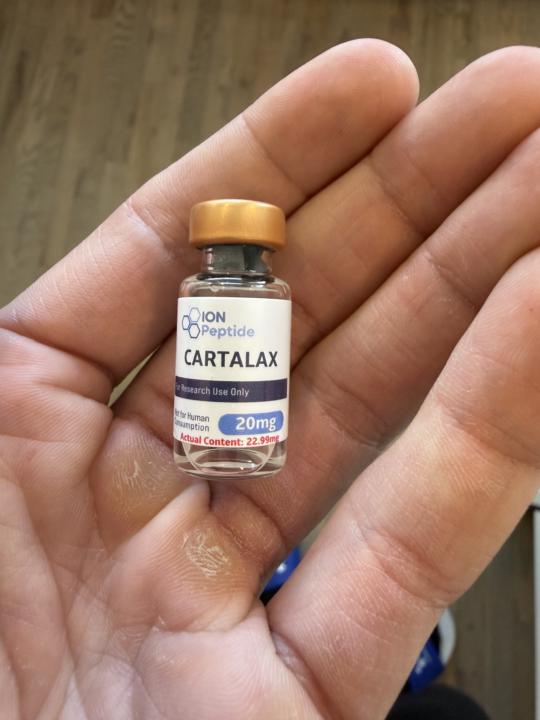
Cartalax Research Expirement
Just added Cartalax to the research stack I will let you know if I see any improvements. Been curious about this one for a while and my research to have some hamstring issues while training. My approach is always low and slow with everything, but I’ll keep you guys updated as time goes on!
1 like • 6d
I love CARTALAX 💪
🔥
9d •
🗳️ POLL: Which Peptides Sting the Most?
We all know the feeling — you research and immediately go "yep, that one's spicy." 🌶️ These are the most common ones I hear about from the community and from my own experience. Some of these are just known for having that burn, especially certain blends and standalone compounds. Which of these sting the most for you? Drop a comment if I missed any — these are just the most common ones off the top of my head. Curious to see which ones hit the hardest for you guys. 👇
Poll
190 members have voted

1 like • 9d
Hey bro you need to add Fox04 to that poll
🔥
11d •
Modern Aminos Dissolvable Strips + Update On GLP Situation
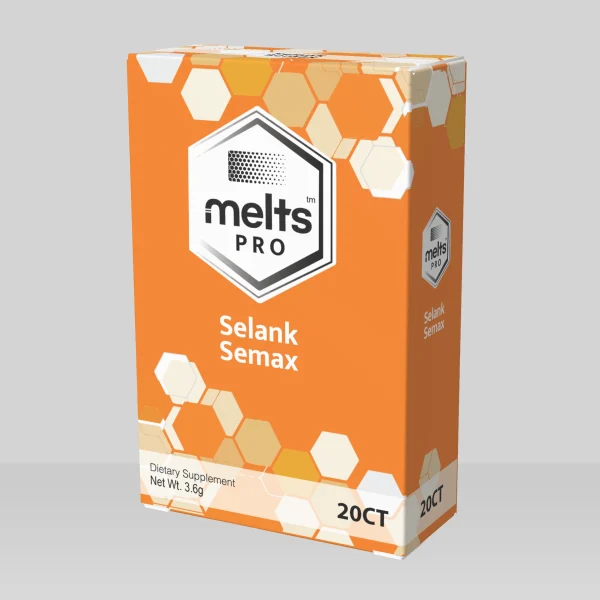
Modern Aminos just added a full line of dissolvable strips to their site, and honestly, the pricing is noticeably better than what we've seen from other vendors carrying them. Here's what they've got: - Brain Fuel Strips — $36.99 - Sleep Strips — $39.99 - NAD+ Strips — $59.99 - Melanotan II Strips — $96.99 - Passion & Performance Strips — $99.99 - Selank + Semax Strips — $174.99 - CJC-1295 + Ipamorelin Strips — $179.99 - Tesofensine + 5-Amino 1MQ Strips — $189.99 Use code DEREK at checkout for 10% off. Check them out here: https://modernaminos.com/product-category/dissolvable-strips/?ref=derek Now — I do want to address something directly. We all remember what happened with Modern Aminos and the GLP-1 situation back in December. I'm not going to sugarcoat that. But here's what I will say: they called me directly and said, "We got duped." No regulatory spin. No finger-pointing. No "it was out of our hands" nonsense. They owned it. It was credit card processors telling them that all of this GLP-1 stuff was going away — and they acted on that bad information. In fairness to every other vendor on the platform, I have not put their GLP-1s back up on PeptidePrice.store, and I don't plan to. That's a matter of consistency and fairness across the board. But I do respect accountability. In this space, too many people deflect, disappear, or blame somebody else when things go sideways. Modern didn't do that. They picked up the phone and were straight with me, and that matters. This doesn't erase what happened — but it does factor into how I evaluate a company moving forward. Dissolvable strips are a different product category entirely. I do value what Modern Aminos brings to the table across the board with different product categories. That's why they've been a key player in the industry for so long
0 likes • 10d
Hey @Derek Pruski this is great. I do take strips from another brand that are extremely expensive and i had purchased them to give GHK-Cu to my wife. They dont have Ghk but have many others, i will test some out. 💪
1-10 of 50

@based-man-3487
In the crypto space im known as based man however for my family of many kids im known as PAPA. Live in the US and love bio hacking and collaborating
Active 2d ago
Joined Jan 4, 2026