Activity
Mon
Wed
Fri
Sun
Nov
Dec
Jan
Feb
Mar
Apr
May
Jun
Jul
Aug
Sep
What is this?
Less
More
Owned by Andra
Turn your Sustainability targets into your next innovation🌎The Essential Sustainability Course💡Making this World to be a better place 🗝
18 contributions to Has2BGreen

Jan 22 •
🟢 New Module Now Live: The Political Components
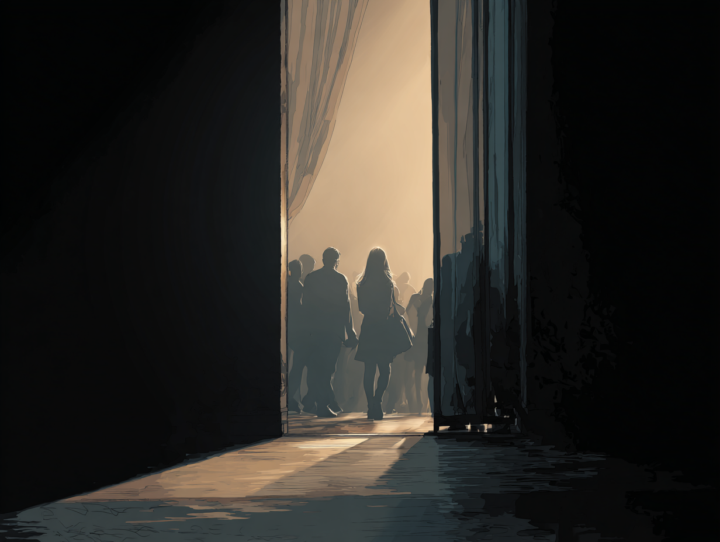
A new module called "The Political Components" is now live in the classroom. This module looks behind the curtain at how politics actually works — not how it’s presented during elections, but how decisions are really shaped long before the public ever gets a vote. Across this module, we explore: - who really sets party agendas - how candidates are selected and filtered - how money and lobbying shape policy - why elections feel open but often change very little - what happens once politicians enter government - how laws are written, diluted, delayed, or quietly killed - why climate action struggles inside this system - and how pressure sometimes breaks through anyway - This isn’t a party-political attack, and it isn’t about cynicism. It’s about political literacy — understanding the machinery so we can engage with it intelligently rather than naively. If you’ve ever wondered: “Why does everyone say the right things about climate… but nothing seems to change?” This module gives you the missing context. 📘 You’ll find The Political Components in the Classroom. Take your time with it — it’s dense, but it’s designed to give you clarity, not overwhelm. As always, I’m interested in: - what challenged your assumptions - what confirmed your experience - and where you think the real leverage points are - This module is about seeing the board clearly — before deciding how to play.

2 likes • Jan 25
London is in the top cities in the world that consider sustainability and climate change; the first important international event that I attended, on the topic of sustainability and climate change was in London; when there was open talk about the need for immediate solutions, in Bucharest it was a taboo subject and I was seen as having strange ideas :); now, things are changed a bit, the buzz exists and of course, there are some important successful case studies, in business domain and in some industries, because in politics, it s true, things are moving slowly; interesting to see your perspective
Jan 11 •
Has2BGreen has 30 members!
Thank you all for being here — and welcome to our 30th member. This space is still in its early days, and there’s a lot happening behind the scenes. Some of what I’m working on will start appearing in the Classroom soon. There’s already a substantial amount of material there to explore, and I genuinely welcome any feedback you’re willing to share. I’m actively learning what works and what doesn’t — both here and by being part of other communities — and I’m refining things as we go. Right now, the Classroom is unapologetically dense. It’s a wall of data. Valuable, but heavy. That’s intentional — at least at this stage. I wanted to properly understand how we got here: What was known, when it was known, and what happened after we found out. We all know that end-of-the-world messaging is a hard sell — and an even harder foundation for elections or collective action. But some of us (me included) prefer a cold dose of reality over comforting stories. I’d rather know the truth than be sold unrealistic dreams. For years, I watched documentary after documentary about nature and wildlife. They’d show collapsing ecosystems, vanishing species — and then end with a hopeful note about one valiant individual making a tiny difference. That always frustrated me. It felt… incomplete. Too small. As if the scale of the problem was being quietly minimised. Almost like being gently gaslit into optimism. So I kept asking: why is everything taking so long? What I’m finding is layer upon layer of inertia. Systems designed to preserve the status quo. Not through conspiracy — but through structure, incentives, and daily habits. I wanted to understand how that inertia actually works in practice. What slows things down. What bypasses it. What genuinely moves the needle. While working on this, global events have inevitably affected my own mood and optimism — the actions of the U.S. president, the ongoing slaughter in Gaza, the absence of meaningful leadership across much of Europe and the wider world.

2 likes • Jan 12
Hip hip hooray 🎉
Dec '25 •
Feeling heavy
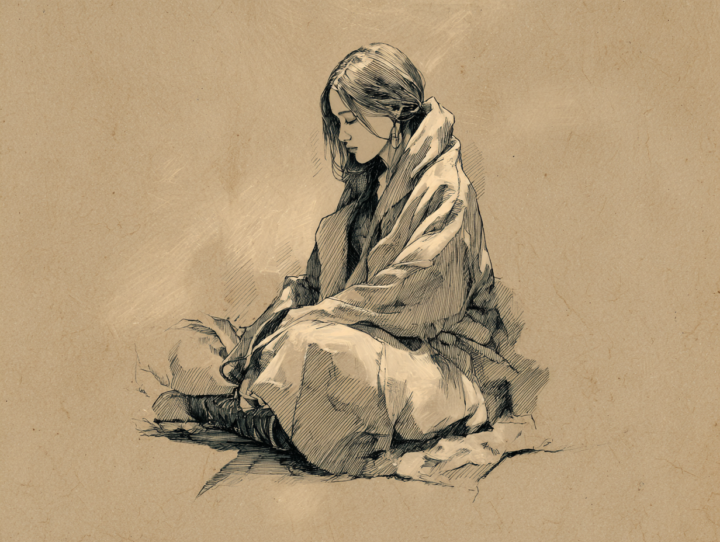
I have been conducting extensive research over the Christmas period on how politics and the media operate to maintain power structures and the agendas of those in power. Writing up what I have found makes it feel nearly impossible to effect change. The systems seem so glued up, so stuck in their ways, and so immune to influence from outside forces. How can such systems be changed? But then you only need to think about the Soviet Union, the Berlin Wall, Apartheid in South Africa and Brexit - the UK breaking from the European Union. All things that seemed too hard to accomplish. It seemed that it would take a revolution or some massive external force to effect change. But each was the result of growing public knowledge, mutual trust, and the collapse of the power structures at the top. One day, people realised that what humans build can be dismantled and new systems can replace it. This realisation does not entirely alleviate the grief, the desire to find a scapegoat or the guilt at my failure to act, my wish to have more agency, or desire to shout louder. Still, it does make me rally and move forward, one step at a time, towards change. I have added a module on Grief, Blame and Guilt. It is my exploration of my own state and seeking guidance on how to overcome despondency and return to action. I realised I was probably not the only one feeling this, and a discussion of the issues might be helpful for others. So here it is. In some way, I wish there was one person whom I could pin all this on -- one person - who once caught and punished would make everything okay. But that is not reality. It is not one person - it is all of us and the systems we have created. I hope you find it interesting to learn how I arrived at this. The images below make me think of my daughter and my son many years from now, considering what could have happened, if only... Climate Resilience
2 likes • Dec '25
Some points of view regarding what is discussed here and based on my incredible experiences; Change is Hard at the social level and it's possible with collective thinking; Transformation is more easier, with appropriate leadership; Lack of systems that value education and capabilities to provide value on different levels, opening opportunities; In a corrupt law system with incorrect laws and fundamental laws missing, needing them, you cannot be more than a victim!
Dec '25 •
💬 A question for the community:
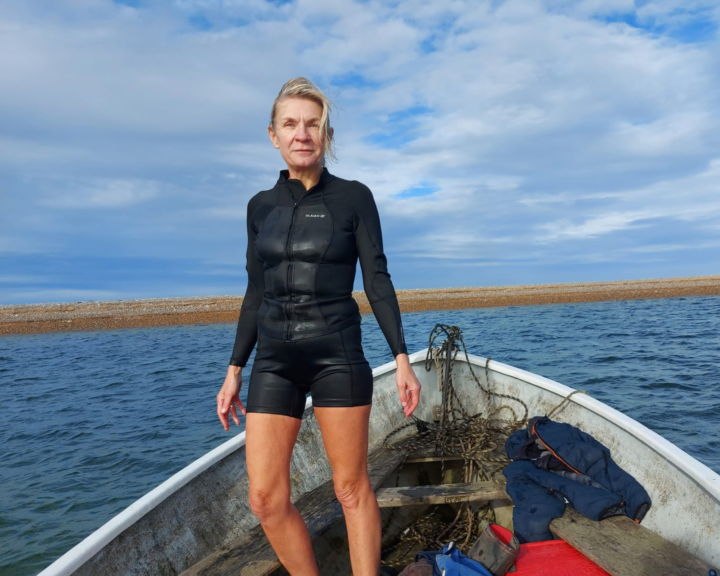
When did you first feel the pull to change direction? I wanted to share this story from The Guardian about Allie Wharf. After years working as a senior foreign producer in conflict zones, she burned out — and eventually found herself doing something completely different: helping restore native oyster reefs on the Norfolk coast through the Luna Oyster Project. What stands out to me is that this wasn’t a neat career pivot. It was slow, uncertain, and rooted in care rather than control. Tiny oyster larvae. Years of groundwork. Long timelines. It raises a question I’d love to hear your thoughts on: 👉 Was there a moment when your relationship with work shifted — from “what can I do” to “what do I want to heal or protect”? No pressure for polished answers. Curiosity is enough. https://www.theguardian.com/uk-news/2025/dec/21/norfolk-coast-oysters-project?CMP=share_btn_url
1 like • Dec '25
I moved from Corporate Social Responsibility to Sustainability through my connection with nature and participating in several international projects, one of these, with a direct focus on Climate Change negative effects. Because I know for sure that nothing can be done without money, I want now to offer my expertise and to support as many entrepreneurs as possible to build/transform in Sustainable Businesses for measurable results in positive Impact in society/in the World.
Dec '25 •
When the cleaners disappear
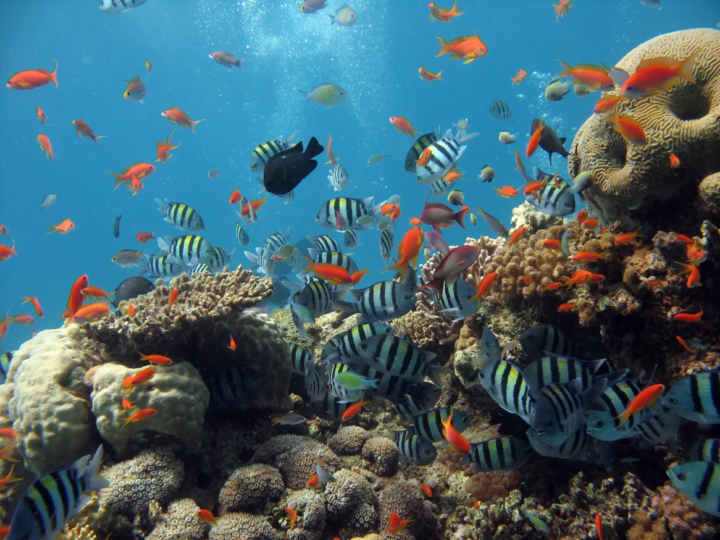
This year, I travelled to Hamilton Island in Australia to see what was left of the Great Barrier Reef. I expected to see a mix: areas of healthy reef, patches of bleached coral, confused fish moving between them. Instead, what we found looked like a lunar landscape. The reef was dead — reduced to rubble and dust on the sea floor. There were a few corals left. Around them swam a few dozen brightly coloured fish. My kids didn’t know this wasn’t normal. They were delighted. I watched them, feeling distraught, horrified, and quietly terrified. In that overheated water, with the air hot above us and sea levels rising, I had a sudden thought I couldn’t shake: this might be the last time I ever see a coral reef. I took photos with a cheap underwater camera and had to wait weeks for them to come back. When they did, they were blurred and dull. I tossed them aside — too depressing to look at. A couple of days later, something clicked. The photos weren’t poor quality. They were accurate. The water was full of particles. The sea floor really was that dull grey-green. Without the coral — and the billions of organisms that live within a healthy reef — nothing was cleaning the water anymore. Dirt, dust, organic matter, all suspended. The system had lost its workers. Years earlier, while training as an architect, I worked on a project designing an oyster-farming community on the Norfolk coast. As part of that, I learned how oysters work — and how astonishingly effective they are at cleaning water. The Norfolk coast once held billions of oysters. For centuries they were cheap food, eaten in huge quantities by Londoners. As stocks were over-exploited, numbers collapsed. Oysters went from poor man’s food to luxury — but something else disappeared too. Billions of tiny workers stopped cleaning the sea. Water quality declined. Life retreated. Now, in the UK, in New York, and elsewhere, people are trying to bring oysters back — not just as food, but as function. To restore water quality. To allow ecosystems to recover. To let life return to places that have slipped into dead zones.
1 like • Dec '25
It is very sad! and with the corals many species of fish disappear such as clownfish Nemo
1-10 of 18

@andra-cretu-4886
I believe Businesses can truly Make This World To Be Better🌏I can train you to implement Sustainability in your Business to Increase Revenue & Impact
Active 2d ago
Joined Oct 17, 2025