
Write something

Dec '25 •
📢 Bonus Lesson: Is Ethical Billionaire Wealth Possible?
Today we’re releasing a special bonus lesson in the billionaire - climate series: Is Ethical Billionaire Wealth Possible? — separating personal virtue from systemic design. This lesson tackles the question that almost everyone asks at some point in the series:“ But what about the good ones?” “What about the generous billionaires?” “Can’t someone be rich and ethical?” This lesson gives a clear and grounded answer — and it reframes the entire conversation. 👉 Start the lesson here: 🔥 What you’ll learn today In this lesson, we explore the difference between personal ethics and system requirements. You’ll learn why billionaire status requires: - global scale - very low marginal costs - labour arbitrage or automation - externalised environmental costs - tax-minimising structures - financial engineering - favourable political conditions …and how each requirement functions like a filter, removing ethical pathways and rewarding extractive ones. The key insight: A person can be ethical. A billionaire cannot be created ethically inside the current system. The system is the issue — not the individual. We also explore what this means for climate justice, democracy, and the future of wealth. 💬 Your Activity for Today Question: Do you think billionaire wealth could ever be ethical — or does the structure of the system make that impossible? Why? You might reflect on: - the role of lobbying - global labour inequality - environmental costs - tax rules - shareholder pressure - monopolies - subsidies and public money - the difference between giving money away and how it was made - Even a short reflection can open up a powerful discussion.

22d •
Most of us see the harvest as the end of the story.
For the farmer, it's the moment when they finally discover whether a year's worth of investment has paid off. Seeds, fertiliser, machinery, fuel, labour, weather, loans and uncertainty all come long before a single pound of income arrives. In this latest Stories from the Farm article, I explore the economics behind growing wheat and why a successful harvest doesn't always mean a profitable year. Understanding the financial pressures farmers face helps us have better conversations about food, prices and the future of farming. I'd love to hear your thoughts after you've read it. Find it here 👉

15d •
🍞 A loaf of bread is never just a loaf of bread.
When we followed the journey from a wheat field to a loaf of bread, we discovered something surprising. The story wasn't really about bread. It was about energy, soil, water, transport, global trade, finance, supermarkets, farming, and the countless decisions that shape what finally appears on our shelves. Now we're taking the next step. We're asking a bigger question: What incentives shape those decisions? Why are farmers under pressure while food prices keep rising? Why do a handful of buyers have so much influence? Why do systems that produce abundance also create insecurity? The new lessons don't start with villains or conspiracies. They start with a simple observation: People and organisations usually respond to the incentives in front of them. When those incentives reward short-term extraction rather than long-term stewardship, the consequences appear everywhere—from our food system to housing, healthcare, education, and even the way our economies are measured. The loaf of bread was never just about bread. It was a window into how our world works. If we want to build more resilient communities, we first need to understand the systems that shape our everyday lives. That's what this new series is about. 🌱 Understand the system. See the connections. Build better futures together.
4
0

27d •
📚 New Deep Dive Series: Understanding Our Changing World
Most of us know that the world is changing. We hear about climate change, extreme weather, rising food prices, AI, water shortages and political instability almost every day. But how do these global issues actually affect our own communities? That's the question behind our new Has2BGreen Deep Dives. Each Deep Dive explores one of the six major challenges we believe every community should understand: - 🌾 Food Security - 💧 Water Stress - 🌡️ Extreme Heat - 🌊 Flooding - 🤖 AI & Work - 🤝 Social Fragmentation - These aren't quick articles. They're designed to help you understand how each system works, why experts are becoming concerned, what changes we may see over the coming years, and how communities can become more resilient. Our first Deep Dive is Food Security, spread across eight easy-to-read chapters. Rather than focusing on fear or worst-case scenarios, it looks at the remarkable global system that brings food to our tables, the pressures it's beginning to face, and why resilience matters more than ever. Our aim isn't to tell you what to think. It's to give you the knowledge to ask better questions, spot the changes happening around you, and become part of the conversation about creating stronger, more resilient communities. We hope you'll enjoy the journey—and we'd love to hear your thoughts and experiences as we explore these topics together. Global Issues. Local Action. Stronger Communities. 🌍💚 🌾 Begin with the Opener: But the Shelves Are Full. It asks a simple question with a surprisingly complex answer—and sets the scene for the entire Deep Dive 👉

May 25 •
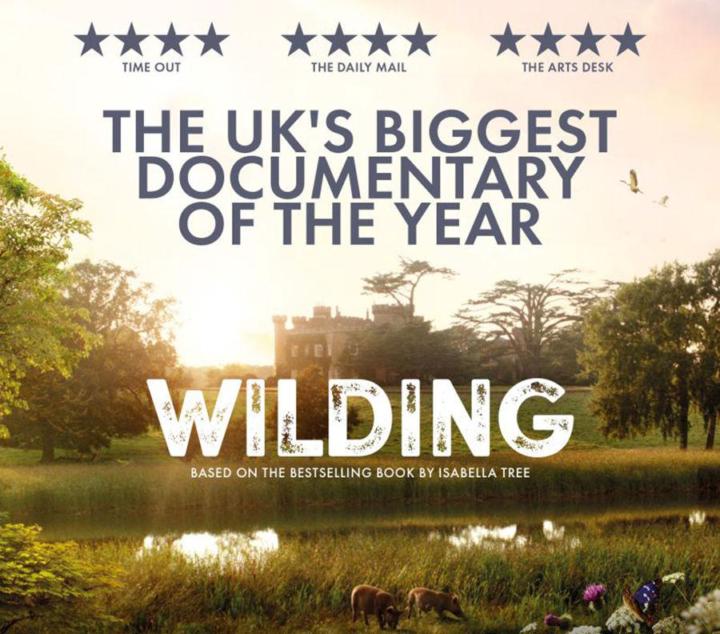
Wilding - Film about the rewilding of the Knepp Estate
I’ve just written a review of the documentary Wilding — the story of the rewilding project at Knepp Estate in England. What struck me most is that it’s not really a film about “saving nature”. It’s a film about control, uncertainty, recovery, and what happens when damaged systems are finally given space to breathe again. Unlike many climate documentaries, it avoids panic and moralising. Instead, it quietly asks a difficult question: What if nature already knows how to heal — if we stop overwhelming it? The film also raises deeper questions about farming, economics, land ownership, resilience, and whether modern society has become too disconnected from living systems to recognise what restoration even looks like anymore. I found it thoughtful, emotionally grounding, and surprisingly hopeful without pretending everything is fine. Full review here 👉
1-30 of 49
powered by
skool.com/has2bgreen-3767
Learn, act, and lead on climate change: from basics to advocacy to real-world action. A global hub for solutions, stories, and change-makers.
Suggested communities
Powered by