Activity
Mon
Wed
Fri
Sun
Feb
Mar
Apr
May
Jun
Jul
Aug
Sep
Oct
Nov
Dec
Jan
What is this?
Less
More
Owned by Santia
A space for athletes, parents, and coaches to connect, learn, and unlock NIL deals and recruiting opportunities.
Memberships
A Front Row Seat
530 members • Free
AchieveGreatness.com (FREE)
4.9k members • Free
Skoolers
190.1k members • Free
407 contributions to Winning Your Way

8h •
What the New Participation Agreement Means for Athletes & Families
I want to bring this article to your attention because it highlights an important shift happening in college sports right now. There is growing discussion around a new participation agreement tied to college sports enforcement. In simple terms, athletes may be asked to sign agreements that outline expectations, rules, and consequences related to NIL, eligibility, and participation. Here’s why this matters for athletes and parents 👇🏽 1. NIL Is Becoming More Formalized What started as a loosely defined space is moving toward more structure. That means clearer rules — but also more accountability. 2. Agreements = Responsibility When athletes sign participation agreements, they’re not just agreeing to play. They’re agreeing to follow specific guidelines around NIL activity, representation, and conduct. 3. “I Didn’t Know” Won’t Be a Defense As enforcement systems evolve, lack of education won’t protect athletes. Understanding what you’re signing — and how NIL fits into it — is critical. 4. This Affects Families Too Parents are often helping guide decisions, review contracts, and support athletes. These agreements make it even more important for families to be informed and aligned. The bigger takeaway: College sports is moving toward more oversight, not less. That’s exactly why we focus so heavily on education, foundation-building, and doing things the right way from the start. This is also why we teach athletes to: • Slow down before signing anything • Ask questions early • Understand rules before opportunities arise • Build their brand with intention, not shortcuts 👉 Read the full article here: https://www.nytimes.com/athletic/6971878/2026/01/14/csc-participation-agreement-college-sports-enforcement/ If you read this article and had questions or concerns, drop them below. These are the conversations that help protect athletes long-term.
0 likes • 7h
@Dr. Cedric Shephard Jr. yes! Absolutely
8h •
Helping Your Athlete Think Beyond “Just Posting”
I want to give parents a simple way to support their athlete’s content without feeling like you’re micromanaging. Before your athlete posts, ask this one question: “What do you want someone to do after they see this?” That question alone helps athletes move beyond “just posting” and start posting with intention. If they can’t answer it, the post isn’t done yet and that’s okay. You don’t need to pick captions or manage accounts. You don’t need to understand algorithms. Your role is clarity, not control. This is exactly what we worked on in our last coaching call, helping athletes understand that effort without direction leads to frustration, but effort with intention builds momentum. Small conversations like this at home lead to big growth over time. If you’re a parent and you’ve tried this question already, let us know how it went.

1d •
👏 Thank You, Andy - NIL Financials Made Clear 👏
We are so grateful to @Andy Ogide for taking the time to educate our Winning Your Way Community on the financial side of NIL. 💰 From understanding the importance of setting up an LLC, to learning how to navigate taxes, save wisely, deduct expenses, and invest for long-term financial security, Andy broke down what can often feel like an overwhelming part of NIL into clear, actionable guidance. 🏢 Thank you, Andy, for sharing your expertise and real-world experience. Your insight is going to help so many of our athletes and families feel more confident, prepared, and empowered as they navigate NIL. 🙌 Missed tonight’s Speaker Series Call? Hit the replay button and don’t miss out on this powerful NIL financial knowledge! Drop your biggest takeaway or question about NIL financials below. 🎥

1 like • 10h
Thank you so much for pouring into everyone last night @Andy Ogide !!
1d •
Tune in to the live with our community Financial Advisor, Andy
We are currently live right now and @Andy Ogide is answering all financial related questions our NIL, don’t miss out on this extremely important topic!
0 likes • 12h
@Michele Starr Glad you found it!
1d •
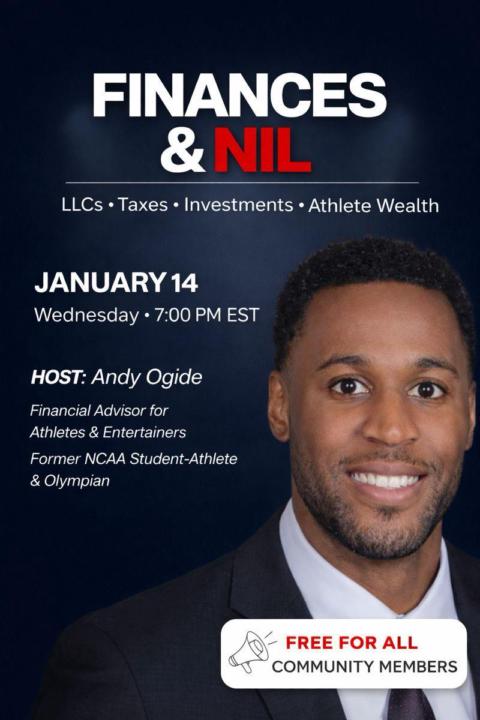
🎤 Speaker Series LIVE Tonight with Andy Ogide 🎤
💰 NIL isn’t just about signing deals, it’s about managing the money the right way. 📊 Tonight, @Andy Ogide is breaking down the financial side of NIL every athlete should understand. ⏰ We are going LIVE TONIGHT at 7:00pm EST right here in the Community. ❓ What financial question are you bringing tonight to ensure your NIL money is working for you? Drop it here and get ready for an evening of invaluable NIL insights from an industry expert.
0 likes • 1d
So excited!!
1-10 of 407

@santia-deck-6180
Winning Your Way: NIL community helping athletes + parents land brand NIL deals, build influence, and gain recruiting exposure.
Active 1m ago
Joined Aug 19, 2025
Powered by