Activity
Mon
Wed
Fri
Sun
Aug
Sep
Oct
Nov
Dec
Jan
Feb
Mar
Apr
May
Jun
Jul
What is this?
Less
More
Memberships
Engagement Design Collective
21 members • Free
11 contributions to Engagement Design Collective

Feb 18 •
Book Club
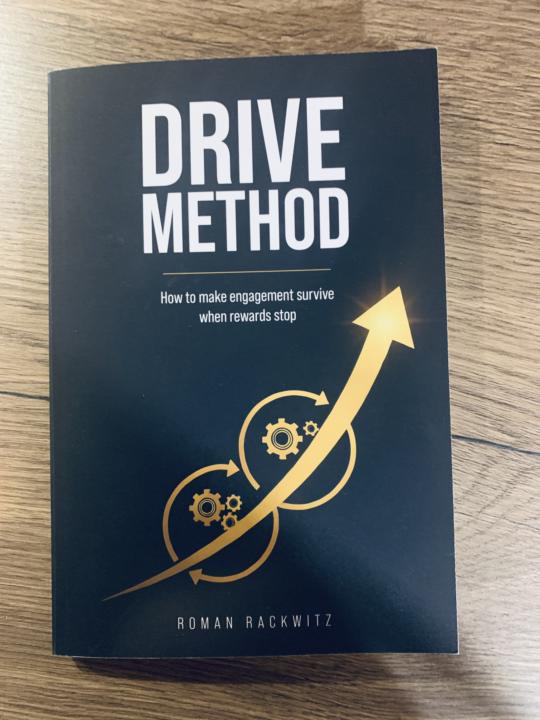
Yesterday, some of our community members started their book club with the 'Drive Method'. Of course, I'm curious 😂 How was it? For everyone: Wondering if you already participated in a book club? How was it? Which book did you read?

1 like • Mar 2
Our first session was set to get to know each other and set expectations and commitments. But this week, we're diving into it! 🤓 - Expect so positive noise.
Feb 23 •
Gamification stays homeless (and is cursed to stay so)
If you type “gamification” into LinkedIn today and just scroll the feed for a few minutes, something interesting happens. You do not find one clear definition. You find twenty. For some, it is a UX layer. For others, a loyalty lever. For others, a learning format. And for many, unfortunately, it is still points, badges, and leaderboards. Which is exactly what the serious part of this field has been trying to move beyond for more than a decade. And yet, that image refuses to die. If you look at the dominant narrative without rose-tinted glasses, something paradoxical has happened. In many contexts, gamification has become exactly what it originally set out to replace. A classic motivation program. Built on rewards. Driven by artificial competition. Decorating unchanged systems with cosmetic game mechanics. That also explains why the term still has no real home. As long as gamification is primarily understood as an incentive wrapper, it will remain strategically blurry. It gets parked in marketing, then in L&D, then in product. Rarely is it treated as what it could actually be: Context architecture for repeated voluntary energy investment. The real question for us as Engagement Designers is not which definition is currently “winning.” The better question is: What kind of performance system are we actually trying to build? One that pushes behavior in the short term. Or one that pulls people in for the long run. If gamification is to have a serious future as a discipline, it needs more than new buzzwords. It needs a clear positioning beyond the point economics. That is where the real work begins inside the Engagement Design Collective. This is also why I wish I wouldn't have been branded as the Gamification-Pope in the first place. Because we 'lost the war' and Gamification is still seen as a childish carrot & stick approach. And I don't believe that this will change. This is just too sexy for marketing, L&D, HR and UX
1 like • Mar 2
My spontaneous answer: the carrot and stick approach is so ingrained in our society, as parents, teachers, managers... For this to change, we would need to recognize the other as an autonomous human (of equal value), but L&D, HR, UX, School tend to objectify people, as vessels, workforce, users, and so on.
Jan 8 •
A short reflection on the pulse check we ran here.
Seven votes. Four orientations. Zero right or wrong answers. Here is how the group distributed itself: Two people start with the self. One person starts with the story. One person starts with the performance. Three people start with the situation. That alone already tells us something important: Not about quality but about focus. What became very visible in the comments is that people are not arguing about what matters. They are revealing where their attention naturally goes first when they think about development, growth, or change. 1. Those who start with the self look inward first. Identity, traits, consciousness, roles, meaning. The assumption here is that understanding who I am precedes any sustainable change. Systems come after clarity. 2. Those who start with the story look at how meaning is constructed. How performance and self get interpreted, narrated, justified, and sold to others and to oneself. Change begins by reshaping the narrative that holds everything together. 3. Those who start with performance focus on output, standards, practice, and improvement. What must get better? What can be trained? What excellence actually looks like in behavior, not in intention. 4. And those who start with the situation look at context. Constraints. Feedback loops. Resources. Pressure. Roles. Real-life conditions. The belief here is that behavior is shaped less by intention and more by the environment people are placed into. I (for example) voted for the situation. Not because the self is not important. Not because story or performance is secondary. But, from my POV in practice, context decides what is even possible to do and how humans are 'framed'. @Bernardo Letayf, my community co-founder (and whose work I really admire), would start with performance. That difference is not a conflict. For you, as a community member, it actually is an asset. Because motivation design, engagement design, UX, learning design, and leadership design all quietly answer this question first, whether consciously or not: Where do you start?
0 likes • Jan 20
“If you start with the self, you design reflection, identity work, autonomy, and inner alignment. If you start with the story, you design framing, language, meaning, and narrative coherence. If you start with performance, you design practice, feedback, standards, progression. If you start with the situation, you design constraints, cues, systems, and environments.” All of these are intertwined in my work as a learning experience designer. I voted The Self, but I find the narrative is so often entangled with, if not a fundamental part of, the self. I also really appreciated the comments about context and the example of parenting (totally relate as a parent to a 7-year-old! 😄). And of course, in the end, it often shows up in behaviors. For my work, the path often looks like this: → Behaviors → Context → Self → Narrative
1 like • Jan 20
@Roman Rackwitz I wouldn't call it a hierarchy but a process or the path I mentioned before. From a learning design perspective, you usually start with identifying the behaviors you want to change/reinforce. If you follow a human centered approach (like I do), you would work on understanding the context and the people you're designing for and make them part of the analysis and design process. And here's is where narrative takes a strong part in my work. Talking to people, analyzing the context and using empathy methods help you understand people's narrative, and the narrative that is build/reinforced through the context. Do they match? (Probably not). And, here's where my work as a storyteller comes in. I work with stakeholders to recognize mismatches, identify big ideas and make sure that the learning experiences we develop are grounded on these ideas, so we can drive the behaviors we want.
Dec '25 •
Where else (apart from gamification) do you have interests?
Gamification was my personal starting point into the vast world of behavioral economics. I later gained a better understanding of many aspects of gamification after delving deeper into behavioral economics and behavioral psychology as a whole. Evolutionary biology and neuroscience have also shaped my view of gamification. What other topics interest you in this context, but outside the traditional industry of gamification?
2 likes • Jan 20
Experience Design, Behavioral Design, Engagement Design, Cognitive Psychology.

Jan 19 •
Book circle
--English version below — Ein Buch gemeinsam lesen, von den Erkenntnissen der anderen und vom Austausch profitieren. Das wollen @Teresa Moreno , Nina Kroner und ich einmal ausprobieren mit Roman Rackwitz’s Buch „Drive Method - How to make engagement survive when rewards stop“. In unserem Buchclub sind noch einige Plätze frei, wer dabei sein möchte. Zwei Highlights: 1. Die/der erste, der hierunter kommentiert mit „Ich will dabei sein!“, bekommt von Roman das Buch geschenkt, um bei unserem Buchclub dabei zu sein. 1000 Dank, Roman 🙏 2. Roman ist beim Termin im April dabei und wir können ihn mit unseren Fragen löchern. Und das ist unser Fahrplan: - 13.02. von 12-13 Uhr: Kick-off & Getting to know - 24.02. von 12-13 Uhr: Discussion about Part 1 - 18.03. von 12-13 Uhr: Discussion about Part 2 - The Myth Section - 31.03. von 12-13 Uhr: Discussion about Part 2 - The Insight Section - 15.04. von 12-13 Uhr: Part 3 - 23.04. von 12-13.30 Uhr: Final session with Roman Rackwitz Wer ist dabei? Bitte meldet euch bis 31.01. hier auf diesen Beitrag mit einem Kommentar. —— Reading a book together, benefiting from each other's insights and exchanges. That's what Teresa Moreno, Nina Kroner and I want to try with Roman Rackwitz's book “Drive Method - How to make engagement survive when rewards stop.” There are still a few spots available in our book club for anyone who would like to join. 2 Highlights: - The first person who writes the comment “Yes, I want to be part of it” below this post will get for free a book from Roman to participate in our book club. Many thanks to Roman 🙏 - Roman will participate in our last Webcall in April where we can ask him all of our questions. And this is our schedule: - 13.02., 12-13: Kick-off & Getting to know - 24.02., 12-13: Discussion about Part 1 - 18.03., 12-13 : Discussion about Part 2 - The Myth Section - 31.03., 12-13: Discussion about Part 2 - The Insight Section - 15.04., 12-13: Part 3 - 23.04., 12-13.30: Final session with Roman Rackwitz
1 like • Jan 20
Yay!! Can't wait to start!
1-10 of 11

@teresa-moreno-4749
Learning Experience Designer | Interactive Storyteller
Active 50d ago
Joined Nov 17, 2025