

Dec '25 •
Game Mechanic #7
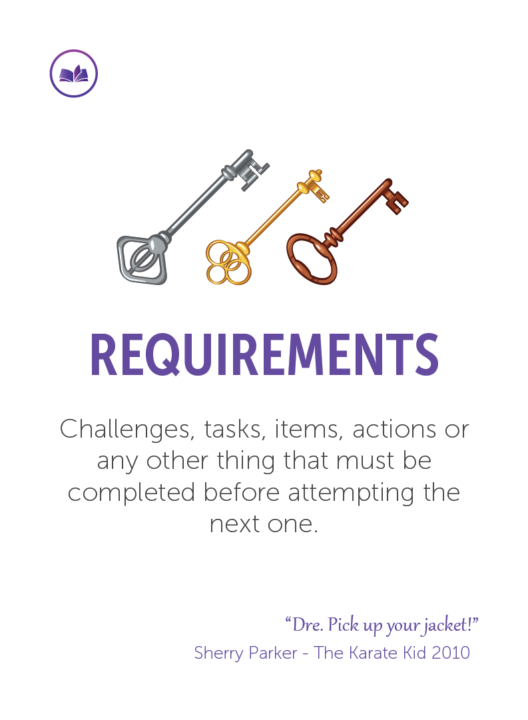
Locking the progress of the users behind access points is key for engagement. In the [ Metroidvania ] game types this is done particularly well. These types of games are platformers where you can't get to all the places in the map because you are lacking special abilities. One of the most common ones is a double jump. So at some point, you get to a place in the map where you wonder "How do I get up there?" The idea of this mechanic in a gamification setting is to look at it differently as if it was just a list but more about what the users become by increasing their skill unlocking new places. Yes, of course it can be a simple key or password to open a lock, but, if we take it further, wen can design award-winning systems. Use the abilities and skills of the users as mechanics themselves and new horizons appear.
1
0
Dec '25 •
Game Mechanic #6
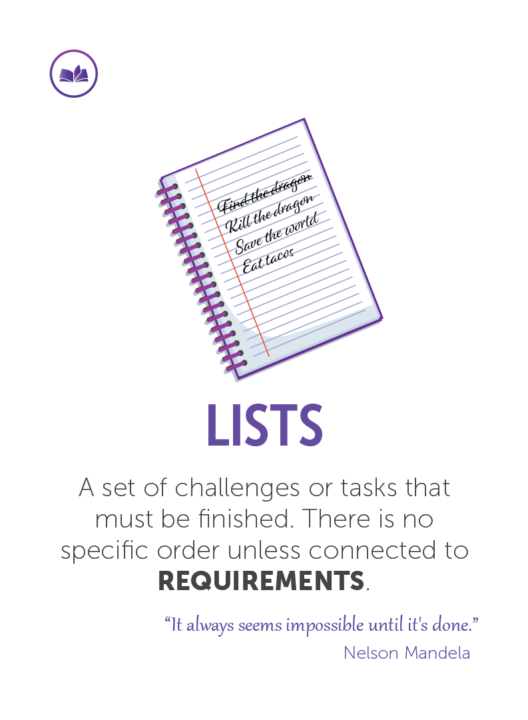
Really? Lists? a list is a game mechanic? Well... a list is a series of elements. We can use a list in whatever context we want so when we connect it to our design, it can become a game mechanic. All we have to do is give the list a context within the narrative. "This is the list of ingredients to create the ultimate cake. You must go find all of them so we can greet our guests with this delicacy" And now the list has value. If you lose the list its an issue. If you don't get all the items the cake won't be real and then the story can't flow. :) That's it. When we give the right context, the tool becomes a game mechanic :)
Dec '25 •
Game mechanic #5
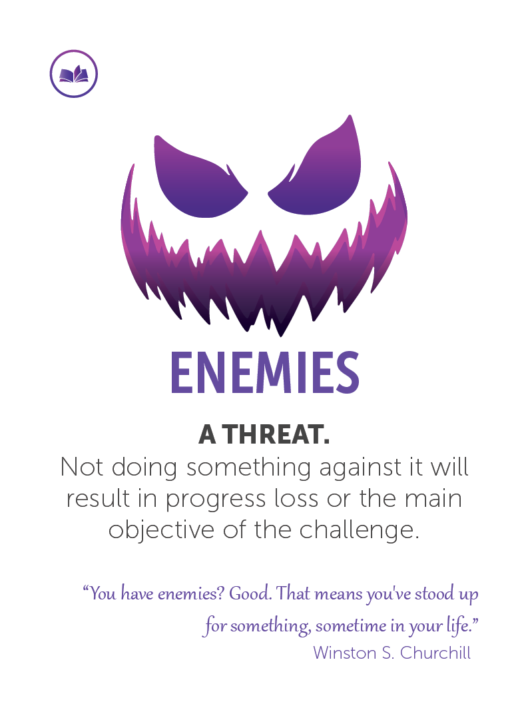
This mechanic ties very well when I explain the concepts of Cool Monsters, Friends and Punches. The idea is to design a threat to the user. Something that won't allow them to stay idle. If there is a threat, there must be action. Usually we tie this to the story but it's not required. It can simply be a timed challenge but the timer isn't a countdown clock but the room filling with water. The point is to add pressure and guidance. The users learn they are at risk and not doing something will result in progress loss.
1
0
Dec '25 •
Game Mechanic #4
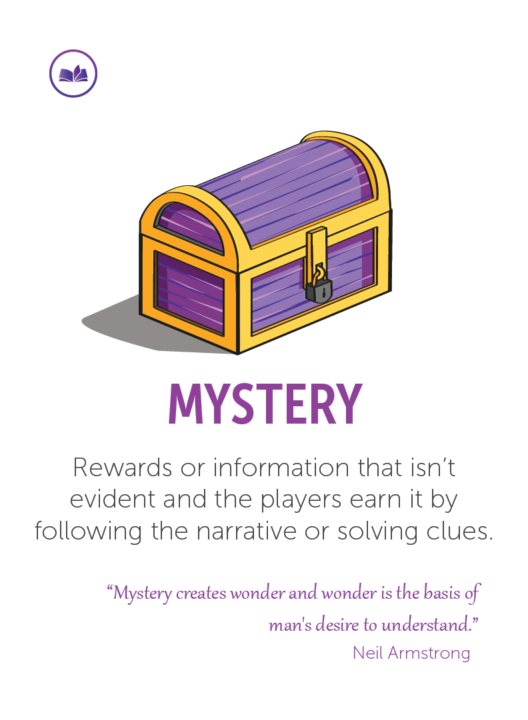
Who did that? Where was it? What should we do? How do we solve this? Why is this happening? All valid questions that allow you to create Mystery. The goal is to reward the users with ACCESS. The Mystery mechanic isn't about the object they receive but what happens because of it. The creators of South Park, Trey Parker and Matt Stone, have a core narrative technique often referred to as the "But, Therefore" model. Instead of only adding to a story, learning why things keep happening build engagement. It allows us to kind-of reverse engineer a story as we play through it discovering more and more to it without weak or invented justifications. Think of this as avoiding using Aliens as the obvious next step in the story. Mystery is really powerful and works wonders when tied with a storyline.
0
0
Nov '25 •
Game Mechanic #3
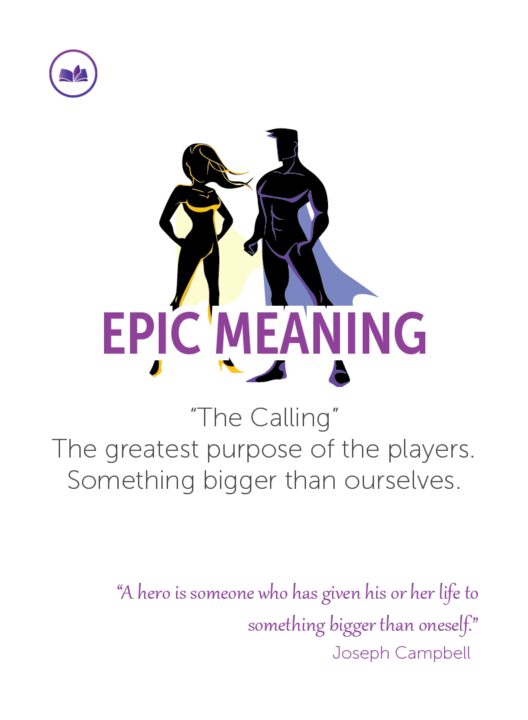
For quite some time, I believed that purpose was the most powerful motivator from the R.A.M.P. model. I designed this card with that idea and it's not a lie. I know today that PROGRESS and MASTERY are far more powerful because they drive purpose (there are many psychological terms involved in this, let me know if you need me to elaborate). Epic meaning is a a pretty great tool. Not all designs will allow it but when it can be present, don't hesitate to use it.
1-7 of 7
powered by
skool.com/engagement-design-collective-1843
This decade belongs to designers who understand drive, not rewards.
We deal with the transition from being a reward dealer to engagement designer.
Suggested communities
Powered by