Song of the Thirteen Postures
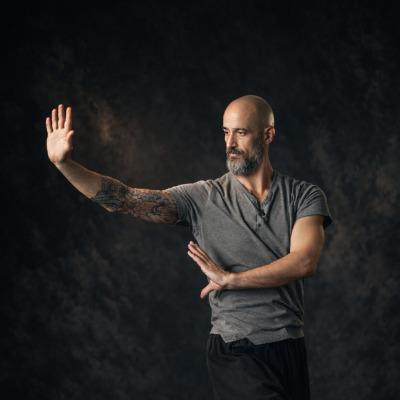
It is said that Tai Ji began as just 13 postures or energetic concepts that were practiced over and over again to build skill, strength and versatility. What we know today as Tai Ji forms were something created later to preserve specific techniques and representations of those initial concepts. Those 13 postures, or energies are the concepts we work on daily in our practice and are listed below. Attached is simple translation of the song of the 13 postures. A 'song' in this context is referring to a 'kou jue" in Mandarin or what is known as Ku Den in Japanese. These are pneumonic devices to help remember important information. These were also used to keep information contained, as often context and some direct instruction is necessary to understand the meaning of the Kou Jue. It is also important to remember that Chinese is a pictographic and idiomatic language so that the use of characters is very intentional and often sparingly used to prevent the inevitable misunderstandings due to the nature of the language. The Song represents both an individual and a shared study acknowledging that the practice spans both of those spaces. As you cultivate your practice allow your understanding and connection to these concepts to build organically. It is important to remember the evolution of these arts started very simply, based on intention, awareness and moving the body according natural rhythms. As they evolved the methods grew to create greater versatility and access, but our goal as students of the arts is to find the root of our practice just as the past teachers did. If you find a particular part interesting, or have a question or comment about any of the song feel free to share! I will start first in the comments! Later I will also share some insights from past teachers on the Song. 13 Postures/Energies of Tai Ji 1. ward off (Peng) 2. roll back(lu) 3. Press(ji) 4. push(an) 5. pluck(cai) 6. split(lie) 7. elbow/wrap(zhou) 8. shoulder/lean(kao) 9. advance (jin) 10. retreat (tui) 11. turn right(zuo gu) 12. turn left (you pan) 13. center (Zhong ding)