Write something

Jan 14 •
I'm Not
This is a reverse poem I wrote at a time when I was feeling bad about myself. I struggle with depression and anxiety. "I'm Not" I'm good for nothing I will never believe My life is meaningful I see the truth I'm worthless Even though my mind tells me I'm an amazing person I'm not Why am I so awful? (Now read from bottom to top)

Feb 4 •
Florida
Well I know I didn't deserve those things that were done to me And if I hear it wasn't your fault one more time I'm going to lose my mind He's dead I'm alive Now I don't fucking sleep at night Thanks for all those great memories I got 99 problems and some scars from the games we played Thanks for teaching me how to love someone someday I was strong and I did not cry I learned to accept the pain So save the best you have for a rainy day Because these were supposed to be the best years of my life now all I want to do is build a house of matchstick and burn myself alive Along with all the other things I keep buried deep inside These were supposed to be the best years of my life I envied you when you shot yourself in flamingo paradise Because you were gone and I was stuck here alive And I will never know why And I cant get you off my mind Thanks for all those pretty memories https://youtu.be/uoKh7wqdXVw?si=BQ7ig-GbvTy__hya
1
0
Feb 2 •
Forget me Not
Sit on the hill at night and stare at the stars Imagine us as a constellation In the shape of a heart I left these songs for you A little piece of my heart a little forget me not To remember when I'm gone And yes this is a love song written for you A tiny little piece of my heart to help get you through

Jan 20 •
The Long Aisle and the Short Road
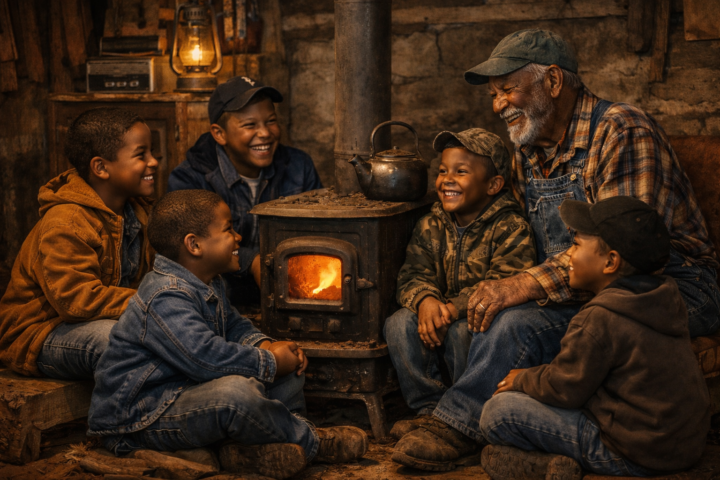
Today, the snack aisle is longer than the walk to the produce. If there is produce, it’s wrapped in plastic, stamped with a date, and priced like memory is a luxury. We call it convenience. We call it progress. We call it evolution. But evolution doesn’t ask permission before it changes us— and it doesn’t promise improvement. Creel Road (where my grandparentslived) didn’t have aisles. It had seasons. Food wasn’t something you reached for— it was something you worked toward. Saturday evenings came with sore backs, purple fingertips, and the quiet satisfaction of knowing your body had earned its rest. After chasing hogs, hauling hay, shelling peas till your fingers burned, my granddad would reach for parched peanuts. No flavors. No mascot. No shiny bag. Just heat, salt, patience—and time. We grew them sometimes. Then one day it got cheaper to buy ten pounds than to grow them ourselves. That moment didn’t feel important then. It should have. Because that’s when the trade happened. We traded labor for leisure. Skill for convenience. Knowledge for packaging. And eventually, participation for consumption. They taught us poverty was a lack of money. Creel Road taught me it was a lack of relationship. Being “poor” isn’t not having snacks. It’s not knowing where food comes from. It’s not recognizing hunger until it’s been marketed to you. It’s forgetting that nourishment used to be a conversation between land, hands, and gratitude. We kept the traditions that didn’t require effort and abandoned the ones that made us whole. Now we pass down brand loyalty instead of planting knowledge. We inherit cravings instead of skills. And the irony cuts deep— because we have more choices than ever, yet fewer roots. What I miss about being a kid isn’t hardship. It’s clarity. Life was smaller then, but meaning was larger. A peanut wasn’t a snack. It was a memory. A lesson. A reminder that simplicity wasn’t deprivation— it was alignment. Creel Road didn’t make us rich. It made us aware. And maybe that’s why, standing in a store with a hundred flavors of empty,
0
0
1-22 of 22