Activity
Mon
Wed
Fri
Sun
Sep
Oct
Nov
Dec
Jan
Feb
Mar
Apr
May
Jun
Jul
Aug
What is this?
Less
More
Memberships
Alive Poets Society
1.7k members • Free
POETRY THAT MAKES $ENSE
146 members • Free
4 contributions to POETRY THAT MAKES $ENSE
Jan 20 •
The Long Aisle and the Short Road
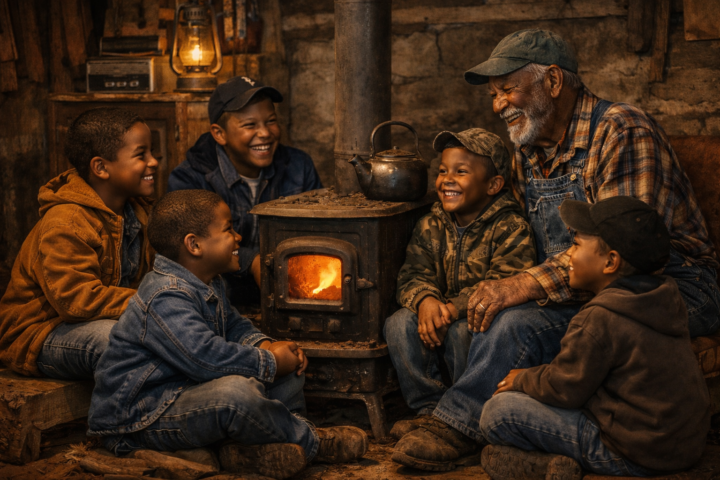
Today, the snack aisle is longer than the walk to the produce. If there is produce, it’s wrapped in plastic, stamped with a date, and priced like memory is a luxury. We call it convenience. We call it progress. We call it evolution. But evolution doesn’t ask permission before it changes us— and it doesn’t promise improvement. Creel Road (where my grandparentslived) didn’t have aisles. It had seasons. Food wasn’t something you reached for— it was something you worked toward. Saturday evenings came with sore backs, purple fingertips, and the quiet satisfaction of knowing your body had earned its rest. After chasing hogs, hauling hay, shelling peas till your fingers burned, my granddad would reach for parched peanuts. No flavors. No mascot. No shiny bag. Just heat, salt, patience—and time. We grew them sometimes. Then one day it got cheaper to buy ten pounds than to grow them ourselves. That moment didn’t feel important then. It should have. Because that’s when the trade happened. We traded labor for leisure. Skill for convenience. Knowledge for packaging. And eventually, participation for consumption. They taught us poverty was a lack of money. Creel Road taught me it was a lack of relationship. Being “poor” isn’t not having snacks. It’s not knowing where food comes from. It’s not recognizing hunger until it’s been marketed to you. It’s forgetting that nourishment used to be a conversation between land, hands, and gratitude. We kept the traditions that didn’t require effort and abandoned the ones that made us whole. Now we pass down brand loyalty instead of planting knowledge. We inherit cravings instead of skills. And the irony cuts deep— because we have more choices than ever, yet fewer roots. What I miss about being a kid isn’t hardship. It’s clarity. Life was smaller then, but meaning was larger. A peanut wasn’t a snack. It was a memory. A lesson. A reminder that simplicity wasn’t deprivation— it was alignment. Creel Road didn’t make us rich. It made us aware. And maybe that’s why, standing in a store with a hundred flavors of empty,
0
0

2 likes • Dec '25
"The Cost of Deaf Ears" The world don’t wait for stubborn minds, It spins with speed and shifting signs. You clutch your pride like armor worn, While futures pass—reborn, reborn. You scoff at change, you flinch at truth, Still preaching dreams you lost in youth. But silence speaks, and wisdom waits Beyond the walls you fabricate. Close your mouth—open your soul, The world’s a fire, not a scroll. You read the past with hardened eyes, While blind to present’s clear disguise. They watch you—those with open hearts, Seeking guidance, seeking starts. But you, a lighthouse with no flame, Let shadows play the ancient game. See, fate is fickle—make no mistake, She gives, she bends, then she can break. She’ll whisper once, then walk away And let you rot in yesterday. So hush your ego, plan with grace, Embrace the shift, reclaim your place. For those who fight the tides of change Will drown in depths they called "unchanged."
1 like • Jan 8
@Victor Mendez appreciate it bro...
Dec '25 •
The Cost of Deaf Ears
The world don’t wait for stubborn minds, It spins with speed and shifting signs. You clutch your pride like armor worn, While futures pass—reborn, reborn. You scoff at change, you flinch at truth, Still preaching dreams you lost in youth. But silence speaks, and wisdom waits Beyond the walls you fabricate. Close your mouth—open your soul, The world’s a fire, not a scroll. You read the past with hardened eyes, While blind to present’s clear disguise. They watch you—those with open hearts, Seeking guidance, seeking starts. But you, a lighthouse with no flame, Let shadows play the ancient game. See, fate is fickle—make no mistake, She gives, she bends, then she can break. She’ll whisper once, then walk away And let you rot in yesterday. So hush your ego, plan with grace, Embrace the shift, reclaim your place. For those who fight the tides of change Will drown in depths they called "unchanged."
Dec '25 •
Upstream Logic
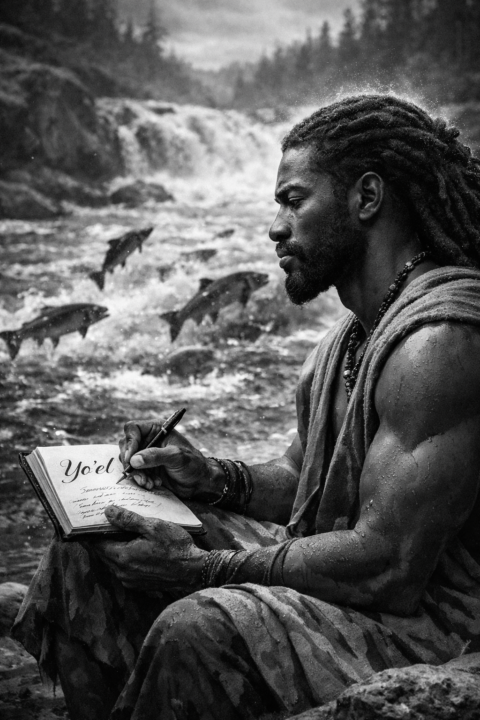
They say salmon swim upstream against bone-breaking current, muscle screaming, purpose louder than pain. No applause. No audience. Just instinct dressed up as destiny. She dies when the work is done— never meets her children, never questions the river, never asks who decided this direction? And we call that nature. But here’s the glitch in the system— humans weren’t coded like fish. We were born unfinished. Upgradeable. Dangerous. Free will wasn’t a gift— it was a risk. So they centralized learning. Standardized truth. Put God on a schedule and freedom behind a desk. Church said: follow. State said: comply. Corporations said: produce. And suddenly choice came with a price tag most people couldn’t afford. They trained us to swim upstream toward money, toward titles, toward borrowed dreams— then blamed us for drowning. See, the salmon never questions death because death is part of the program. But humans? We trade eternity for a paycheck and call it maturity. Here’s the part they don’t teach: If a salmon ever turned around— ever rode the river instead of fighting it— she wouldn’t be a failure. She’d be a myth. And that’s why they hate deviation. Because one thinking individual infects the water with possibility. “All for One” is control. One story. One ladder. One acceptable life. But “One for All”? That’s dangerous. That means I master me so thoroughly that my freedom becomes your permission. I’m not here to swim where you point. I’m here to ask who built the dam and who profits from exhaustion. I don’t want instinct in a suit. I want consciousness in motion. Because the real tragedy isn’t dying after purpose— it’s living and never choosing it.
0
0
1-4 of 4
@joel-powell-1284
Writer of truth. Philosopher of the soul. I turn experience into story and questions into light.
Active 65d ago
Joined Dec 10, 2025