
🔥
29d •
70+ Pose Library
Here is a full 70-pose library that covers wrestlers, promoters, trainers, managers, referees, announcers, commentators, sponsors, and fan-facing marketing. Hope it helps. Basic Poses 1. Standing Stand straight with a natural posture. Use: Profile photos, introductions, roster pages. 2. Sitting Sit comfortably and naturally .Use: Interviews, podcasts, character content. 3. Walking Walk forward with purpose. Use: Entrance graphics, promotional posters. 4. Turning Turn the body slightly to create movement. Use: Dynamic profile images. 5. Looking at Camera Look directly into the camera. Use: Trust-building, personal branding. 6. Looking Away Look off into the distance. Use: Serious or reflective content. 7. Pointing Point toward a person, logo, or object. Use: Calls to action and promotions. 8. Arms Crossed Cross arms confidently. Use: Authority and confidence. 9. Hands in Pockets Relaxed casual stance. Use: Lifestyle content. 10. Holding Object Hold a prop naturally. Use: Belts, merchandise, microphones. Movement Poses 11. Jumping Captured in mid-air. Use: High-energy promotions. 12. Leaning Lean against a wall, ropes, or object. Use: Relaxed character shots. 13. Reaching Reach toward the camera or audience. Use: Fan engagement graphics. 14. Thinking Hand on chin or face. Use: Storytelling content. 15. Waving Friendly wave. Use: Fan appreciation posts. 16. Looking Back Turn and glance over the shoulder. Use: Dramatic visuals. 17. Running Sprint toward the camera. Use: Action posters. 18. Bending Slight crouch or bend. Use: Preparing for action. 19. Profile Complete side view. Use: Character sheets. 20. Relaxed Comfortable seated pose. Use: Casual branding. Wrestler Poses 21. Champion Pose Belt held proudly across chest. Use: Championship announcements. 22. Belt Raised High Raise championship overhead. Use: Victory graphics. 23. Belt Over Shoulder Carry title casually. Use: Champion branding. 24. Flexing Show strength and physique. Use: Athlete marketing.
🔥
May 4 •
THE 10-YEAR-OLD TEST
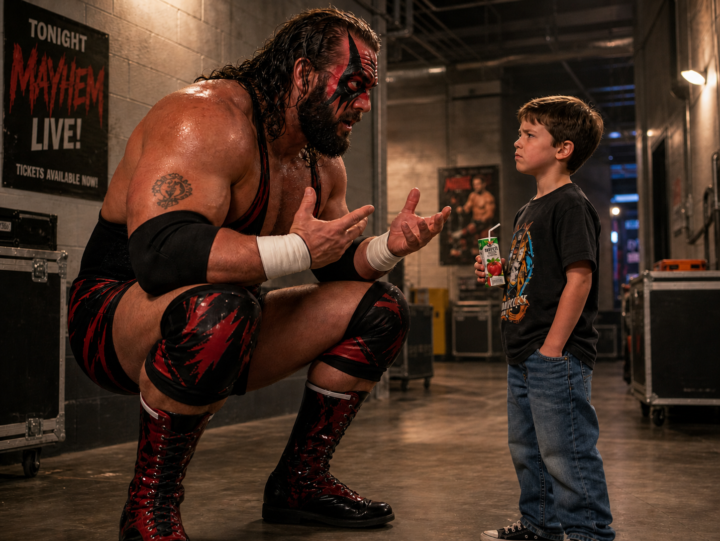
Here is what I know. If you cannot explain your character to a 10-year-old holding a juice box, your character is not ready. I have watched wrestlers cut promos for years. The good ones tell you who they are in one sentence. The lost ones talk for five minutes and you still have no idea what they want. A kid will not pretend to get it. A kid will look at you like you have three heads and walk away to find his mom. That is the most honest crowd you will ever wrestle in front of. So try this today. Walk up to a kid in your life. Nephew. Niece. Neighbor. Your buddy's son. Tell them who your character is in one sentence. If they nod and say "cool," you are on to something. If they look confused, you have work to do. And that is a gift. Because right now you found out for free what would have taken you a year of bad matches to learn. Your character does not need to be complicated. It needs to be clear. Reach is built on people remembering you. Reputation is built on people understanding you. Revenue is built on people believing in you. None of that happens if a 10-year-old cannot follow what you are doing. Here is your homework for the week. Write your character in one sentence. Drop it in the comments. Let the room sharpen it with you. The mat does not lie. Neither does a kid with a juice box. Who are you?
🔥
Mar 16 •
REACH: Why Nobody Knows Your Name (And Why That's Killing Your Career)
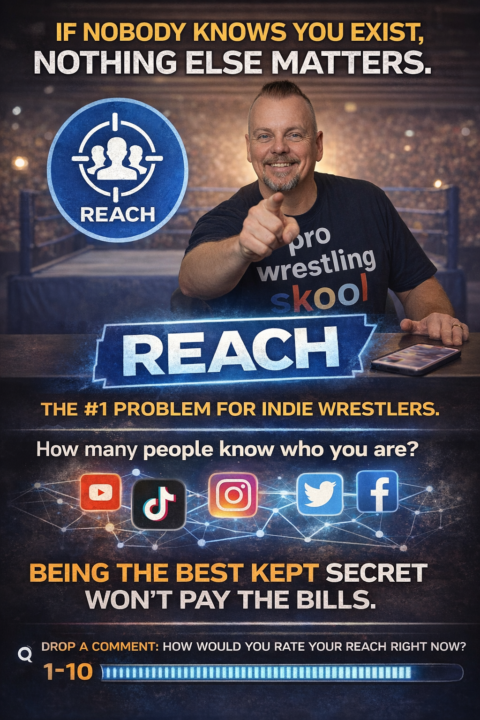
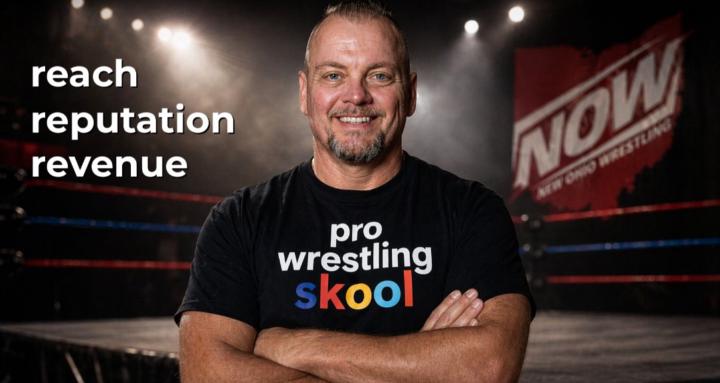
I need to tell you something that might sting a little. You could be the best wrestler in your state right now. The smoothest worker. The hardest bumper. The most creative mind in any locker room you walk into. And none of it matters if nobody knows you exist. That's a Reach problem. And almost every indie wrestler has one. WHAT REACH ACTUALLY MEANS Reach is the first R in the 3R Framework. And it's first for a reason. Reach is your visibility. Your discoverability. It answers one question: Can people find you? Not just the 200 people at your local show on Saturday night. Can someone in Texas find you? Can a promoter in Florida find you? Can a fan in the UK stumble onto your content and become obsessed with you? If the answer is no, you don't have a Reach problem. You have an invisibility problem. And invisibility is a career killer. You can't get booked by promoters who don't know your name. You can't sell merch to fans who've never seen your face. You can't build a following if you're only performing for the same 50 people every month. Reach is the foundation. Without it, Reputation and Revenue have nothing to stand on. THE OLD WAY IS DEAD In the old days, Reach meant one thing. Television. If you weren't on TV, you were invisible. The promoter controlled your Reach. The network controlled your Reach. You had zero say in who saw you and when. That world is gone. Today you are holding a television studio in your pocket. Your phone can reach more people than most wrestling shows on cable in the 1990s. That's not hype. That's math. You don't need a promoter's permission to be seen anymore. You don't need a TV deal. You don't need a manager or an agent or a connection. The gatekeepers are gone. The only thing standing between you and an audience is you. WHY MOST WRESTLERS ARE INVISIBLE So if the tools are free and available to everyone, why are most wrestlers still invisible? Because they don't treat Reach like a priority. They post once or twice a week. Maybe a match clip. Maybe a selfie in their gear. Then they sit back and wait.
🔥
Feb 13 •
It’s My Fault…
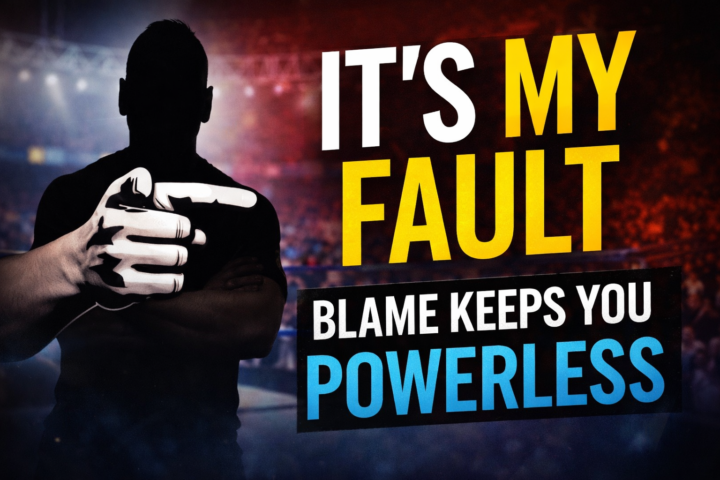
Those three words will change your wrestling career. If you miss a booking… If you don’t get over… If the crowd doesn’t react… If your merch doesn’t sell… The easy move is blame. Blame the promoter. Blame the booker. Blame the politics. Blame the crowd. Blame “the business.” Blame feels good for five minutes. But blame makes you weak. When you say, “It’s my fault,” something powerful happens. Now you’re in control. If it’s your fault, you can fix it. If it’s your fault, you can improve. If it’s your fault, you can train harder, promo better, build smarter, market stronger. That’s leadership. The best wrestlers I’ve seen don’t complain. They adjust. They ask, “What could I have done better?” They review their matches. They study their reactions. They improve their look, their conditioning, their mindset. Taking responsibility doesn’t mean beating yourself up. It means taking your power back. You want freedom in this business? Own your results. Drop one excuse today. What’s one thing in your wrestling career that you’re ready to take full responsibility for?
🔥
Jan 25 •
My Battle With Imposter Syndrome
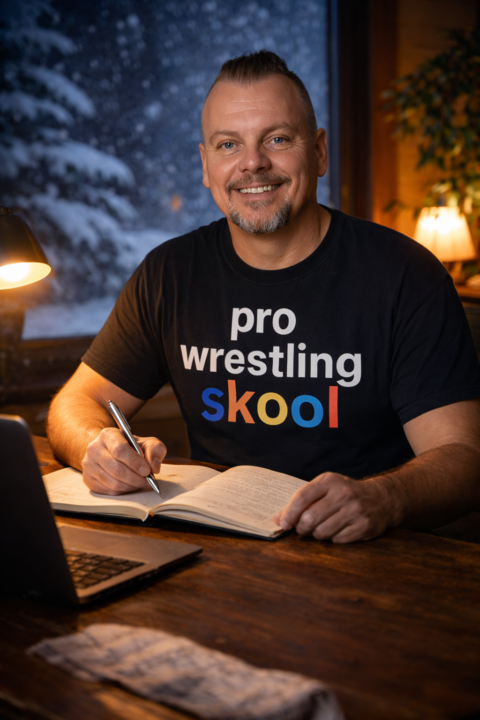
Up late at night… Watching the snowstorm… Trying to stay warm… And working on my book that’s years in the making… I am finally making some great progress and I am excited to share this book with the pro wrestling world and beyond… Actually, the book is becoming much bigger than I originally thought so I may have to break it down into two seperate books… We shall see 😀 For anyone interested, I’d like to share just a small piece of what I’ve been working on. It was a game changing moment in my life, and it kinda got me thinking about how far I’ve come, so I just wanted to put it out there. **My Battle With Imposter Syndrome** Most of my life I've struggled with imposter syndrome. Even as a kid, I would get into my own head. Am I good enough? Who do I think I am? What makes me think I can do this? That voice followed me everywhere. Into school. Into work. Into wrestling. When I was actively wrestling, I didn't know what mental training was. I just pushed through. I ignored the voice and hoped it would go away. It didn't. It wasn't until after I had to leave pro wrestling that I discovered mental training. I started listening to Tony Robbins seminars. I started reading books by Napoleon Hill, Elsie Lincoln Benedict, Dale Carnegie, Earl Nightingale, and Jim Rohn. These people opened my eyes to how the mind actually works. How the voice in your head can be changed. How your beliefs shape your reality. I also started studying business training. Russell Brunson. Dan Kennedy. Dean Graziosi. Alex Hormozi. Gary Vaynerchuk. Perry Belcher. Frank Kern. And many others. Learning how to market and build businesses also taught me how to build my mindset. Here's the thing. Studying all of these brilliant people is how I learned the stuff I'm writing about in this book. Everything you've read so far? The laws of success? The mental frameworks? The business strategies? I didn't make this up. I learned it from people who figured it out before me. I took their wisdom and applied it to pro wrestling.
1-11 of 11
skool.com/wrestling
Get booked. Build your brand. Get paid. The career system for indie wrestlers who want wrestling to pay the bills, not drain them.
Leaderboard (30-day)
1
+6
2
+6
3
+1
Powered by