
Write something

Mar 14 •
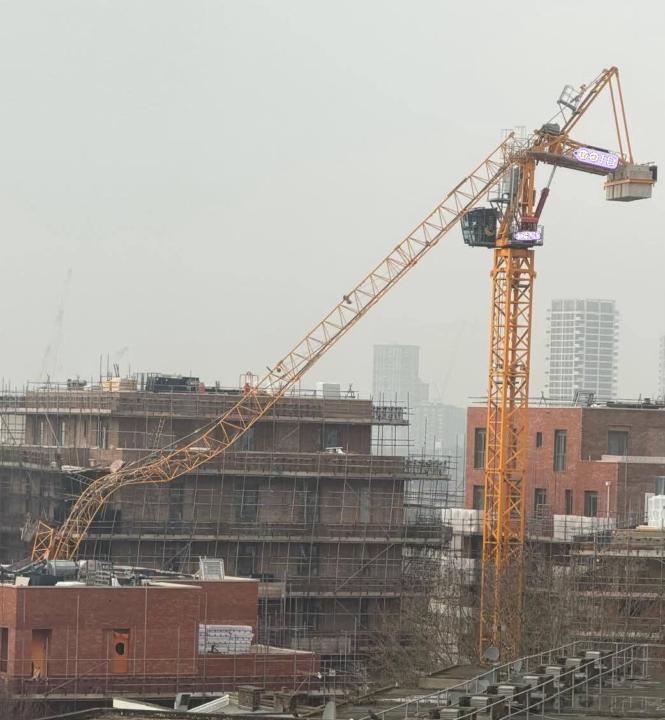
Case Study 101: Tower Crane Jib Collapse (Possible Rope Entanglement)
Incident Overview During lifting operations on a residential project in Kensington, London, a tower crane jib collapsed onto the construction site. Images from the incident potentially show the hoist ropes running across sections of the scaffolded building, suggesting the hook block or rope may have become entangled with the scaffold structure. The site was evacuated immediately and no injuries were reported, but the potential consequences were severe. What Went Wrong Hoist rope or hook block likely became caught on scaffold structure Crane movement continued while rope was restrained Abnormal lateral forces transferred into the crane structure Possible overload of the jib connection or slew system Key Lessons Learned Tower cranes are designed for vertical lifting, not restraint forces Hook block and rope position must be constantly monitored near structures Entanglement hazards can generate structural loads far greater than the lifted load Safety Recommendations Control crane operating envelopes near scaffolding and buildings. Maintain visual control of the hook block at all times and stop operations immediately if abnormal resistance or rope tension is observed. Incident source Tower crane collapse reported on a residential development site in Kensington, London (March 2026). Incident under investigation by authorities. ● LOLER Reg. 8 – Lifting operations must be properly planned and supervised. ● PUWER Reg. 11 – People must be protected from falling objects or plant movement. ● PUWER Reg. 4 – Equipment must be used safely within its intended limits. ● BS 7121-1 – Crane operations must account for surrounding structures and obstructions. Key point Crane structures are not designed to resist restraint forces caused by entanglement. Wolf Lifting Dynamics – Safe Lifting UK | Case Study 101
0
0
Jan 30 •
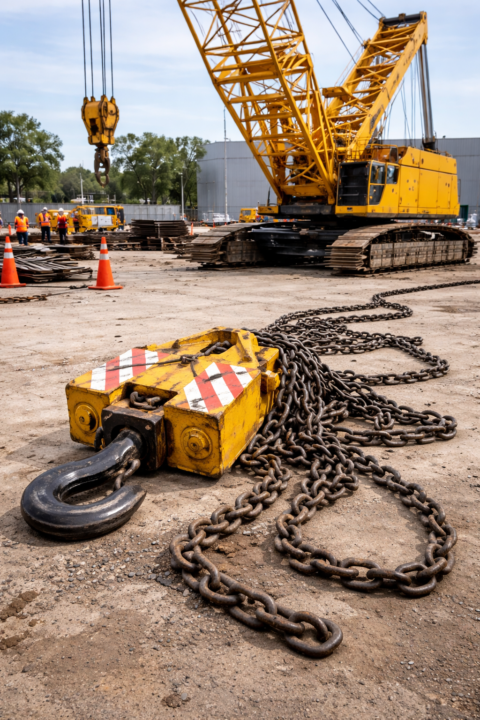
Case Study 100: Hook Block and Chain Detachment During Setup.
Category: Erection / Set-Up Interface Risk Incident Overview On a major London project, an incident occurred during crane-related set-up activity where an over-hoist chain became entangled, causing chain and block to fall free. No one was injured, but the drop potential was severe. What Went Wrong Unexpected movement/entanglement occurred mid-task Secondary retention/controls were not sufficient to prevent a drop A “non-lifting moment” became a lifting incident Key Lessons Learned Set-up phases carry lifting-level risks Suspended components require the same controls as live lifts Secondary retention prevents drops when things snag Safety Recommendations Control entanglement hazards, maintain exclusion zones during set-up, and ensure secondary retention where drop risk exists. Incident source Crossrail safety alert on auxiliary jib chain detachment causing chain/block to fall. https://learninglegacy.crossrail.co.uk/wp-content/uploads/2016/01/Health-and-Safety-Alert-140917-Crawler-Crane-Auxiliary-Jib-Chain-Detachment-Update.pdf ●LOLER Reg. 8 – Set-up phases require control. ●PUWER Reg. 11 – Falling object risks must be prevented. ●PUWER Reg. 4 – Equipment must be used safely. ●BS 7121-1 – Set-up activities are lifting operations. Key point Set-up is not “low risk”. Wolf Lifting Dynamics – Safe Lifting UK | Case Study 100
0
0
Jan 29 •
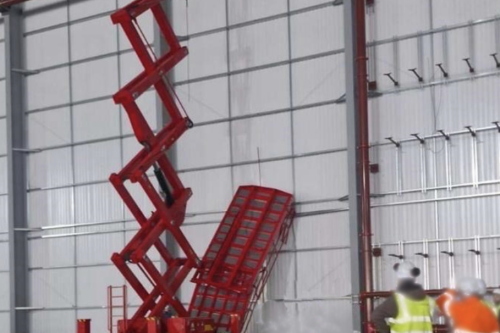
Case Study 97: Scissor Lift Deck Detached From the Machine
Category: MEWP Failure / Equipment Integrity Incident Overview In March 2025, two workers were seriously injured in Northampton when the platform/deck detached from a large scissor lift during use. The incident triggered investigation and industry safety attention. What Went Wrong Mechanical integrity failed at the interface between deck and arms Pre-use checks did not prevent operation in a dangerous condition Consequences were immediate and severe Key Lessons Learned MEWP failures are sudden and unforgiving “It worked yesterday” is not a check Equipment integrity is a frontline control Safety Recommendations Strengthen MEWP inspection discipline, defect reporting, and isolation rules. If anything feels abnormal (movement, noises, pins, connections), stop and quarantine the machine. Incident source: Industry reporting on Northampton scissor lift platform detachment. https://www.constructionenquirer.com/2025/03/28/deck-falls-off-huge-scissor-lift-at-winvic-site ●LOLER Reg. 4 – Equipment must remain stable and secure. ●PUWER Reg. 5 – Equipment must be maintained. ●PUWER Reg. 6 – Inspections must detect defects. ●PUWER Reg. 11 – Prevent people being struck or crushed. Key point Structural failure gives no warning. Wolf Lifting Dynamics – Safe Lifting UK | Case Study 97
0
0
Jan 26 •
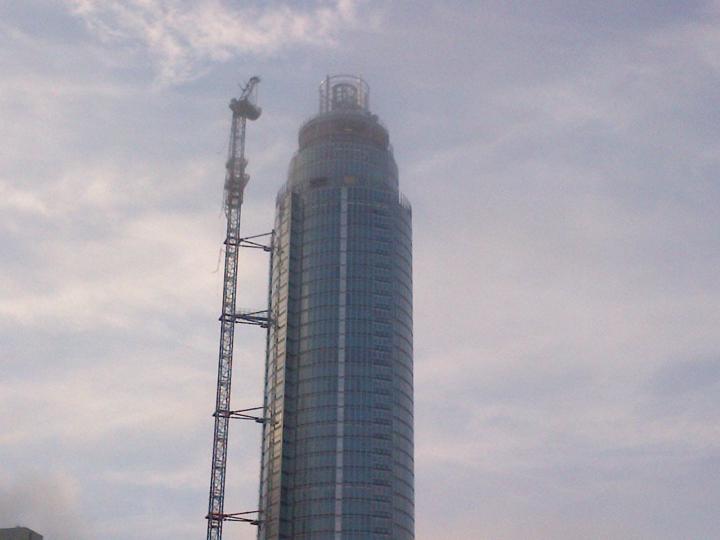
Case Study 96: Vauxhall Helicopter Crash. Crane Jib Struck in Poor Visibility
Category: Public Interface / External Hazard Incident Overview In January 2013, a helicopter struck a tower crane jib at St George Wharf, Vauxhall and crashed into the street. The pilot and a pedestrian were killed and others were injured. The investigation highlighted visibility conditions and obstacle awareness. What Went Wrong Crane became a critical public interface hazard External/aviation interface risk exists in dense urban zones Consequences extended far beyond the site boundary Key Lessons Learned Urban cranes create off-site risks Not all hazards are “construction workers” Emergency response planning matters Safety Recommendations Where aviation/river/road interfaces exist, ensure robust hazard awareness measures, emergency plans, and strict control of crane configuration/out-of-service arrangements. Incident source/ Reference AAIB special bulletin on the Vauxhall helicopter crash. https://assets.publishing.service.gov.uk/media/5422f95ae5274a1317000781/S1-2013_-_Agusta_A109E_G-CRST_03-13.pdf Key point Crane risk does not stop at the fence. Wolf Lifting Dynamics – Safe Lifting UK | Case Study 96
0
0
Jan 4 •
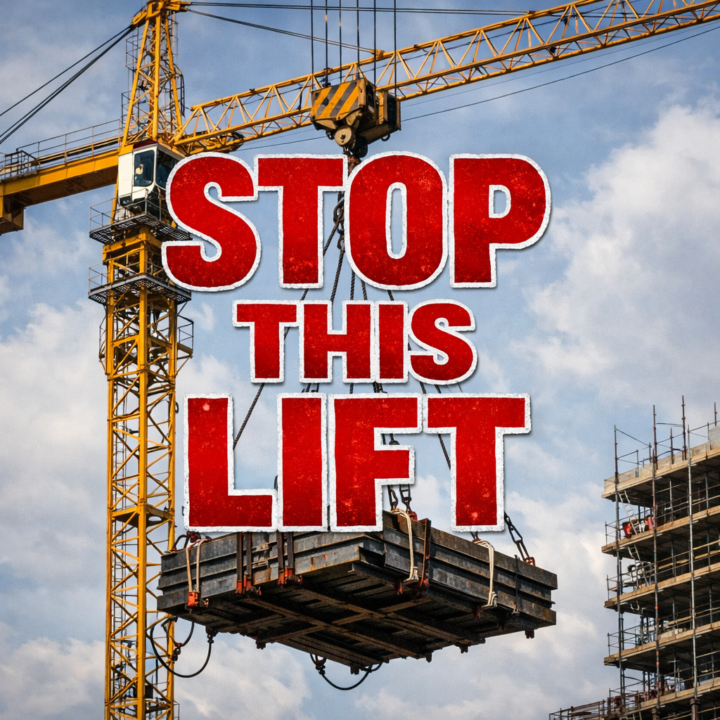
Case Study 58: Nobody Stopped It Safety Culture & Behaviour
Incident Overview It wasn’t one lift. It wasn’t one person. It was one of those days on a busy construction site where nothing felt right, yet everything carried on as normal. Throughout the shift, several lifting operations took place with clear warning signs: questionable slinging methods, rushed decisions, missing supervision, and loads travelling over active work areas. At multiple points, people noticed that something wasn’t right. Conversations happened. Looks were exchanged. A few comments were made quietly between operatives. But no one stopped the lift. Each time, the assumption was the same: “It’ll be fine.” The crane moved. The load landed. Nothing went wrong — this time. By the end of the day, the site had avoided an incident, but only by luck. The real failure wasn’t technical. It was cultural. What Went Wrong The lifting team relied on experience and familiarity instead of formal control. Although risks were recognised, no one exercised stop-work authority. Responsibility became diluted, and silence replaced leadership. Key Lessons Learned - Recognising risk without acting changes nothing - Silence is still a decision - Luck is not a control measure Safety Recommendations Stop-work authority must be actively encouraged, supported, and expected at all levels. Lifting operations depend on people having the confidence and backing, to intervene when something doesn’t feel right, even if the lift has worked before. •LOLER 1998 Regulation 8 – Organisation of lifting operations Requires lifting operations to be properly planned, appropriately supervised, and carried out in a safe manner. ➜ Failure here was not technical planning, but lack of active supervision and intervention. •PUWER 1998 Regulation 8 – Information and instructions Regulation 9 – Training Workers were able to recognise unsafe conditions, indicating awareness, but training and instructions were not translated into action, highlighting a behavioural gap. •BS 7121-1 Roles, responsibilities and safe systems of work
0
0
1-7 of 7
powered by
skool.com/wolf-lifting-dynamics-9548
This community shares real lifting case studies, consultancy insights, and site-proven lessons covering cranes, supervision, planning, and execution.
Suggested communities
Powered by