
17d (edited) • Planning & Pre-Lift Failures
Spider Crane vs HIAB: Choosing the Right Crane for the Job
Incident Overview
A site team needed to lift materials into a restricted internal courtyard with limited access, poor turning space, and sensitive ground conditions.
The first suggestion was to use a HIAB / lorry-mounted crane because it was already delivering materials. This looked quicker and cheaper on paper.
However, the lorry-mounted crane required vehicle access, enough outrigger space, and a stable set-up area. A spider crane would have been more suitable because it can access tighter spaces, work inside restricted areas, and set up closer to the lift point. Spider cranes are specifically used where larger cranes or vehicle-mounted cranes cannot easily access, including confined spaces and restricted routes.
What Went Wrong
Wrong crane type considered for the environment.
HIAB selected because it was convenient, not because it was best.
Access route and outrigger space were underestimated.
Ground conditions were not fully assessed.
Risk of collision with site structures increased.
Risk of instability or overturning increased.
The lift was treated as delivery work instead of a planned lifting operation.
Key Lessons Learned
Convenience is not crane selection.
A HIAB is excellent for delivery/offload work, but it is not always the safest choice for restricted lifting.
Spider cranes are better where access is tight, the lift point is internal, or the crane must get closer to the load.
Lorry loaders still require proper stabiliser deployment and strict adherence to manufacturer instructions. HSE has also warned of serious crush risks around some lorry-loader stabilisers.
A smaller crane can sometimes be the safer crane.
Safety Recommendations
Choose the crane based on the lift environment, not availability.
Check access, ground bearing, outrigger positions, radius, and collision risks.
Use a spider crane where access is restricted or the lift point is difficult to reach.
Use a HIAB where the task is suitable for controlled delivery/offload work.
Never allow the delivery driver to become the whole lifting plan.
Stop the lift if the crane cannot be positioned safely.
Incident Source
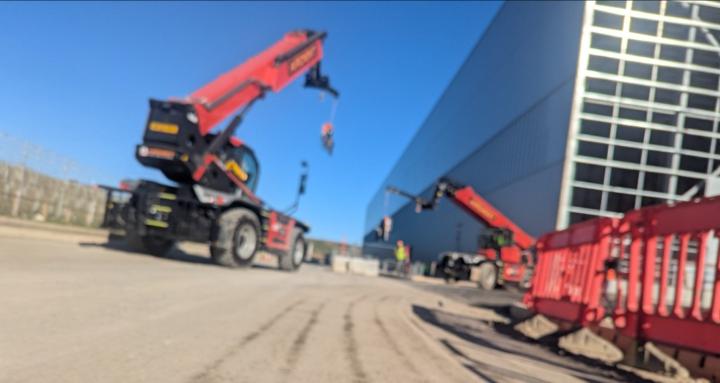
Live construction site 2026. Industry guidance explains that spider cranes are compact machines suited for confined spaces, restricted access, and areas where conventional cranes or vehicle access are limited. Lorry-mounted cranes are useful for flexible delivery and unloading, but they still require suitable stabiliser deployment, planning, and safe operating space.
Regulatory Mapping
● LOLER Reg. 8 – Lifting operations must be properly planned and supervised.
● LOLER Reg. 4 – Stability must be ensured before lifting.
● PUWER Reg. 4 – Equipment must be suitable for the task and site conditions.
● PUWER Reg. 11 – Crush and struck-by risks from plant movement must be controlled.
● BS 7121-1 – Crane selection must match the load, access, radius, ground and environment.
● CDM 2015 – Site activities must be coordinated safely between contractors.
Key Point
The best crane is not the one already on the lorry.
It is the one that can complete the lift safely, with control.
0
0 comments
Spider Crane vs HIAB: Choosing the Right Crane for the Job
powered by
skool.com/wolf-lifting-dynamics-9548
This community shares real lifting case studies, consultancy insights, and site-proven lessons covering cranes, supervision, planning, and execution.
Suggested communities
Powered by