Aug 30 (edited) • Access & Logistics Risks
Staying Behind or Under a Crane: The Blind-Zone
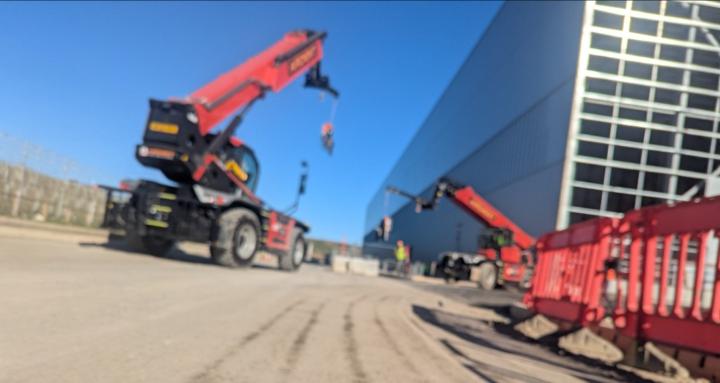
On a busy construction site, slingers and other site personnel were observed using the area behind and underneath a crane as a temporary place to stand, wait or shelter.
To them, it appeared to be out of the way.
In reality, they had positioned themselves inside one of the most dangerous areas around operating plant.
A crane can slew, travel, reposition or move unexpectedly as operations change. The operator may have significant blind spots and may have no idea that someone has walked behind, underneath or alongside the machine.
One unexpected movement could leave that person with nowhere to escape.
What Went Wrong
Personnel entered the crane’s operating area unnecessarily.
Workers positioned themselves within operator blind spots.
The crane was treated as somewhere to shelter or wait.
Personnel relied on the operator knowing where they were.
Potential slew, counterweight and tracking/reversing zones were not respected.
Safe pedestrian areas were not being used.
Key Lessons Learned
If you cannot see the operator, never assume the operator can see you.
The danger is not limited to the suspended load.
Depending on the crane type, hazards can include:
- Slewing counterweights.
- Tracks and wheels.
- Reversing movements.
- Outriggers and stabilisers.
- Crushing points between the crane and structures.
- Suspended loads and lifting accessories.
- Unexpected crane repositioning.
A crawler or mobile crane may also start travelling after sitting stationary for a period.
Stationary does not mean safe.
The Slinger Has an Extra Responsibility
A Slinger/Signaller should understand plant movement and exclusion zones.
They should therefore be setting the example — not hiding behind the crane between lifts.
If the slinger needs to take a break, wait for another lift or shelter from weather, a designated safe area should be used.
The crane’s footprint is not a welfare area.
Safety Recommendations
Establish clear crane and plant exclusion zones.
Identify counterweight and slew-radius hazards.
Provide designated safe waiting areas for lifting personnel.
Keep pedestrian routes separated from crane movements.
Never sit, stand or shelter underneath or immediately behind operating plant.
Maintain communication before cranes travel or reposition.
Operators should stop if personnel enter their restricted operating zone.
Challenge the behaviour immediately when observed.
Incident Source
Safety-learning scenario based on unsafe positioning commonly observed around cranes and heavy construction plant.
The case highlights how personnel can become comfortable around equipment they work with every day and gradually begin treating dangerous areas as normal places to stand.
Regulatory Mapping
● LOLER Reg. 8 – Lifting operations must be properly planned, appropriately supervised and carried out safely.
● PUWER Reg. 11 – Measures must prevent access to dangerous parts of machinery or stop dangerous movement before a person enters the danger zone.
● CDM 2015 – Construction activities, vehicle movements and pedestrian interfaces must be properly managed.
● BS 7121 series – Crane operations require suitable exclusion arrangements, communication and control of personnel around the lifting operation.
Key Point
Never use a crane as somewhere to hide, wait or shelter.
The operator may not know you’re there.
The crane may move.
And when tonnes of machinery start moving beside you, there may be nowhere left to run.
1
0 comments
Staying Behind or Under a Crane: The Blind-Zone
powered by
skool.com/wolf-lifting-dynamics-9548
This community shares real lifting case studies, consultancy insights, and site-proven lessons covering cranes, supervision, planning, and execution.
Suggested communities
Powered by