Case Study 105: Contract Lift Carried Out Without Full Site Coordination
Incident Overview
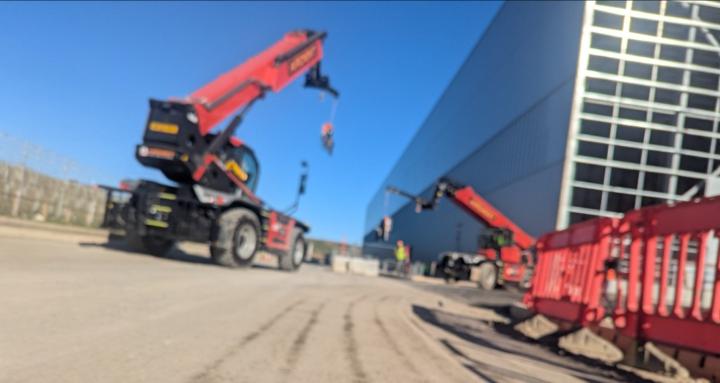
A contract lift was arranged for a busy construction project involving a mobile crane lifting HVAC units onto the roof of a multi-storey building.
The crane company supplied the crane, operator, Appointed Person, and lift supervisor under a full contract lift arrangement.
When the lifting team arrived on site, several critical conditions were not as described during the planning stage:
•Access roads were partially blocked by deliveries
•The agreed crane setup area was occupied by stored materials
•Pedestrian routes crossed directly through the lifting zone
•No exclusion barriers had been installed
•Nearby subcontractors were unaware lifting operations were taking place
Despite these issues, pressure from the project team pushed for the lift to continue to avoid delays.
What Went Wrong
Site conditions did not match the original planning information
Setup area not maintained or protected by site management
No effective coordination between contractors
Exclusion zone not established before lifting began
Pedestrians and workers allowed near suspended loads
Pressure applied to continue despite unsafe conditions
Contract lift responsibilities misunderstood by site team
Key Lessons Learned
A contract lift does not remove the client’s site responsibilities
Site coordination is critical for safe lifting operations
Unsafe site conditions can invalidate the original lift plan
Pressure and programme deadlines create unsafe decisions
If conditions change, the lift must stop and be reassessed
Safety Recommendations
Verify site conditions immediately before crane arrival.
Maintain agreed crane setup and exclusion areas clear at all times.
Ensure all contractors are informed of lifting activities.
Stop lifting operations if the site no longer matches the lift plan.
Clarify responsibilities between principal contractor and crane company before work starts.
Incident Source
Real contract lifting scenario observed on UK construction project (April 2026).
Common failures involving poor coordination between crane supplier and principal contractor.
Regulatory Mapping
● LOLER Reg. 8 – Lifting operations must be properly planned and supervised.
● LOLER Reg. 4 – Equipment must be stable and safely positioned.
● PUWER Reg. 4 – Equipment and systems must be suitable for use.
● BS 7121-1 – Contract lifts require coordination between all parties.
● CDM 2015 – Principal contractor must coordinate site activities safely.
Key Point
A contract lift is not “someone else’s problem.”
If the site is unsafe, the lift is unsafe.
0
0 comments

Case Study 105: Contract Lift Carried Out Without Full Site Coordination
powered by
skool.com/wolf-lifting-dynamics-9548
This community shares real lifting case studies, consultancy insights, and site-proven lessons covering cranes, supervision, planning, and execution.
Suggested communities
Powered by