
Write something

21h •
Daily Dose — Sleep Latency
The Concept Sleep latency refers to how long it takes to fall asleep — not how long or how well you sleep. The Explanation • Sleep onset is tied to nervous system arousal • Hyperarousal delays sleep • The endocannabinoid system influences wake–sleep transitions The Clarification This explains why something can help you fall asleep faster without improving sleep quality. Different sleep processes are controlled by different systems. Understanding which process is affected changes expectations — and decisions.
4
0
4d •
Cannabis & Testosterone — The Science Folder
This section breaks down everything we know and don’t know about cannabis and testosterone — using only peer-reviewed human studies, not internet myths. Inside you’ll find: • The science-backed truth (simple + clear) • What actually affects testosterone (lifestyle factors) • The largest human studies on cannabis users • What old studies got wrong • Notes you can use to optimize your hormones while still using cannabis mindfully Use this as your go-to reference whenever you hear someone say “weed kills your T.” It’s not that simple — and the research shows a different story. Daily Dose: Does Cannabis Lower Testosterone? The Truth Might Surprise You. WHAT THE LARGE HUMAN STUDIES SHOW A U.S. population study of more than 1,500 men found no significant difference in testosterone levels between cannabis users and non-users. Another recent study using human testicular tissue showed that short-term THC/CBD exposure does not impair testosterone production. Across multiple human studies, the pattern is clear: 👉 No consistent evidence that cannabis lowers testosterone long-term. WHAT ABOUT SHORT-TERM DROPS? Some older or very small studies reported temporary hormonal changes after cannabis use — but: • The changes were minor • Short-lived • And returned to baseline quickly Nothing permanent. Nothing clinically meaningful. WHAT DOES AFFECT TESTOSTERONE (PROVEN) These variables matter FAR more than cannabis: • Sleep quality • Stress levels • Strength training • Caloric intake • Body fat percentage • Alcohol consumption Managing these has a much bigger impact than whether you use THC or CBD. THE TAKEAWAY (100% SCIENCE-BACKED): Cannabis doesn’t reliably lower testosterone. It doesn’t reliably raise it either. For most people, it’s neutral. If your sleep, training, and stress are dialed in — cannabis is unlikely to mess with your hormone health. STUDY REFERENCES (simplified): • Large U.S. population study (n = 1,577): no consistent T change
9d •
THC doesn’t create your state — it amplifies it.
When you’re stressed, your sympathetic nervous system (SNS) is active. This increases: • cortisol • heart rate • amygdala activation • internal tension • shallow breathing A 2017 Harvard study showed that stress changes the way THC interacts with CB1 receptors, making sensations feel sharper, faster, and more overwhelming. When you're calm, parasympathetic activity (rest & digest) dominates — so THC feels: • smoother • grounding • more predictable • more enjoyable THC interacts with your state, not just your brain. How does cannabis feel in your body when you're stressed vs calm?
9d •
WELCOME TO THE DAILY DOSE
This is your daily learning ritual. Every day we break down one concept connected to: • cannabis • the endocannabinoid system • the nervous system • breathwork • sleep • stress • performance • recovery • mental health • Whole-body wellness Each lesson is: • science-backed • simple to understand • directly connected to your life • designed to help you use cannabis intentionally • meant to give you at least one practical insight you can apply today This is how we build a healthier relationship with cannabis — through education, awareness, and consistency. Welcome to the Daily Dose. Take it in. Apply it. Live higher.
8
0
11d •
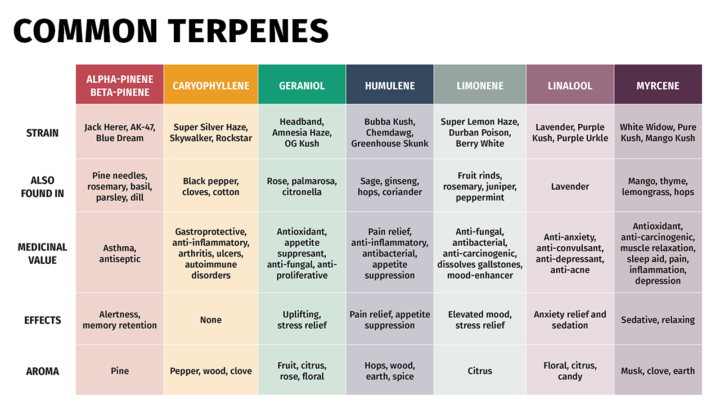
TERPENES — THE MISSING LAYER OF YOUR CANNABIS EXPERIENCE
Most people think weed hits different because of the strain name or the THC percentage. But there’s another layer nobody talks about enough: Terpenes. They’re the natural compounds that give cannabis its smell — citrusy, earthy, piney, sweet — but they also shape how the experience feels. And you’ve already felt this, even if you didn’t know the reason. Ever notice how sometimes cannabis makes you: • more clear • more calm • more present • more social • or more anxious? A lot of that comes down to the terpene profile, not the THC. Here’s how to think about it — simple: Limonene = the “lighten up” terpene.Citrus smell. Mood lift. Cleaner, happier energy. Linalool = the “exhale” terpene.Lavender vibe. Softens tension, great for anxious bodies. Myrcene = the “slow down” terpene.Earthy. Makes the high feel heavier, deeper, more full-body. Pinene = the “clear mind” terpene.Pine smell. Helps you breathe deeper and stay present. Caryophyllene = the “body relief” terpene.Peppery. Helps with stress, inflammation, muscle tightness. This is why two products with the same THC can feel completely different. It’s not random — your body is responding to different terpene instructions. Here’s the part most people never realize: When your nervous system is already stressed or overwhelmed,your body can’t use terpenes the same way. The experience feels inconsistent. This is why we focus on regulation first, cannabis second. So today’s practice is simple: Next time you take a hit or an edible, pause for 5 seconds and ask yourself: “What did this shift in me?“ My energy? My breathing? My mood? My body tension? My thoughts? You’ll start to see patterns. You’ll start learning what actually works for your system. And cannabis stops feeling unpredictable — because now you understand the language. Comment: Which terpene profile usually feels best in your body — energetic, calming, or grounding?
1-11 of 11
skool.com/weed-wellness-lab-8604
Sleep deeper, recover faster, and stress less — using cannabis with intention to live higher every day.
Leaderboard (30-day)
1

+15
2

+10
3

+9
4

+8
5

+7
Powered by