
Write something

3d •
If your struggling to get an remote job, listen close.
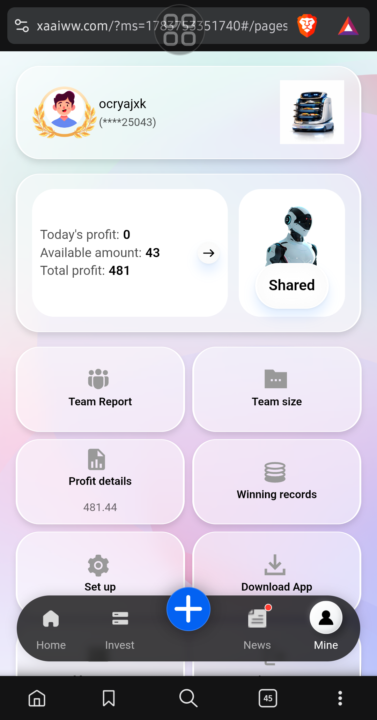
For my fellow men who are freelancers, influencers, and job seekers who are struggling to get by in these crazy times, you might want to take a look at this. I’ve been involved in this project for almost a month now, and I’m still shocked by how easy it is. At first, I thought it was a scam, but after a few days and a few USDC deposits, I was locked in. Getting into this AI project is as simple as it gets: first, complete your tutorials step by step, set your USDC wallet to receive deposits, attend your meetings, do your robot tasks during meeting breaks, promote it, and then get paid. It’s truly that simple. I've already made over $481. The great part is that you can do this on your computer or your phone with no interviews to start. If you are interested or have concerns, let me know, and I’ll walk you through it.

19h •
Video recommendation
I am so glad we are all using paper straws and that the GreenDeal in Europe is working so nicely and is absolutely worth it. 😵 https://www.youtube.com/watch?v=4t6Rie4Fz_I
0
0

6d •
Launched my first software product
Just launched my first software product. I built it as a tool for myself, a companion to reading my physical books. I was reading Hume and would struggle to fully grasp elements of it and I figured I'd make an app with a decent interface that lets me comprehend the chapters as I go, just a way to stay organized and converse with AI as I progress through the book. Long term for 2.0, I'm going to sync Ko-reader and other e-readers with it and focus on the academic side (citations and organized fields) and just see where it goes. I'm not posting this as an 'ad'. I'm posting this to get feedback because I don't really know anybody else, I would like genuine people to test it out so I can get external feedback. I'm unsure as to who would ever even use it due to how specific it is (a digital companion to physical books), but any other sets of eyes are always welcome.

27d •
they just 10x'd the cost of AI
and I've noticed with anthropic. I could go for 5 straight hours with my agent (Jessica) and finally cap out my usage. Now, usage ticks by at about 1% per 45 seconds. That means I get about an hour of use and it's gone. Weekly limit has drastically reduced. They are talking about increasing prices 1000% https://www.youtube.com/watch?v=i9Bq076wZj8&t=359s

Jun 11 •
They were told to “keep working” while he was dying.
This story is from my hometown. Lancaster County, PA. A 35-year-old man named Julio Valverde collapsed at work on May 5th at a UPS warehouse. EMS showed up and was actively performing CPR on him. And management told his coworkers to “get back to work.” Not after. DURING. While EMS was working on him. Employees were told to keep moving boxes and loading trailers just a few feet from where this man was fighting for his life. Julio died that day. He had worked for UPS for over 16 years. I work in a warehouse. So when I tell you this hit different, I mean it. To a company, you are a unit of output. The moment you go down, the machine still has to run. And that's exactly why I work on something of my own every single day outside of my job. I refuse to be in a position where the only person who gives a damn about my future is a company that would tell people to move boxes around me while I'm on the floor. That's some straight up bullshit. And Julio deserved so much better than that. I'm making a video on this because men need to hear it. Self agency is our survival. Peace brothers. RIP Julio Valverde. https://lancasteronline.com/news/local/coworkers-say-ups-employees-told-to-keep-working-after-man-collapsed-at-east-hempfield-warehouse/article_f044865b-5de8-46d2-9c82-05680ef79692.html ( May be behind a paywall but the headline and first paragraph say enough.)
1-30 of 232
powered by

skool.com/tribe-of-men-8462
Welcome to the free community, a place to meet others, share ideas and make a difference.
Suggested communities
Powered by