
Write something

Mar 13 •
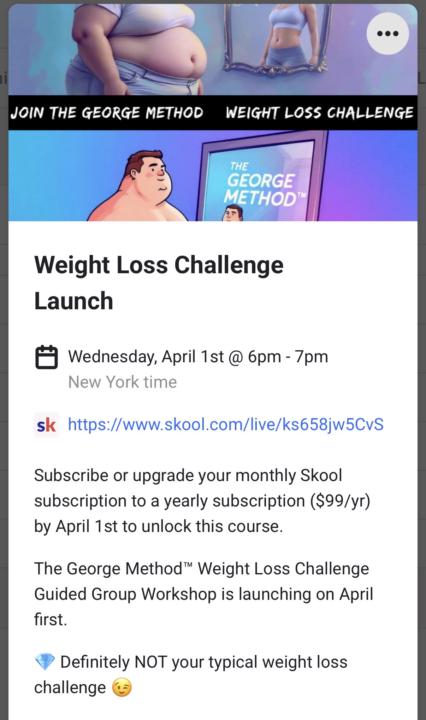
April Weight Loss Challenge
Subscribe or upgrade your monthly Skool subscription to a yearly subscription ($99/yr) in April to unlock this course. The George Method™ Weight Loss Challenge Guided Group Workshop is launching on April first. 💎 Definitely NOT your typical weight loss challenge 😉 Most people try to change their body through force. More workouts. More restriction. More exhaustion. The body responds by tightening fascia, elevating cortisol, slowing metabolism, and holding on even harder. The George Method™ routine works differently. It restores flow to the systems that determine body shape. If you’re already a yearly subscriber, comment UNLOCK to be granted access and join us ⬇️ Carey Ann George
13d •
Turkey Picadillo Recipe
https://www.skool.com/thegeorgemethod/classroom/be162780?md=6a6ead5068d141ada2814e5a5d5ce474
10d •
New Course - FREE to members until the end of May
https://www.skool.com/thegeorgemethod/classroom/e4689513
1
0
1-30 of 109

skool.com/thegeorgemethod
The George Method Healing Community - Learn how to heal yourself from within. Nervous System Regulation & Embodiment Courses For Healing Yourself.
Leaderboard (30-day)
1
+2
2

+1
3

+1
Powered by