
Write something

18d •
What's is a Dosa and How to Determine What Yours is:
I just created a much more thorough Dosha Assessment for the community because one of the biggest misunderstandings in Ayurveda is thinking your dosha is simply “what type you are.” There are actually two important pieces to look at: Prakriti is your natural constitution, the balance of Vata, Pitta and Kapha you were born with. Vikriti is your current state, what may be elevated or out of balance right now because of stress, diet, sleep, lifestyle, season, environment and everything happening in your life. This assessment looks at both. The first section focuses more on your physical constitution, including body frame, skin, digestion, temperature, sleep, joints, appetite and other lifelong tendencies. The second section looks at what is happening right now, including your energy, emotions, eating habits, digestion, ability to start and finish tasks, stress response, sleep, communication style and motivation. The goal isn’t to put you into a box or tell you that you are “just Vata” or “just Pitta.” We all have all three doshas. What becomes interesting is understanding your baseline and then noticing where you may have moved away from it. That is where Ayurveda becomes practical. Once you understand what is naturally you versus what is currently out of balance, you can start making much more intentional choices with food, movement, routine, rest and self-care. Take the assessment and share your results below. I’d love to know your Prakriti and Vikriti and whether the difference between the two surprised you. Go to classroom and check the quiz
Jun 5 •
TRUE Health is not the absence of illness, its the brilliance of vitality! Ayurveda measures it in three ways
In Ayurveda, true health is not just the absence of illness — it is the balance of Prana, Tejas, and Ojas. These three subtle forces shape how we feel, think, love, heal, and move through the world. ✨ Prana - your life force. Prana is the vital energy moving through the body. It lives in the breath, the nervous system, and the spaces between thoughts. When prana is strong, we feel energized, inspired, clear, and alive. When depleted, we may feel anxious, disconnected, fatigued, or scattered. How we nourish it: breathwork, nature, sleep, stillness, nourishing foods, meaningful connection. 🔥 Tejas - your inner radiance. Tejas is the fire of transformation. It governs digestion, perception, discernment, intelligence, and our ability to “digest” life experiences. Balanced tejas gives us confidence, sharpness, passion, and clarity. Too much can create burnout, irritability, inflammation, or judgment. Too little can leave us dull, confused, or unmotivated. How we nourish it: healthy digestion, purpose, boundaries, balanced ambition, proper rest. 🌙 Ojas - your deep vitality. Ojas is your reserve tank. The essence of immunity, resilience, sensuality, fertility, and emotional steadiness. It is what gives us glow, groundedness, and the feeling of being deeply nourished. When ojas is low, we burn out faster, get sick easier, and feel emotionally depleted. How we nourish it: rest, loving relationships, healthy fats, ritual, nervous system regulation, and living in alignment. In many ways:Prana is the energy.Tejas is the transformation.Ojas is the reserve. Health is not built in one moment. It is cultivated through how we breathe, digest, rest, relate, and live. Which one do you feel you need more of right now? 👇
0
0
Nov '25 •
THE POWER IS IN THE PULL & THE PUSH
The Yogis call it Rāga & Dveṣa — Attachment & Aversion. Two forces that quietly shape almost every choice you make. Most people think the spiritual path is about eliminating them. But the yogis knew better: Attachment isn’t the enemy. Aversion isn’t a flaw. They are teachers. Maps. Mirrors. Rāga shows you where you seek comfort, beauty, belonging. Dveṣa shows you where you fear discomfort, rejection, truth. One pulls you forward. One pushes you back. Together, they reveal your karmic curriculum. Every time you cling, something is asking to be understood. Every time you resist, something is asking to be freed. When you get lost in them, you suffer. When you witness them, you wake up. When you master them, you become unstoppable. This is why self-study (svādhyāya) matters. This is why meditation matters. This is why your path — your pilgrimage — matters. Because the goal isn’t to erase your human tendencies. It’s to meet them with honesty, compassion, and awareness so they alchemize into wisdom.
2
0
Oct '25 •
The Yogi and the Mirror of the Mind
Long ago, a student approached his teacher and said, “Master, I’ve been practicing for years and still my mind won’t be still.” The teacher handed him a bowl of water. “Walk to the edge of the forest,” he said, “and bring it back without spilling a drop.” When the student returned, trembling with focus, the teacher asked, “What did you see along the way?” “Nothing,” said the student. “I was too focused on the bowl.” The master smiled. “That,” he said, “is meditation.” ✨ The mind reflects the world like water — disturbed, it distorts; still, it reveals. Yoga is the art of learning to carry the bowl through life’s noise — to remain centered in movement, grounded in change, awake in stillness. Each breath is an invitation to return. Each posture, a chance to polish the mirror. Each moment of presence, a glimpse of the infinite. This is why we practice. To see clearly. To remember who we are beneath the ripples.
1
0
Oct '25 •
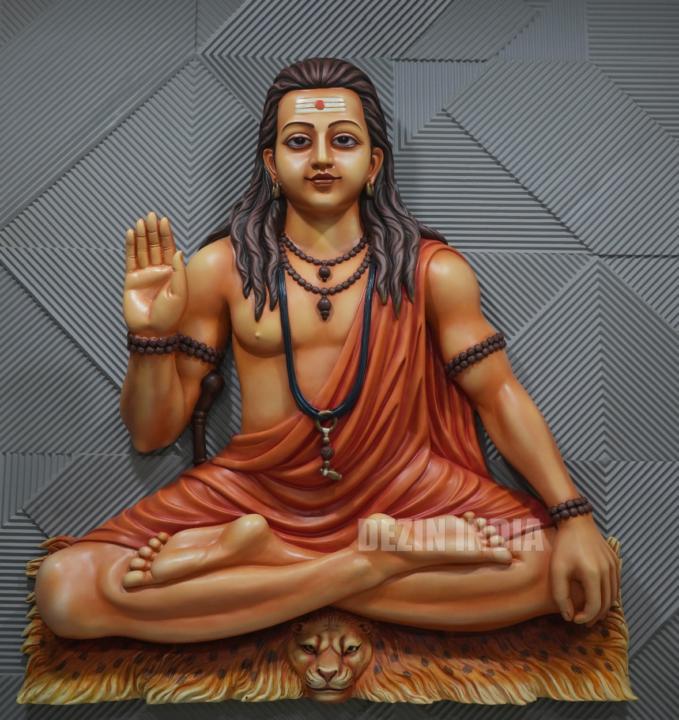
The Alchemy of Gorakhnath — The Fire That Cools
Gorakhnath, a great Hatha yogi, was mocked for his strange practices of breath and heat. To prove yoga’s power, he sat in meditation inside a boiling pot of water. This is his story….. They called him mad. A man who breathed fire into his belly and spoke of stilling storms with a single exhale. Gorakhnath — the wandering yogi, the alchemist of life force — was known to dwell where few dared to look: inside the laboratory of the body itself. When skeptics challenged his talk of mastery, he accepted their test without words. They built a great iron pot, filled it with water, and kindled the flames until it roared like the sun itself. Gorakhnath climbed inside, cross-legged, spine tall, eyes half-closed — a breath entering the infinite. As the villagers watched, minutes became hours. The fire blazed, the pot rattled. Yet when the lid was lifted, the crowd fell silent. The yogi sat serene — the water cool, the air fragrant, his body untouched by heat. They say even the flames bowed to his steadiness. But Gorakhnath only smiled. “This is no miracle,” he said softly, “only a reflection of what burns within you. When the breath is mastered, the fire obeys. When the mind is still, the elements serve. The true furnace is not beneath you — it is inside you.” He rose, dripping with light, leaving behind not the secret of invincibility, but the reminder that the body is the crucible of consciousness — the field where all transformation begins. The teaching: When prana is harnessed and the mind disciplined, tapas (inner fire) no longer destroys — it purifies. The goal of yoga is not escape from the body, but mastery within it. That story originates from oral Nath Yogi and Hatha Yoga traditions surrounding Gorakhnath (Goraksha) — a legendary 11th–12th century yogi considered the founder of the Nath Sampradaya and one of the early codifiers of Hatha Yoga. While there’s no single “canonical text” recording the boiling pot story, versions appear throughout Gorakh Nath hagiographies and folk tales
1-6 of 6
powered by

skool.com/the-method-1982
Spiritual Studies: Yoga, Ayurveda, Meditation.
Classes, courses and coaching to help you live and spiritually aligned life.
https://atmanacademy.ca/
Suggested communities
Powered by