
Write something

19h •
Are labels beneficial or hurtful to your relationship?
Before we start: abuse is real. If you feel you are in an abusive relationship, please seek help immediately. This post is not about that. This is about something else that has quietly crept into our relationships. We are living in a world where every behaviour has a label. 🏷️ Your partner forgets to text back. "That's avoidant." Your partner disagrees with your version of events. "That's gaslighting." Your partner is having a bad week and snaps at you. "They're a narcissist." Here's the truth nobody wants to sit with. There is a difference between someone displaying a narcissistic behaviour and someone being a narcissist. We can all be selfish sometimes. We can all be defensive. We can all struggle to see someone else's point of view when we are hurting. That does not make us a narcissist. It makes us human. But in this generation, for example, "narcissist" has become the go to word the moment we feel disrespected, unheard or disappointed. And once we say the word, something shifts. We stop seeing our partner. We start seeing a diagnosis. So how do we stop jumping the gun? 1. Check yourself first. Before you label, ask. Am I hurt, or am I actually in danger? Those are two very different things. Hurt needs a conversation. Danger needs help. 2. Look for a pattern, not a moment. One action is a moment. A moment deserves a conversation, not a diagnosis. A repeated pattern of control, manipulation and no accountability is a different conversation entirely. 3. Ask what the behaviour is protecting. Often what looks like "narcissistic behaviour" is actually fear, insecurity or an unhealed wound talking. That does not excuse it. But it does help you respond instead of react. 4. Remember grace goes both ways. None of us come into a relationship whole. We are all carrying something. Scripture reminds us, love keeps no record of wrongs. That does not mean ignore harm. It means we do not build a case file every time our partner disappoints us. 💛 A relationship God is at the centre of is not one where nobody ever gets it wrong. It is one where we learn to tell the difference between "you hurt me" and "you are dangerous," and we respond accordingly.

14d •
Is criticism killing your marriage?
When I speak to a lot of husbands, they say they feel their wives are constantly criticising, or telling them what they are doing wrong. I don't believe this is intentional, but I do wonder whether we recognise how our words, and the way we are saying things, are impacting our spouses. I really like how the amplified Bible puts it. Your love for criticism has consequences. Death and life are in the power of the tongue, And those who love it and indulge it will eat its fruit and bear the consequences of their words. Proverbs 18:21 (AMP) Have you ever criticised your spouse or felt criticised by them? How did it end? Let us know. No judgements here.

Apr 21 •
Welcome to the Kingdom Relationship Room 🙏🏾
You are not here because your relationship is falling apart. You are here because you refuse to coast. This is the space where Christian couples do the real work together. 💖Step 1: Start in the Classroom. You can find the Intimacy Bundle in the classroom, or use this link. https://www.skool.com/the-kingdom-relationship-room/classroom/6100406c That is your home base. Inside, you will find faith-rooted tools, psychology-backed resources, and practical challenges built around communication, conflict, intimacy, and parenting. Start there. Work through it at your own pace. Want something else in there? Let me know, this space is yours! 💖 Step 2: Introduce yourself Drop a comment below. Tell us your name, and one thing you are hoping to build in your relationship this year. Glad you are here. Now, let us get to work.
7d •
Changes are happening
Hey everyone, I know I was quiet last week, I have not been 100%, but feeling better, praise God. We will be making a few changes to the group, and I want to be able to add even more value here. I wanted to know what you would prefer, do you prefer live sessions or videos that you can come back to and watch in your own time?
Poll
2 members have voted
1
0

15d •
Your brain is working against your marriage. And it does not even know it. 😔
Let me be vulnerable with you for a minute. A few weeks ago, I took four of our children to the shops. My husband kindly offered to stay home with our one year old, even though he was working, so I could get in and out quicker. On the way home I called and asked him to put lunch on. He agreed. I walked through the door. Nothing was on. My first instinct? To run a mental list of every time he had done this. Every dropped ball. Every moment he had not followed through. My brain had the receipts, and it was ready to present them. But then I caught myself. Because I also had a one year old who stayed home. I had an easier shopping trip. I had a husband who rearranged his working morning for me. That is negativity bias. And it is quietly damaging marriages everywhere. So what is negativity bias? 👑 It is the brain's tendency to give more weight to negative experiences than positive ones. It is not a character flaw. It is actually wiring. Our brains is created to flag threats and problems because that keeps us safe. But in a marriage, that same wiring means we can: Register the one thing he forgot and miss the ten things he did 💛 Hold onto criticism longer than we hold onto kindness. Build a case against our spouse without realising we are doing it Gottman's research found that healthy relationships need around a 5:1 ratio. Five positive interactions to every one negative. That is how strong the pull of the negative is. What happens if we let it run? If I had gone into that kitchen and let the bias take over, here is where that conversation goes. I make him wrong. He gets defensive. I escalate. He shuts down. We spend the afternoon cold with each other over lunch that never got made. And here is the part that stings. Nothing about that argument would have been a lie. He did agree to put the food on. He did not do it. But the full truth was bigger than that moment. And negativity bias shrinks the picture until all you can see is the problem. Over time, that shrinking becomes a habit. You stop noticing the good. You stop expecting it.

1-30 of 37
skool.com/the-kingdom-relationship-room
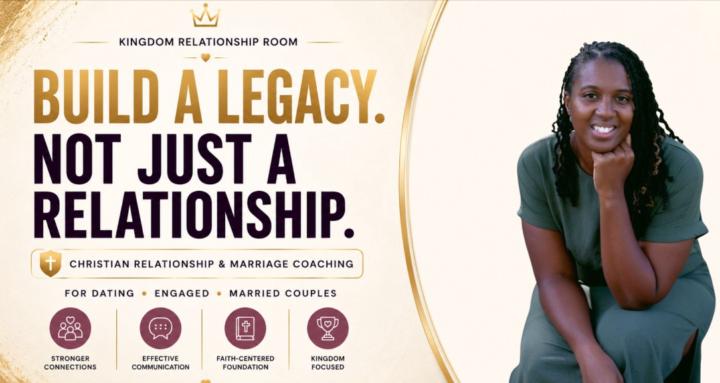
Build a legacy, not just a marriage. Faith-rooted tools for Christians who are dating, engaged or married and ready to go deeper. 👑 Free to join
Leaderboard (30-day)
1

🔥
+18
2

🔥
+7
3

+1
Powered by