
Write something
Pinned

17h •
🤐 The Client Who Doesn't Know You Use AI, and Why That's a Choice Worth Examining
A quiet pattern has developed across a lot of professional service work: AI is genuinely integrated into the workflow, meaningfully shaping how deliverables get produced, and clients simply aren't told. Not because of any deliberate deception, but because disclosure never became an explicit decision. It defaulted to silence, and silence has just kept being the path of least resistance. This default is worth examining directly, because it's rarely the product of a considered choice. Most professionals haven't actually weighed the costs and benefits of disclosure versus non-disclosure. They've simply avoided the topic because it feels slightly awkward to raise, and awkward topics tend to get avoided by default rather than addressed deliberately. ------------- Context ------------- The instinct behind non-disclosure usually traces back to a specific worry: that mentioning AI involvement might undermine a client's perception of expertise, making the work feel less personal or less earned than it would if the client believed it was produced entirely through the professional's own unassisted effort. This worry is understandable, but it's rarely been tested directly, and the assumption underneath it, that disclosure necessarily damages perceived value, isn't obviously true once actually examined. Research on client and consumer attitudes toward AI-assisted professional services has found a more nuanced picture than the simple "disclosure damages trust" assumption suggests. Clients often respond more negatively to discovering undisclosed AI use after the fact than they do to transparent disclosure upfront, particularly when the disclosure is framed around how AI assistance allows the professional to deliver better or faster results, rather than framed as an admission of reduced effort. The risk profile of the default silent approach is asymmetric in a way that's easy to miss. If AI use is never discovered, non-disclosure costs nothing. But if it is discovered, whether through a client noticing patterns in the output, through industry conversation, or simply through increasing general awareness of how common AI-assisted work has become, the discovery of undisclosed use tends to feel like a breach of trust specifically because it was hidden, not because AI was used. The hiding is often what damages the relationship, more than the underlying fact would have on its own.

Pinned
6d •
OpenAI Just Rebuilt ChatGPT
OpenAI put out a ton of new stuff this week including the public release of the GPT-5.6 family of models, the new ChatGPT Work app that will be merging Codex and ChatGPT capabilities, a new voice mode, improvements to the speech-to-text dictation, and more! I break it all down for you here, enjoy! Want to save time, get more leverage, and stop figuring this AI stuff out from scratch? I put the clearest map and support inside the AI Advantage Club
Pinned

5d •
Keep Going. You're Building Something Bigger Than You Think.
There's a season where you're doing everything right... You're showing up. You're putting in the work. You're staying consistent. And it still feels like nothing is changing. No momentum. No big breakthrough. No proof that it's working. This is the moment that separates people. Not because the work got harder... but because they mistake a lack of results for a lack of progress. What I've learned after decades in business is this: The invisible season is where everything important gets built. Your discipline. Your resilience. Your standards. Your identity. The results come later. Success rarely announces itself while it's being built. It compounds quietly... until one day everyone calls it an overnight success. If you're in that season right now, don't quit. The work you're doing today is building the life you'll eventually be grateful you didn't give up on.

4h •
Are We Preparing People for the Future—or the Past?
A huge thank-you to Adam Finch for accepting my invitation to have a conversation with me. As I continue building out my guest list, one question keeps getting louder: How should education change now that AI is changing the world so quickly? We are no longer preparing students for a distant, hypothetical future. The future is already arriving. The question is not whether AI will change how we learn, work, create, and solve problems. The question is: What changes should we be making now so people are prepared for what is coming? How do we teach students to think critically, adapt quickly, ask better questions, work alongside AI, and continue learning in a world where information and technology are evolving faster than traditional systems can keep up? That is why I would love to have this conversation with Dean Graziosi and Tony Robbins. You both have spent years helping people prepare for change, recognize opportunity, and take action before they feel completely ready. I believe a conversation about AI, education, and the future could help a lot of people move from fear and uncertainty to curiosity and preparation. Because the biggest risk may not be that the future changes too quickly. It may be that we keep preparing people for a world that no longer exists.

1-30 of 20,065
skool.com/the-ai-advantage
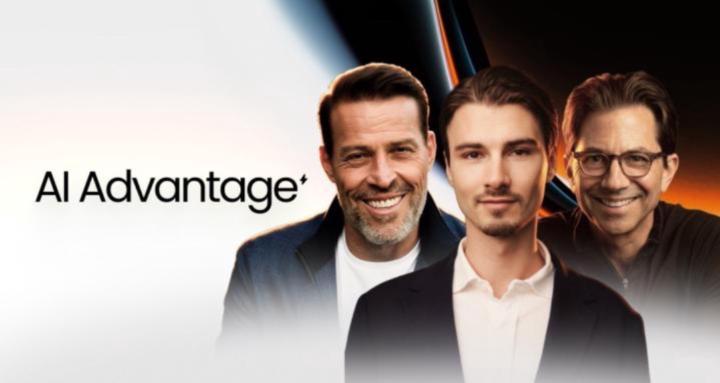
Founded by Tony Robbins, Dean Graziosi & Igor Pogany - AI Advantage is your go-to hub to simplify AI and confidently unlock real & repeatable results
Leaderboard (30-day)
1
+479
2

+372
3

+358
4

+318
5

+306
Powered by