
Write something
Pinned

1d •
🌍 Alignment Without Hand-Waving: Ethics as a Daily Practice
AI alignment often gets discussed at the level of civilization, existential risk, and saving humanity. That concern is understandable, and it matters. But if we only talk about alignment as a distant research problem, we miss the alignment work we can do right now, inside our teams, products, and daily decisions. In our world, alignment is not a theory. It is a practice. Ethics is not a poster on a wall. It is a set of repeatable behaviors that shape what AI does, what we allow it to touch, and how we respond when it gets things wrong. ------------- Context: Why This Conversation Keeps Getting Stuck ------------- When someone asks for tips on alignment and ethics, two unhelpful things often happen. Some people dismiss the concern as hype or doom, because it feels abstract. Others lean into fear, because it feels big and uncontrollable. Both reactions make it harder to do the real work. The reality is that there are two layers of alignment. One is frontier alignment, the long-horizon research that tries to ensure increasingly powerful models remain safe and controllable in the broadest sense. Most of us are not directly shaping that layer day to day, although it is important and worthy of serious work. The other layer is operational alignment, which is how we align AI systems with our intent, our values, our policies, and our responsibility in real workplaces. This layer is not abstract at all. It is the difference between a team that adopts AI with confidence and a team that adopts AI with accidental harm. We do not have to choose between caring about humanity-level questions and being practical. We can hold both. In fact, operational alignment is one of the most optimistic things we can do, because it builds the organizational muscle of responsibility. It turns concern into competence. ------------- Insight 1: Alignment Starts With Intent, Not Capability ------------- A lot of ethical trouble begins with a simple mistake, we adopt AI because it can do something, not because we have clearly decided what it should do.

Pinned

2d •
The Difference Between Grinding… and Living on Purpose
I was up at 4:35am this morning… on a Sunday… diving head first into work. And the truth is — it didn’t feel like grinding at all. Because when you love what you’re building, when you know it’s stretching you as a man, when it’s tied to being in service to your family and making a real impact… the work hits different. It stops feeling like pressure. It starts feeling like purpose. I don’t get excited about being busy. I get excited about growing. About becoming more disciplined. More focused. More capable than I was yesterday. That’s what fuels me. Not the hours. Not the grind. The progress. So if you’re in a season where you’re putting in the reps — don’t just ask yourself how hard you’re working. Ask yourself who the work is helping you become. Because when the mission is bigger than you…even a 4:35am Sunday start feels like a privilege.
Pinned
4d •
Claude Interactive Responses, ChatGPT Ads Explained & More AI News You Can Use
This week, I show you how to use Claude's new Interactive Reponses, breaks down AI ads at the Superb Owl and how ads in ChatGPT work (for now), reviews our testing results comparing GPT-5.3-codex and Claude Opus 4.6, and way more. Enjoy!
7d •
How to Use Gemini Canvas in 2 Minutes
In this video, I show you how to use Gemini's Canvas tool to transform your chats into web pages, quizzes, infographics, and more. Canvas is one of Gemini's best tools and if you're going to be using Gemini in 2026, this is the first tool you should master! Enjoy the video :)

3h •
Axiom: Use the Best Instruments
"Use the best instruments" simply means: when you want to do something well, pick the right tools for the job. Using the best tools doesn’t mean spending the most money — it means choosing the tools that make the task easier, safer, and more likely to succeed. The right tool helps you work faster, make fewer mistakes, and do a better job. A short story: Olivia loved making paper kites. One windy Saturday she decided to build the biggest kite in the neighborhood. At first she tried using a blunt pair of kitchen scissors, a bent ruler, and tape that kept ripping. The kite looked messy and fell apart the moment she launched it. Then Olivia’s dad handed her three better tools: a sharp craft knife (with his help), a straight measuring stick, and strong masking tape. They cut the paper cleanly, measured exact angles, and stuck everything together firmly. When Olivia ran into the wind, the new kite soared higher than any she’d made before. She smiled and said, “Using the best instruments really does make a difference!” Final Word: Choosing the right tools helps you do things better — it turns hard, messy work into something you can be proud of. What do you think, agree or nah?
1-30 of 11,459
skool.com/the-ai-advantage
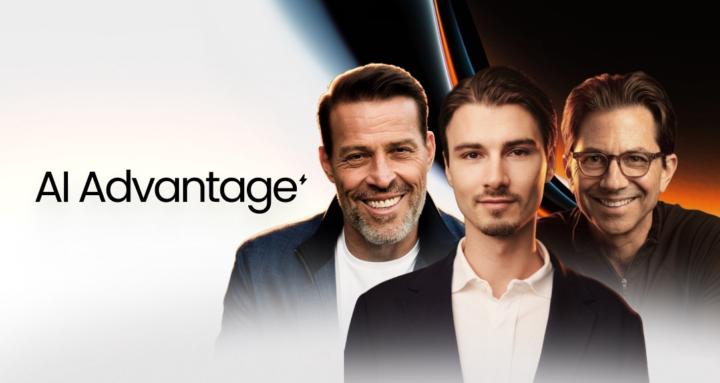
Founded by Tony Robbins, Dean Graziosi & Igor Pogany - AI Advantage is your go-to hub to simplify AI and confidently unlock real & repeatable results
Leaderboard (30-day)
1

+185
2

+170
3

+151
4

+148
5

🔥
+115
Powered by