
Pinned

⭐
9h •
🔥 Welcome to the Private AI Advantage Community!
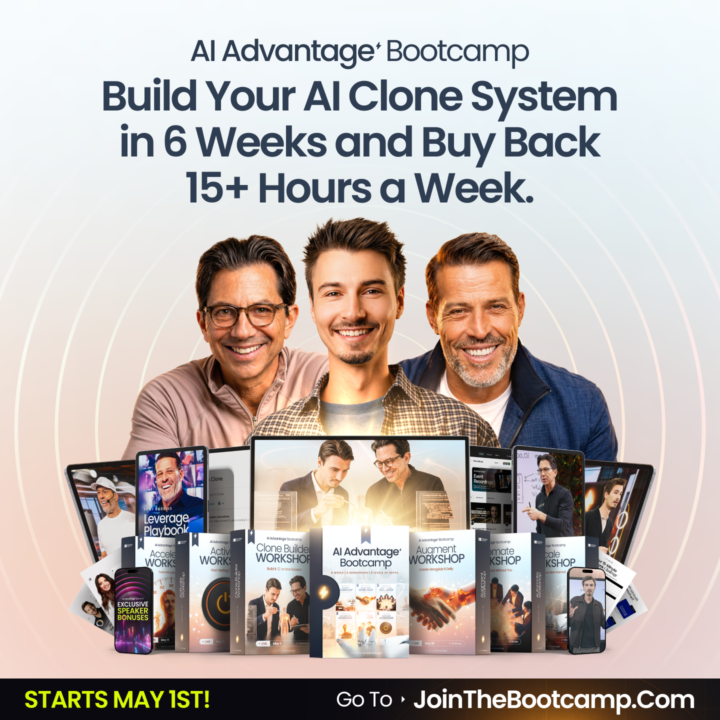
First and foremost, so glad you’re here. The 2026 AI Advantage Summit just wrapped, and the energy was incredible. If you joined us live, you already know what this community is about. And if you’re just finding your way here now, perfect timing. The doors to the AI Advantage Bootcamp are officially open. This is where the real work begins. Over the course of the Bootcamp, you’ll build your own AI clone, create AI agents that work for you around the clock, and put together a setup designed to save you 15 hours every week. Not 15 hours of busywork. Fifteen hours of the stuff that drains you, distracts you, and keeps you from the work that actually moves the needle. Whether you’re brand new to AI or you’ve been experimenting for a while, this is the right next step. The Bootcamp is practical and step-by-step. You don’t need a tech background. You just need to show up and do the work. JOIN THE BOOTCAMP HERE And while you’re getting settled, introduce yourself in the General Discussion section. Let us know where you’re from, what you do, and what you’re most hoping to change. We’re glad you made it. Let’s get to work.
Pinned
⭐
3h •
📣 BIG NEWS! We’re going LIVE tomorrow
Everyone made one thing very clear on Friday! When Dean, Igor, The AI Surfer, and Lior took the stage at the AI Advantage Summit and showed you how they cloned themselves using AI - doing in minutes what used to take hours - the chat exploded. "Can we see that again?" "How do I build a clone like that?" "Wait, can we go deeper on this?" So Igor and Dean are coming back tomorrow for one final "Bonus Day" of the AI Advantage Summit, where in JUST 90 MINUTES they’ll answer your questions, close the gaps, and then best of all… 🗓 Date: Monday, April 27th ⏰ Time: 11:00AM PT | 2:00PM ET ⏳ Length: 90 minutes Igor is going to walk you through an incredible power session to start building something pretty special. We have never done anything like this before. But so many people asked for it… we wanted to deliver 🙂 So join us one more time and you won't just understand the concept of AI Clones… you'll have the foundation already started. No registration. No RSVP. Just use this link to show up LIVE tomorrow at 11am Pacific (2pm Eastern) See you in the morning!
Pinned

1d •
The Last 3 Days Proved What We Can Build Together 🚀
I'm sitting here reflecting after this event and I just wanted to come in here to show my gratitude to you all. The first time we did this, most people were still trying to understand what AI even was. They were curious, but cautious. Interested, but unsure. They knew something big was happening, but they hadn’t experienced it for themselves yet. This time felt completely different. You showed up ready. You had opened the tools. Tested prompts. Tried different platforms. Seen glimpses of what was possible. But you were still asking the questions that matter most: Which tools actually matter? How do I make this work for my business? How do I save time instead of adding more noise? How do I use this to create a better future for myself and the people I love? That tells me something important. You’re not resisting the future. You’re preparing for it. You don’t need more theory... You need clarity. You need strategy. You need a path you can trust. And if I’m being honest, we didn’t know how the world would respond when we launched this summit the first time. We believed in the mission, but no one knew how quickly this technology would evolve or how many people would be ready to embrace it. Even doing it again now, with how fast everything changes, we still didn’t know what the response would be. What we found is this: people are hungry. Hungry to grow. Hungry to learn. Hungry to adapt. Hungry to become more capable in a changing world. That’s inspiring. Because no matter how much technology advances, some things never change. People still want progress. People still want purpose. People still want to provide, contribute, create, and live a better life. I’m incredibly grateful to my partners Tony Robbins and Igor Pogany for sharing the vision of making this practical, empowering, and real for everyday people. I’m deeply grateful to every speaker who poured into these three days with wisdom, generosity, and real insight. And I’m grateful for every one of you who showed up, took notes, asked questions, and stayed open to learning something new.

3d •
Artist - looking to expand my knowledge.
I’m an artist. I use Chat GPT every day. Looking to expand my knowledge.
4d •
How Do You View Obstacles?
The way you view obstacles will shape the way you experience life. If you see them as proof the path is wrong, you’ll stop. If you see them as unfair, you’ll resent them. If you see them as permanent, you’ll feel stuck. But if you see them as part of growth, everything changes. Because obstacles often show up for a reason. They reveal where you need to get stronger. They expose what needs to change. They build the capacity required for the next level of your life or business. So, I’ve learned to see obstacles as opportunity. Opportunity to overcome. Opportunity to learn. Opportunity to grow. Opportunity to increase my capacity. That doesn’t mean challenges are fun haha. But it does means they can be useful. The obstacle in front of you may not be there to block you. It’s likely there to develop you. To push you. To invite you into a whole new level. Because when you do overcome it, you don’t just get past the challenge. You gain the lesson you needed, the growth you needed, and the strength you needed to become the person who can hold the thing you’ve been asking for. Sometimes the obstacle isn’t separate from the path. Sometimes it is the path. So I’ll ask you… how do you view obstacles right now?
1-30 of 17,951
skool.com/the-ai-advantage
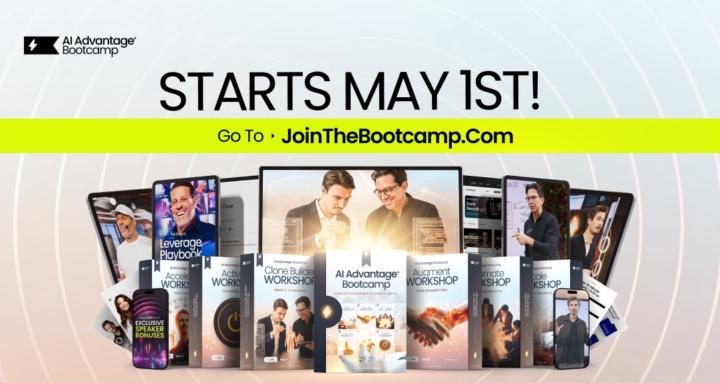
Founded by Tony Robbins, Dean Graziosi & Igor Pogany - AI Advantage is your go-to hub to simplify AI and confidently unlock real & repeatable results
Leaderboard (30-day)
1

+1646
2
+1245
3

+578
4

+533
5

+523
Powered by