
Pinned

⭐
25d •
🎉 Welcome to the Private AI Advantage Community!
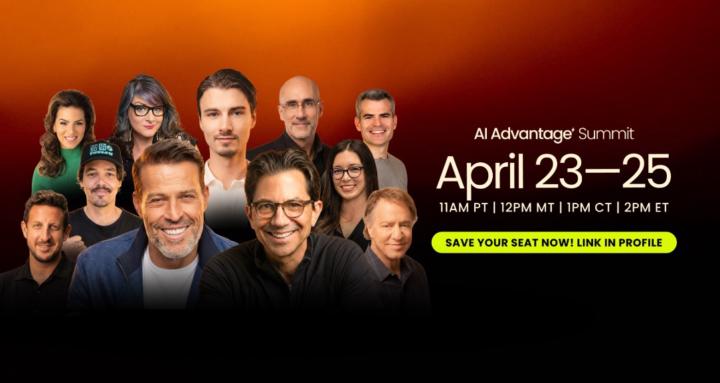
First & foremost… We’re so glad you’re here with us in this incredible private community. You’re officially part of the AI Advantage movement, and there’s never been a better time to jump in and start creating TRUE AI Confidence in a world that’s shifting daily. With our brand new 2026 AI Advantage Summit happening April 23–25, this is the perfect place to get connected, get inspired, and get ready for an incredible event. If you found this community because you registered for the Summit, welcome… We’re thrilled to over deliver for you during this journey! If you’re an existing member and want to be part of the 2026 Summit, make sure you RSVP so you don’t miss your chance to join us live for this exciting experience. Over the coming weeks, this community is where the momentum starts. It’s where entrepreneurs, business owners, creators, and professionals come together to explore what’s possible with AI, especially when it comes to saving time, simplifying the way you work, and creating more space for what matters most. Whether you’re brand new to AI or already experimenting with it, you’re in the right place. The Summit is going to be packed with powerful ideas, practical strategies, and real-world ways to use AI to work smarter, move faster, and reduce the overwhelm that so many people feel in business and life right now. And while you’re here, we’d love for you to introduce yourself in the General Discussion section. Let the community know where you’re from, what you do, and what you’re most excited to learn at the Summit. This is your chance to meet like-minded people, build connections, and start learning alongside others who are also ready to embrace AI in a practical, empowering way. We’re excited to have you here, and we cannot wait to experience the Summit with you. Let’s get ready for an amazing April 23–25... and make sure you RSVP if you want to join us

Pinned
⭐
just now •
Pre-Event Training #3 - 🚀 4 days to go...
The AI Advantage Summit goes LIVE this Thursday, and before Day 1 starts, there is one thing you really want to get clear on first. A quick pre-event training was put together to help you do exactly that. It walks through a few key details, cuts through the noise, and helps set the foundation before we kick off the Summit. Because when Dean, Tony, and some incredible AI leaders go LIVE, the goal is not to make AI feel more complicated. It is to make it make sense . To show how to use AI in a practical way that helps you save time, create more leverage, and actually use these tools in real life and business. That is what this is all about. Not more hype. Not more overwhelm. Just a clearer path forward. So take 5 minutes, check out the pre-event training, and start thinking about this: What would you do with more hours back every week? We’re almost there.See you LIVE in 4 days 🔥
0
0

Pinned

2d •
Why High Performers Slow Down Too Soon
I’m turning 58 this year, and if I’m honest… the resistance doesn’t get quieter. It gets louder. The voice changes. It’s no longer, “What if you fail?” Now it says, “You’ve already worked hard enough.” “It’s okay to slow down.” “You’ve earned the right to coast.” And yes… there’s truth in some of that. We all have permission to slow down. To choose quite. To redefine what success looks like. But sometimes that voice isn’t wisdom. Sometimes it’s just comfort trying to take over. Because I know there’s still more in me. I have a team counting on me. Goals I still want to hit. Work that still matters. I don’t want to look back and realize I backed off too soon. At this stage, it’s not about grinding harder. It’s about being honest with yourself. When do you truly need rest? And when are you just avoiding the next level? That line matters. Because the goal isn’t to burn yourself out. But it’s also not to talk yourself out of what you’re still capable of. Curious… where is resistance showing up for you right now?

19h •
Attention Australia and New Zealand
Hi from New Zealand I'm based in Auckland where you based? I see from the map there are just over 5000 people from Australia and New Zealand registered for the event. I'd love to connect and see how we might support each other. Drop a comment where are you based? Regards Jeff & Donna


6d •
Hello from Montreal Canada 🇨🇦!
Hi peeps! I'm really really excited to get to know all the fellow Tony Robbins fans in here ready to kick butt with Ai productivity. I want to learn how to use agents. Is there anyone in here from Montreal? Any Eastern Canadians? Any Canadians?
1-30 of 14,481
skool.com/the-ai-advantage
Founded by Tony Robbins, Dean Graziosi & Igor Pogany - AI Advantage is your go-to hub to simplify AI and confidently unlock real & repeatable results
Leaderboard (30-day)
1
+876
2

+807
3

🔥
+250
4

+237
5
+234
Powered by