Mar 4 • tactical fitness
From Yesterday's LIVE QA: What is the Better Way?
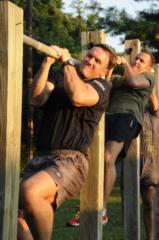
There are many ways to improve calisthenics scores on fitness tests, including exercises like push-ups and pull-ups. While the first rep is a strength exercise, the higher volume required to excel on these tests demands muscle stamina (strength-endurance). Here is a common question from a reader who is mixing different ways to see results throughout the year:
Stew, what do you think of sub-maximal sets spread throughout the day, like pull-ups or push-ups, versus a single workout with these calisthenic exercises to improve fitness on fitness tests? Thanks, Ken.
The methodology for improving maximum-repetition calisthenics exercises combines strength first and volume over time. The quick answer is both. However, if you have only done one of these workout types and are stuck on a plateau, doing the other is a great way to break through that plateau and see more reps in your scoring. If you continue to see results with what you are doing, be patient and keep going. Consistency is key, but eventually you may need another version of the stimulus on the muscles responsible for more reps of pull-ups and push-ups. Here is a breakdown of how to use both:
Sub-Maximal Sets Throughout the Day
The goal with multiple sets of pull-ups and push-ups is to perform 50-60% of your current max reps to increase total volume for the day. You should do this every OTHER day, but some protocols may have you following this daily routine for a short period of 10-14 days. Daily reps at a high volume for too long usually result in stagnation or negative scores and could even lead to overuse injuries in the shoulders and elbows, such as tendonitis.
This method is highly effective for increasing volume without causing failure or fatigue which allows for better application of technique and perfect form repetitions. This is how you build muscle stamina and break through plateaus when doing normal workout split routines (upper body / lower body) on consecutive days throughout the week.
Single Workout (Max Reps, Pyramids, and Super Sets)
There are many ways to increase volume, and these three are easily the most common among military members looking to improve PT scores on fitness tests. This involves doing all your repetitions in a single upper-body session lasting 30-60 minutes. The benefits of this type of workout are building work capacity and mental toughness to keep training when physically fatigued. These are the type of workouts where you can simulate the fitness test and work on your speed, pace, and form for the time you will be tested.
Or You Can Do Both Each Upper Body Day
As you build up the training volume, the daily pull-up and push-up routine is not recommended. Workouts with 100+ pull-ups and 200-300 push-ups are not recommended daily. However, every OTHER day works well as you progress to higher repetitions of this type. Three workouts a week is perfect, but later in the same day, you can add some extra repetitions in small sets spread throughout the day if you want more volume and practice with perfect form. Try this type of week: Try these Three Favorites
Workout 1: PT Pyramid to Build Volume and Max Effort (1 pull-up/2 push-ups, 2/4, 3/6, etc.). Continue up the pyramid until you fail. Then repeat in reverse order. Think of this workout as a warm-up, a max-out, and a cooldown all in one. Active Rest with running.
Workout 2: Sub-Max Effort Set To Build Volume - Sub-max effort sets (example 10–15 sets of 5–10 pull-ups/20 push-ups) to build volume without failure. Active Rest with running.
Workout 3: Max Rep Sets to Push Perceived Limits and Test Endurance – Perform max rep sets in a round-robin circuit to test endurance. Active Rest with running. Think workouts like Murph, where you set a goal of 100 pull-ups, 200 push-ups, and any other exercise (squats, sit-ups, dips, etc.), and do maximum-effort sets until those numbers are reached. Try in as few sets as possible.
The Bottom Line: Use spread-out sets to build the capacity (total daily reps) and use single-session workouts to test that capacity. By adding an active rest of running to the workout, you can help yourself with the test as running usually follows these exercises in military fitness tests. Check out the Stew SmithFitness.com Articles Section for more ideas of this type of training. There are hundreds of articles showing even more workouts you can introduce to your training week if you feel you need a change.
4
2 comments
From Yesterday's LIVE QA: What is the Better Way?
powered by
skool.com/stew-smith-tactical-fitness-1847
Veteran - Stew Smith (former Navy SEAL) helps military, law enforcement, and firefighter candidates and recruits succeed with coaching and programs.
Suggested communities
Powered by