
Write something
4d •
Saturday: Belonging & Becoming Abroad (live workshop for expats)
This Saturday (October 3rd) I'm running a complimentary live workshop for expats: Belonging & Becoming Abroad. You practice reading and listening in Spanish. Many of you have moved to a Spanish-speaking country, or you're thinking about it. If you have, you may have noticed something: learning the language is one thing, and feeling at home is another. You can understand the audio and still feel like a guest. In this interactive workshop we'll look at: 🗨️ What keeps you feeling like a guest instead of a neighbor 🗨️ How to turn what makes you different into something your community values 🗨️ Concrete ways to get a foot in the door, even before you're fluent You don't have to wait until your Spanish is ready. Your outsider's eye is an asset 💫 Saturday, October 3 - 11:00am Uruguay and Argentina - 10:00am US Eastern - 4:00pm Central Europe 90 minutes, on Zoom, in English. Register here: walterfreiberg.com/belonging Hope to see you there! Walter (aka Paco)
0
0

Aug 22 •
ChatGPT-Live
El nuevo ChatGPT-Live https://www.youtube.com/watch?v=czyWvwEW_g0 https://openai.com/es-419/index/introducing-gpt-live/ Presentamos GPT‑Live Una nueva generación de modelos de voz para una interacción natural entre humanos e IA, que ahora impulsa ChatGPT Voz.
Aug 15 •
nytimes: Abandonar un libro ya no da vergüenza
¿Tiene sentido dejar de leer un libro que no te gusta? Los clubes de lectura y las redes sociales han reavivado un viejo debate. https://www.nytimes.com/es/2026/08/10/espanol/cultura/club-de-lectura-goodreads-libros.html?smid=url-share
Jul 21 •
Un español fuerte, rápido y flexible
(English version below) Últimamente anduve pensando en las similitudes entre el ejercicio físico y el aprendizaje de idiomas. La mayoría de la gente va al gimnasio dos o tres veces por semana, o practica algún deporte una o dos veces por semana. Esa es toda la actividad física que tienen. Y parece suficiente como para cuidar el cuerpo. Hace poco escuché sobre Jerzy Gregorek y su esposa Aniela, que crearon un método llamado The Happy Body. Es una rutina diaria, de unos 30 minutos, enfocada en desarrollar fuerza, flexibilidad y velocidad. Que sea diaria tal vez puede sonar a mucho. Pero a ellos, y a muchas otras personas, les dio muy buenos resultados. Creo que la misma idea aplica al aprendizaje de idiomas. Solemos creer que una o dos clases por semana alcanzan para mantener el español (o el idioma que estés aprendiendo) en forma. No practicamos todos los días. No porque no creemos que funcionaría, sino porque eso es lo que vemos hacer a los demás, o lo que nos dijeron que es normal. A veces tenemos épocas un poco más intensivas. Tal vez te estás preparando para un viaje, o estás en Colombia, México o España tomando clases todos los días, incluso varias horas por día. Eso te dura unas semanas. Después volvés a tu casa y retomas la rutina de una clase semanal. ¿Pero qué pasaría si le dedicaras 30 minutos por día al español, durante años u años? ¿Qué pasaría con tu español? Hay algo más que noté del método Happy Body: es una rutina que cualquiera puede hacer en su casa, con mínimo equipamiento o elementos. ¿Qué pasaría si armaras algo parecido para ejercitar tu español? Algunas preguntas para considerar: • ¿Qué significaría para vos tener un español rápido, fuerte y flexible, el equivalente a un cuerpo rápido, fuerte y flexible? • ¿Cómo estructurarías una práctica diaria? • ¿Qué te ayudaría a sostenerla todos los días? • ¿Qué te gustaría desarrollar en esos 30 minutos: lectura, escucha, escritura, conversación…? Si tenés ganas mandame tus respuestas. Estoy juntando ideas para un recurso que ayude a la gente justamente con esto: 30 minutos por día (o el tiempo que elijas) de práctica real de español.

Jul 8 •
Content and Discontent: A Group Call on Language Learning
You can feel good about your Spanish and still want more from it. Both at once. That's not a contradiction, it's a great place to be. In this call we'll practice holding both: - What to acknowledge: the progress you've made - What to keep working on: the gaps that still frustrate you We'll also look back at 2026 so far: - What went well - What could be better in the second half of the year Date & Time: - Rome (CEST): Monday, July 13, 4:30 PM - New York (EDT): Monday, July 13, 10:30 AM - Los Angeles (PDT): Monday, July 13, 7:30 AM - Buenos Aires (Argentina): Monday, July 13, 11:30 AM Duration: 1 hour Language: English Cost: Complimentary Facilitator: Walter Freiberg (aka Paco Ardit) Sign up below! (find the event also on the Calendar tab) https://us06web.zoom.us/meeting/register/ny9CelNFSfmn8Er3g3dEXQ Looking forward to seeing you there! Walter

1-30 of 292
powered by
skool.com/spanishnovelsclub-1884
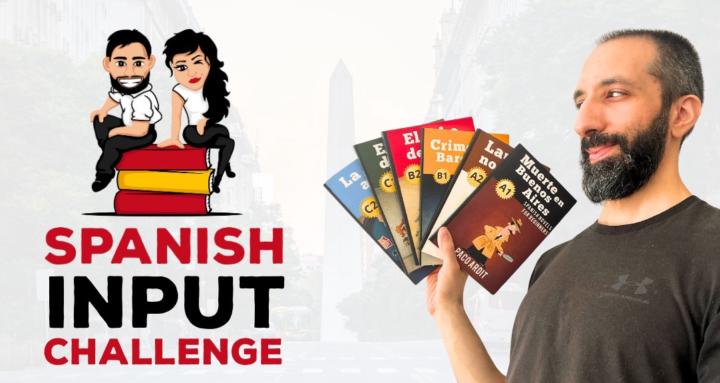
📚 Practice your Spanish skills with fiction stories: graded readers in ebook, audiobook and paperbacks 🤓
Suggested communities
Powered by