🔥
23d • Early Clues & Signals
Wednesday: Two Dogs: Two Declines. One Truth No One Warned Me About
The Quiet Slow‑Motion Storm: What Actually Happens in Age‑Related Cognitive Decline in Dogs
Most people think they can see when a dog is declining.
I used to think that too.
Then I lived through two completely different declines, one quiet, one catastrophic, and realized something no one in the pet world talks about:
Dogs don’t decline the way you think they do. And by the time you notice it, you’re already too late.
Let me tell you a story.
Actually, two.
Dog #1: Simcha: The One Who Hid Everything
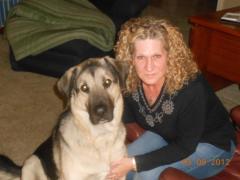
He was massive, 150 pounds of gentleness and loyalty. The kind of dog who made you feel safe just by breathing next to you.
When his body began to fail, he didn’t show it. He compensated. He adapted.
He protected us from his own suffering.
By the time I realized what was happening, the disease had already taken over.
That dog taught me this:
Some declines are silent. And silence is not safety.
You know Simcha. Let me introduce you to Judah
Dog #2: Judah: The One Who Lost His Map
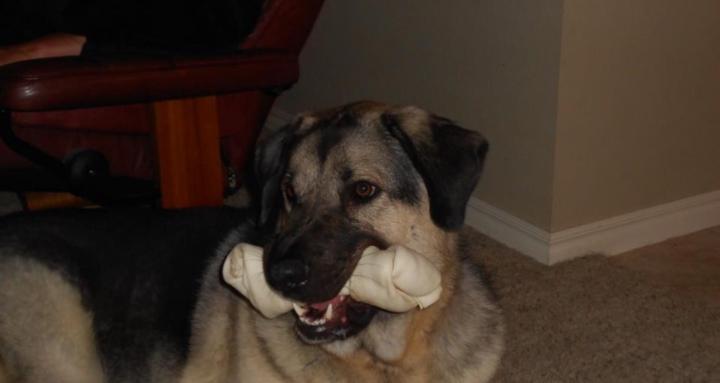
Judah was trained by the police department.
The second dog didn’t decline quietly. He declined quickly and dangerously.
His brain stopped orienting him. His instincts flickered out.
His internal compass, the one every dog is born with, collapsed.
One day, he went outside like always, and disappeared.
Not because he was old. Not because he was weak.
But because his brain could no longer protect him.
Judah taught me this:
Some declines are quick and quiet. And quick and quiet can be lethal.
The Quiet Slow‑Motion Storm: What Actually Happens in Age‑Related Cognitive Decline in Dogs
Most people think cognitive decline in dogs begins when their dog starts pacing at night or staring at walls. That’s the final chapter.
The story starts years earlier, in the places no one is looking.
Judah didn’t show the “classic” signs. No pacing. No house‑soiling. No nighttime agitation.
Just one thing: He stared. Blankly at times. Like he was looking through the world instead of at it.
That was it. That was the only clue his brain was losing its map.
And then one day, the map was gone completely.
Some declines are loud. And loud can be lethal. But sometimes the only warning is a stare you don’t know how to interpret.
1. The First Thing to Break Isn’t Memory. It’s Metabolism
Before a dog forgets a command, before they get lost in their own home, something quieter happens:
The aging brain stops using glucose efficiently.
Neurons become sluggish. Signal speed drops. The brain begins running on “brownout mode.”
This metabolic slowdown is one of the earliest detectable changes in canine cognitive decline. It mirrors early Alzheimer‑type changes in humans, where energy failure precedes structural damage.
When the brain can’t fuel itself, it can’t communicate. When it can’t communicate, behavior changes long before anyone calls it “cognitive.”
2. The Brain Starts Filling With Static
As dogs age, their brains accumulate beta‑amyloid plaques, toxic protein clumps that interfere with neuron‑to‑neuron communication.
Think of it like static on a radio:
- Commands don’t land.
- Routines feel unfamiliar.
- The dog hesitates in doorways, hallways, corners.
- They look at you like they’re buffering.
This isn’t stubbornness. This isn’t “old age.” This is signal interference.
3. Tau Protein Changes: The Brain’s Internal Skeleton Starts to Sag
Inside neurons, tau proteins help maintain structure and transport nutrients. With age, tau becomes abnormal, twisting, tangling, destabilizing the neuron from the inside.
When tau collapses, the neuron collapses.
This is why dogs:
- circle compulsively
- get stuck behind furniture
- lose spatial awareness
- pace without purpose
It’s not behavior. It’s architecture.
4. Neuroinflammation: The Brain Starts Fighting Itself
As plaques and tangles accumulate, the brain’s immune cells activate, and then over‑activate.
Chronic neuroinflammation becomes its own source of damage. It accelerates neuron loss, shrinks memory‑critical regions, and disrupts sleep‑wake cycles.
This is why nights get harder. Why “sundowning” appears. Why dogs wander, pant, vocalize, or seem distressed after dark.
Their internal clock is no longer synced.
5. The DISHAA Signs Aren’t Random. They’re a Map of Brain Regions Failing
Every “behavioral” sign corresponds to a specific neurological breakdown:
- Disorientation = hippocampal dysfunction
- Interaction changes = frontal lobe + limbic system changes
- Sleep‑wake disruption = suprachiasmatic nucleus dysregulation
- House‑soiling = breakdown of learned motor patterns
- Activity changes = basal ganglia + cortical signaling issues
- Anxiety = amygdala hyperactivation
These aren’t quirks. They’re coordinates.
6. Why It’s Missed: The Decline Is Slow, the Love Is Fast
Owners normalize the changes. Vets see snapshots, not timelines.
And the earliest signs look like personality shifts, not pathology.
But the physiology is clear:
Cognitive decline is a progressive neurodegenerative disease, not a personality change.
7. The Emotional Cost: When the Brain Ages, the Bond Gets Frayed
Studies show cognitive decline affects not just the dog, but the entire household, emotionally, practically, financially. Nighttime vocalization, house‑soiling, and confusion strain even the most devoted families.
This is why literacy matters. Not to diagnose. But to preserve dignity, theirs and ours.
How Functional Medicine Approaches Age‑Related Cognitive Decline in Dogs
Functional medicine starts with one core premise:
Cognitive decline is the output of multiple stressed systems, not the origin point.
Where conventional frameworks focus on the brain, functional medicine zooms out to the metabolic, inflammatory, vascular, mitochondrial, endocrine, and sensory systems that feed the brain.
Here’s how the approach unfolds:
1. Identify the Drivers Before the Symptoms Make Sense
Functional medicine asks: What is stressing the brain? What is starving it? What is inflaming it? What is confusing it?
The most common upstream drivers include:
- Mitochondrial decline = reduced ATP = neurons can’t fire efficiently
- Glucose dysregulation = the aging brain becomes insulin‑resistant
- Chronic inflammation = microglial overactivation accelerates damage
- Oxidative stress = free radicals outpace antioxidant defenses
- Vascular dysfunction = reduced cerebral blood flow = chronic hypoxia
- Gut dysbiosis = neuroinflammation via the gut‑brain axis
- Pain = constant sympathetic activation degrades cognition
- Sensory loss = vision/hearing decline mimics or worsens cognitive signs
Functional medicine doesn’t assume cognitive decline until these are mapped.
2. Rule Out the “Look‑Alikes” First
Functional medicine always begins with a broad differential, because many conditions masquerade as cognitive decline:
- kidney disease
- liver dysfunction
- thyroid imbalance
- hypertension
- anemia
- infection
- medication side effects
- chronic pain
- sensory loss
This prevents months of guessing and ensures the “cognitive” symptoms are truly cognitive.
3. Restore the Brain’s Metabolic Fueling
Because the aging brain becomes less efficient at using glucose, functional medicine focuses on:
- stabilizing blood sugar
- improving mitochondrial function
- supporting alternative fuel pathways (e.g., MCTs ketones)
- reducing metabolic inflammation
This directly improves neuronal firing and communication.
4. Reduce Neuroinflammation at the Source
Instead of suppressing symptoms, functional medicine reduces the inflammatory load coming into the brain:
- gut repair + microbiome support
- anti‑inflammatory nutrition
- omega‑3 fatty acids (especially DHA)
- antioxidants to counter oxidative stress
- reducing environmental toxins
- addressing chronic infections or immune triggers
This slows the progression of neuronal damage.
5. Support Neurotransmitter Balance
Functional medicine looks at the systems that influence dopamine, serotonin, acetylcholine, and glutamate, all of which shift in cognitive decline.
By supporting nutrient cofactors, reducing excitotoxicity, and improving sleep, the brain’s signaling becomes more coherent.
6. Rebuild Daily Rhythms and Reduce Stress Physiology
Circadian disruption is a hallmark of cognitive decline.
Functional medicine restores:
- predictable light exposure
- consistent feeding windows
- sleep hygiene
- nervous‑system regulation
- pain management
- enrichment that stimulates neuroplasticity
This stabilizes the dog’s internal clock and reduces nighttime agitation.
7. Strengthen the Environment the Brain Lives In
Functional medicine always includes:
- sensory accommodations
- safe navigation pathways
- predictable routines
- cognitive enrichment
- gentle physical activity
- reducing overwhelm and decision load
Because a struggling brain needs fewer obstacles and more clarity.
8. The Functional Medicine Reframe
Traditional view: “The brain is deteriorating.”
Functional medicine view: “Multiple systems are overburdened, and the brain is the organ showing the consequences.”
This reframes cognitive decline from an inevitable slide into a modifiable physiology story.
Traditional medicine names the decline. Functional medicine explains it.
When Cognitive Decline Turns Deadly: Judah’s Story
Most people think cognitive decline in dogs looks like pacing, staring, or forgetting commands.
But sometimes it looks like something far more dangerous.
Sometimes it looks like Judah.
Judah wasn’t “just getting old.” He wasn’t “slowing down.” He wasn’t “being stubborn.”
He was losing his internal map.
He was losing the ability to recognize danger. He was losing the instinct to protect himself. He was losing the neurological wiring that tells a dog, “This is safe. That is not.”
And one day, that loss cost him his life.
Judah had disappeared. He went outside to go to the bathroom and in minutes was gone.
We looked for him for weeks.
I lived on 27 acres. On that property was a pond.
Weeks later that pond gave up it's dead.
Judah wandered into that pond, and he drowned. Not because he didn’t know how to swim. Not because he was careless. But because his brain could no longer orient him to the world he lived in.
This is the part no one talks about.
Cognitive decline isn’t just memory loss. It’s spatial disorientation. It’s sensory confusion. It’s the collapse of self‑preservation.
It’s a dog walking into danger because the brain that once kept him safe can no longer read the environment.
Judah’s story is heartbreaking, and it’s also a warning.
Not a fear‑based warning. A literacy warning.
Because when you understand what’s happening inside the aging brain, the metabolic slowdown, the plaque buildup, the circadian breakdown, the loss of spatial processing, you stop calling it “old age.”
You start calling it what it is:
A neurodegenerative disease that deserves attention, support, and safety planning.
Judah didn’t die because he was old. He died because his brain was failing him in ways no one recognized early enough. It was only a stare.
And that’s why this class matters.
Not to diagnose. Not to scare. But to give people the literacy Judah never got.
So that another dog doesn’t wander into danger.
So that another family doesn’t carry the weight you carry.
So that cognitive decline is seen for what it truly is, not a personality change, but a physiology
The Truth No One Told Me
Two dogs. Two declines. Opposite presentations. Same root cause:
Physiology failing long before behavior makes sense.
Not “aging.” Not “senior moments.” Not “slowing down.”
A multi‑system breakdown that starts quickly, quietly, hides in plain sight, and then, sometimes, explodes.
And once you’ve seen both sides of decline, you can’t unsee it.
Why I’m Telling You This
Because most people don’t know what decline actually looks like.
Because most people wait for the obvious signs.
Because most people think they’ll “just know.”
You won’t.
You can’t.
Not without literacy.
And that’s why I teach what I teach, not to diagnose, not to scare, but to give people the map I wish I had before both of my dogs slipped through the cracks in two completely different ways.
It was only a stare. The vet saying, "He's getting older, this is normal."
No! It wasn't normal.
EVERYONE THAT OWNS A DOG NEEDS THIS CLASS!
Judah’s story will save dogs. Because it tells the truth.
1
3 comments
Wednesday: Two Dogs: Two Declines. One Truth No One Warned Me About
skool.com/simcha-hub-of-pet-physiology-5304
Understand your pet through physiology. Learn the gut - immune - neuro patterns that shape behavior, mood, and resilience long before symptoms appear.
Leaderboard (30-day)
1

🔥
+67
2

+40
3
+16
4

🔥
+13
5

🔥
+4
Powered by