
🔥
23d • General discussion
Tuesday The Quiet Cries: Chronic GI Inflammation
Before the diarrhea. Before the vomiting. Before the ‘allergies.’ There were whispers.”
Most dogs don’t suffer in silence. They suffer in subtlety.
And nowhere is that more true than with chronic GI inflammation, one of the most common, most misdiagnosed, and most quietly devastating conditions in dogs today.
Today’s Quiet Cry is one almost every dog parent has seen, but almost no one has been taught to interpret.
THE QUIET CRY
The dog who licks their paws at night, not during the day.
Not obsessively. Not dramatically. Just quietly. Rhythmically. Predictably.
Often after dinner. Often after midnight.
It looks harmless. It looks like “quirk.” It looks like “allergies.”
But this is not a skin problem. This is not boredom. This is not a habit.
This is a physiological timestamp.
WHAT THE BODY IS ACTUALLY SAYING
Night‑time paw licking is a histamine‑circadian clue, a whisper from the gut‑immune axis.
Here’s the physiology in plain language:
- Histamine naturally rises at night as part of the body’s circadian rhythm.
- If the gut lining is inflamed or permeable, histamine load rises even higher.
- That histamine doesn’t stay in the gut, it circulates.
- The skin becomes the overflow valve.
- The paws become the outlet.
- Licking becomes the coping mechanism.
This is the gut saying: “My inflammation is highest at night. I’m struggling. Please notice.”
WHY IT’S MISSED
Because the dog looks “fine” during the day. Because the paws aren’t always red. Because the stool might look normal. Because the dog still eats. Because the symptoms don’t scream, they whisper.
And because we’ve been trained to believe:
- paw licking = allergies
- allergies = antihistamines
- itching = skin problem
But the earliest cry of chronic GI inflammation is timing, not severity.
THE DEEPER PHYSIOLOGY
Chronic GI inflammation creates:
- micro‑tears in the gut lining
- immune activation
- mast cell priming
- cytokine release
- vagal tone disruption
- tryptophan pathway shifts
- neuroinflammation that changes behavior
This is why GI inflammation shows up as:
- anxiety
- reactivity
- clinginess
- pacing
- restlessness
- “sudden” fearfulness
- sleep disruption
The gut doesn’t whisper in words. It whispers in behavior.
WHY THIS QUIET CRY MATTERS
By the time a dog has:
- chronic diarrhea
- vomiting
- food refusal
- weight loss
- ear infections
- hotspots
- full‑blown “allergies”
the gut has been inflamed for months or years.
But the night‑time paw licking? That’s the first domino. The reversible domino.
This is the moment where physiology is still plastic.
Where targeted nutrition, microbiome support, and early intervention can change the entire trajectory.
This is the window where you can rewrite the ending.
THE SIMCHA LAYER
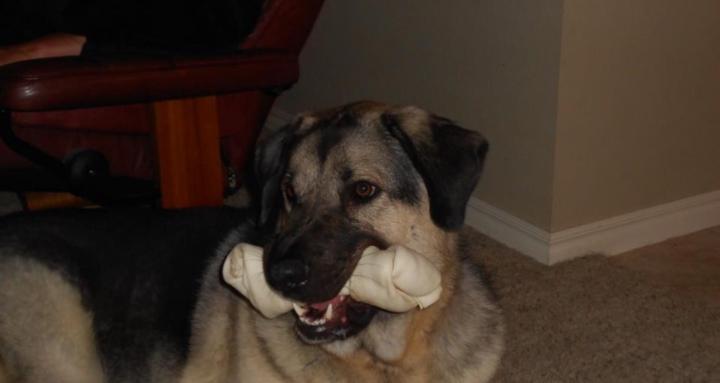
Simcha had his own quiet cries long before the world had a name for them. He didn’t complain. He compensated. This Tuesday theme teaches people to hear what you wish the world had known how to hear for him.
This is legacy work. This is category creation. This is literacy.
How Functional Medicine Handles Chronic GI Inflammation
It doesn’t chase the symptom. It traces the signal.
Functional medicine asks one core question:
“What is driving the inflammation, and what systems are compensating because of it?”
Instead of suppressing the paw licking, it investigates the gut‑immune‑brain axis that produced it.
Let’s go layer by layer.
1. Identify the Load: What’s Irritating the Gut?
Functional medicine starts by mapping the inflammatory load, not the “allergy list.”
Common drivers:
- ultra‑processed kibble
- high‑histamine proteins
- poor protein rotation
- dysbiosis
- yeast overgrowth
- parasites
- environmental toxins
- chronic stress physiology
- low stomach acid
- poor bile flow
- antibiotic history
This is the “why” behind the quiet cry.
2. Assess the Barrier: Is the Gut Leaking Signals Into the Body?
Functional medicine looks at gut permeability as a physiological event, not a buzzword.
It asks:
- Is the mucosal layer thin?
- Are tight junctions compromised?
- Are mast cells overactive?
- Is histamine load elevated?
- Is the immune system on high alert?
Because paw licking is not a skin issue, it’s a barrier integrity issue.
3. Map the Immune Response: What’s the Pattern?
Functional medicine doesn’t ask, “What is the dog allergic to?” It asks:
“Why is the immune system reacting this way?”
It looks at:
- IgA depletion
- chronic IgE activation
- mast cell priming
- cytokine patterns
- inflammatory timing (night vs day)
- circadian rhythm disruption
This is where the night‑time paw licking becomes diagnostic gold.
4. Restore Digestion: Can the Dog Break Down Food Properly?
Functional medicine knows inflammation often begins upstream:
- low stomach acid = undigested proteins = immune activation
- poor bile flow = fat malabsorption = microbiome imbalance
- low pancreatic enzymes = fermentation = gas, pain, inflammation
You don’t fix the gut by feeding “sensitive stomach” kibble. You fix the gut by restoring digestion.
5. Rebuild the Microbiome: Who’s Living There?
Functional medicine doesn’t throw probiotics at the problem. It asks:
- Is there diversity?
- Are there keystone species missing?
- Is there overgrowth?
- Is there fungal dominance?
- Is the microbiome producing inflammatory metabolites?
This is where targeted nutrition becomes gene‑signaling, not guesswork.
6. Support the Liver: Can It Handle the Histamine Load?
Night‑time paw licking is often a liver‑histamine story.
Functional medicine supports:
- detox pathways
- methylation
- glutathione production
- bile quality
- circadian liver rhythms
Because if the liver is overwhelmed, the skin becomes the exit route.
7. Regulate the Nervous System: Is the Gut-Brain Axis Inflamed?
Chronic GI inflammation always affects behavior.
Functional medicine looks at:
- vagal tone
- sympathetic dominance
- cortisol rhythm
- tryptophan pathway shifts
- neuroinflammation
This is why GI inflammation shows up as:
- anxiety
- reactivity
- clinginess
- pacing
- restlessness
The behavior is not “behavior.” It’s biology speaking through behavior.
8. Rebuild the Terrain: Create a Gut That Doesn’t Whisper for Help
Functional medicine doesn’t aim for “symptom-free.” It aims for resilience.
This includes:
- nutrient density
- protein rotation
- anti-inflammatory phytonutrients
- omega balance
- moisture-rich feeding
- microbiome diversity
- circadian feeding patterns
This is how you prevent the quiet cry from becoming a scream.
Chronic GI Inflammation: Functional Medicine vs Traditional Medicine
Two models. Two interpretations. Two completely different outcomes.
This comparison isn’t about “better vs worse.” It’s about different operating systems,
different ways of interpreting the same quiet cry.
And nowhere is that difference more obvious than in chronic GI inflammation, where the earliest signals are subtle, compensatory, and easy to miss.
Let’s go layer by layer.
1. How Each Model Interprets the Quiet Cry
Traditional Veterinarian Medicine:
“Paw licking = allergies.” “Try an antihistamine.” “Switch to a hydrolyzed diet.” “Maybe it’s behavioral.”
The focus is on the symptom.
Functional Medicine:
“Why is histamine highest at night?” “What’s happening in the gut lining?” “What’s the immune system reacting to?” “What’s the inflammatory load?”
The focus is on the physiology that produced the symptom.
2. What Each Model Sees as the Problem
Traditional Veterinarian Medicine:
The problem is itching.
Functional Medicine:
The problem is gut permeability, immune activation, and circadian histamine spikes.
Traditional medicine sees the output.
Functional medicine sees the origin.
3. What Each Model Measures
Traditional Veterinarian Medicine:
- Skin appearance
- Stool quality
- Obvious symptoms
- Allergy panels (often misleading)
- Presence/absence of infection
Functional Medicine:
- Gut barrier integrity
- Microbiome diversity
- Mast cell activation
- Histamine load
- Digestive capacity (acid, bile, enzymes)
- Immune patterning
- Circadian rhythm of symptoms
- Behavior as biology
Traditional medicine measures what’s visible.
Functional medicine measures what’s driving what’s visible.
4. How Each Model Treats the Dog
Traditional Veterinarian Medicine:
- Antihistamines
- Steroids
- Antibiotics
- “Sensitive stomach” kibble
- Hydrolyzed diets
- Anti‑itch meds
- Topical treatments
These suppress the output.
Functional Medicine:
- Restore digestion (acid, bile, enzymes)
- Reduce inflammatory load
- Rebuild gut lining
- Support liver detox pathways
- Balance omega ratios
- Rotate proteins
- Increase nutrient density
- Rebuild microbiome diversity
- Support vagal tone
- Address stress physiology
These restore the system.
5. How Each Model Understands Behavior
Traditional Veterinarian Medicine:
Behavior separate from GI issues.
Functional Medicine:
Behavior is the earliest sign of GI issues.
Because chronic GI inflammation alters:
- vagal tone
- neurotransmitter pathways
- cytokine signaling
- sleep architecture
- stress reactivity
A “clingy,” “anxious,” or “restless” dog is often a gut‑inflamed dog.
Traditional medicine sees behavior as psychology.
Functional medicine sees behavior as physiology speaking through psychology.
6. What Each Model Considers “Success”
Traditional Veterinarian Medicine:
“The itching stopped.”
Functional Medicine:
“The gut is resilient, the immune system is calm, the dog’s behavior normalized, and the quiet cries are gone because the physiology is restored.”
One stops the noise. The other resolves the reason the body was making noise.
7. The Time Horizon
Traditional Veterinarian Medicine:
Short-term relief. Fast suppression. Symptom management.
Functional Medicine:
Long-term resilience. System repair. Trajectory change.
Traditional medicine puts out fires.
Functional medicine prevents the forest from catching fire in the first place.
8. The Simcha Layer
Simcha didn’t have a voice, he had physiology. He didn’t complain, he compensated.
Traditional medicine would have treated the compensation.
Functional medicine would have asked:
“Why is he compensating?”
This is why your Tuesday Quiet Cries theme matters. It teaches people to hear what the world never taught them to hear.
Most pets don’t hide their pain. They broadcast it in a language we were never taught to hear.
Welcome to Tuesday The Quiet Cries. Welcome to the new literacy.
Traditional medicine treats the symptom.
Functional medicine treats the story behind the symptom
Simcha’s story is the reason this work matters. He didn’t have a voice, he had physiology.
And physiology always speaks first.
Functional medicine is the discipline that teaches people to hear it.
1
4 comments
Tuesday The Quiet Cries: Chronic GI Inflammation
skool.com/simcha-hub-of-pet-physiology-5304
Understand your pet through physiology. Learn the gut - immune - neuro patterns that shape behavior, mood, and resilience long before symptoms appear.
Leaderboard (30-day)
1

🔥
+61
2

+40
3

+16
4

🔥
+13
5

+3
Powered by