
Pinned

6d •
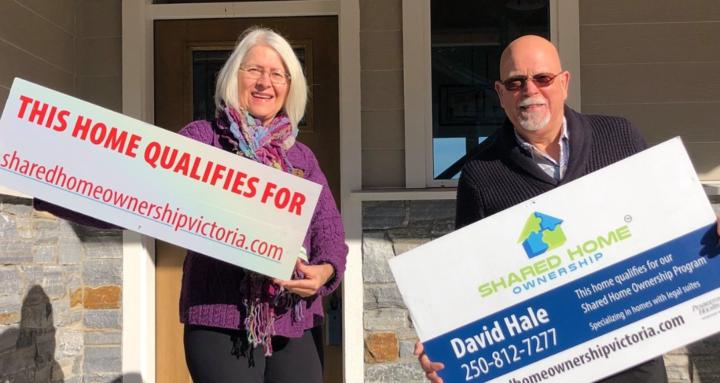
Here's a Great Shared Home Ownership Home in Cadboro Bay
One of our Skool participants is selling this Home....$710,000 for the main house, and $684,500 for the downstairs floor which contains 2 - 1 bedroom suites. If one of the suites rented for $1500, remember that, that represents about $300,000 worth of Mortgage, so the extra suite is paying a good portion of your mortgage. If you bought the whole house for $1,395,000 you would have two suites helping pay for your mortgage. There are many variations or combinations with this home. ... Here's the MLS remarks....... Rarely does Cadboro Bay offer this much FLEXIBILITY. 2 blocks from the Village, 4 from the ocean, & 2 from UVic, this is a home that lets you LIVE WELL & EARN INCOME at the same time. The main residence is PRIVATE & BRIGHT, with hardwood floors, an updated kitchen, a generous living room anchored by a fireplace & its own laundry. A covered deck opens to a patio & hedged, fully fenced yard spaces - a detached office is a perfect bunkie or work from home spot. Below, TWO complete SELF-CONTAINED studio suites, each with full kitchen, 4-piece bath & entry; sharing a laundry room between them. One is tenanted; the second is VACANT on possession & joined to the main floor by existing stairs, ready to rent, to welcome family, or to be reclaimed as your own living space. The costly work is long done - perimeter drains, roof, electrical, heat pump & windows. For the multigenerational family, the investor, or the buyer who has waited for Cadboro Bay on their terms.
0
0
4d •
Langford - Great Price- $799,000 - 2 bedroom plus a 1 bedroom suite
The 1 bedroom suite would be worth $345,000 and the 2 bedroom main home would be worth $455,000. This unit is priced to sell quick, so if you are interested let me know right away. Here are the MLS remarks....Floor plans and MLS sheet below. Welcome to 2326 Hoylake Crescent, a 3 bedroom, 2 bathroom home in a convenient Langford location. The main level offers a bright and functional layout with a comfortable living room, gas fireplace, and a well-appointed kitchen with plenty of space for everyday living and entertaining. Step outside onto the west-facing back deck and enjoy the afternoon and evening sun. The lower level features an in-law suite, offering a great option for extended family, guests, or additional living space. A heat pump provides efficient heating and cooling throughout the home, keeping things comfortable year-round. Located in a family-friendly neighbourhood, this home is just steps from Millstream Elementary and close to shopping, restaurants, parks, and other everyday amenities. With easy access to the Trans-Canada Highway and everything the West Shore has to offer, this is a great opportunity to get into a home that offers flexibility, convenience, and plenty of potential.
0
0
6d •
Webinar-Financing Shared Home Ownership Homes
Here is the webinar we had tonight with Kam Brar. Lot's of great information here. https://www.youtube.com/watch?v=4cZ7cCyehPw
0
0
7d •
Kam Brar-Mortgage Broker-Tonight Thursday Sept 17th at 7:00 PM
For many people, the biggest challenge in buying a home is not making the monthly payment - it is assembling the down payment and qualifying for a mortgage large enough to purchase a suitable property. Shared Home Ownership may provide another path by allowing two compatible parties to combine their resources and purchase one home together, ideally with two separate and self-contained living spaces. Tonight we are hosting a special event with Kam Brar of Auxilium Mortgage. Kam understands that buyers do not all fit into the same box, and this will be an opportunity to learn more about the financing questions that arise when two parties are considering purchasing a property together. We plan to ask Kam about: How lenders review income, debts, credit and down-payment funds; what prospective co-buyers should do before they begin looking at homes; when potential suite income may be considered; and which questions buyers should ask a mortgage professional before committing to a shared purchase. Shared Home Ownership is not a shortcut around mortgage qualification. It is a structured way for two parties to explore whether combining their purchasing power could help each of them secure an appropriate home. The goal is separate living, clear expectations and an agreement that addresses responsibilities, expenses, decision-making and the eventual sale or buyout of the property. Even if you are only beginning to explore the idea, this event should help you understand what information a mortgage professional will need and what your next step may be. Event: Kam Brar of Auxilium Mortgage Date and time: Thursday, September 17 at 7:00 PM Zoom Link..... https://us02web.zoom.us/j/2508127277?pwd=VmlVRWRjUEZQSWJodXJLbzRIbmtoQT09&omn=83156177725 Talk soon. David
0
0
7d •
Homes that have Legal Suites and Open Houses this Weekend
Here are some legal suites with Open Houses Legal Suites with Open Houses Just let the Realtor know you are working with me. 😊 You can put this link on your desktop or find this link anytime in the Buyers Classroom. If you want to get out to view with me just call me at 250-812-7277. Thanks David
0
0
1-30 of 132
powered by
skool.com/shared-home-ownership-4063
Join our community dedicated to helping you get into the Real Estate Market through Co-Owning, Investing, or Selling a portion of your home.
Suggested communities
Powered by