

Jan 9 •
The Great Divide: Navigating Platform Double Standards in the AI Era
For marketing leaders, the latest developments in the search landscape have brought a critical strategic tension into sharp focus: the growing divide between the quality standards platforms demand of publishers and those they apply to their own AI-driven products. This is not a niche technical issue; it is a fundamental challenge to brand safety, corporate reputation, and the very economics of digital marketing. As a Chief Digital Marketing Officer, your role is to navigate this double standard, manage the associated risks, and position your organization to win in an environment of competing rules. This article deconstructs three recent, interconnected events—the December 2025 core update, a Guardian investigation into AI Overview health inaccuracies, and attempts by platform executives to reframe the AI quality debate—to provide a strategic framework for enterprise leaders. The Specialization Imperative: A Strategic Response to the Core Update The December 2025 core update has sent a clear signal to the market: specialization is being rewarded over generalization. Early analysis reveals that niche sites with deep, category-specific expertise are gaining visibility on commercially valuable mid-funnel terms, while broad, generalist sites are seeing their rankings erode. For enterprises, this is a strategic inflection point. The old model of building a single, monolithic domain to cover a wide range of topics is now a strategic liability. As a marketing leader, you must now evaluate your content portfolio through the lens of specialization. This may require a fundamental rethinking of your content architecture, potentially breaking up large, generalist sites into a portfolio of smaller, more focused niche properties. This is not just an SEO decision; it is a business strategy decision that requires close collaboration with your product and business unit leaders. The key questions to ask are: Where can we be the undisputed authority? Where can we provide a level of depth and expertise that a generalist site cannot match? The answers to these questions will define your content strategy for 2026 and beyond.
0
0

Jan 7 •
Future-Proofing Your SEO Strategy
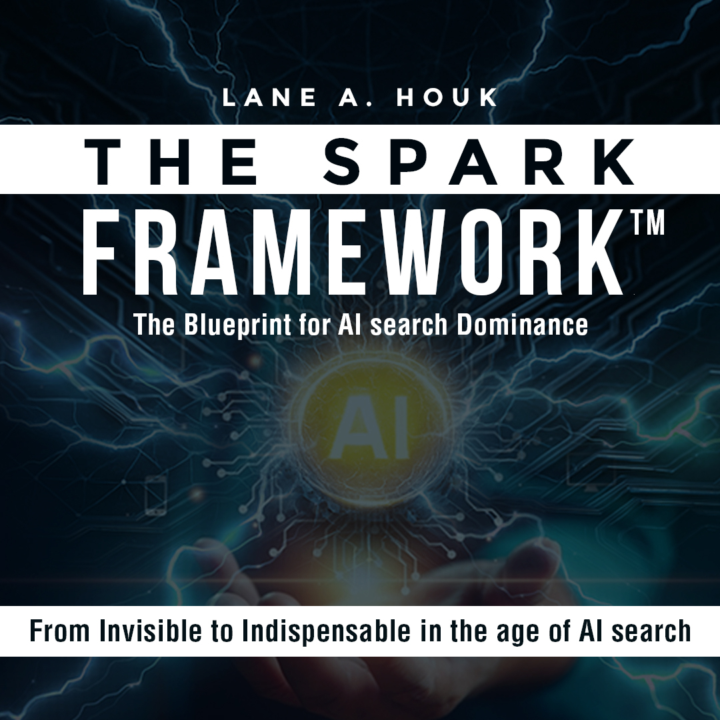
One of the core principles of the SPARK Framework™ is future-proofing. AI search is evolving rapidly, and strategies that work today may need adjustment tomorrow. The framework is designed to be adaptable. By focusing on fundamental principles—entity strength, content quality, structured data, platform authority—rather than platform-specific tactics, you build a foundation that remains valuable regardless of how individual AI systems evolve. The businesses that will thrive are those that view AI search optimization as an ongoing discipline, not a one-time project. Continuous learning and adaptation are essential. Question for the community: What emerging trends in AI search are you paying closest attention to? How are you preparing for them?
0
0
Dec '25 •
What is AI, and How is it Really Affecting SEO?
If it feels like the entire internet woke up one day and decided to start every sentence with “AI,” you’re not wrong. Marketers are being hit with a daily wave of LinkedIn thought leaders, half-baked prompt hacks, and promises that AI is either going to 10x your productivity or take your job entirely. In the middle of all this, you’re trying to figure out if this is just another buzzword cycle or the beginning of a complete rewrite of how we do content, SEO, and reporting. This is your guide to what AI actually is, what matters, what’s noise, and how to stay ahead. From Human Intelligence to Machine Prediction At its core, artificial intelligence refers to machines performing tasks that typically require human intelligence: understanding language, recognizing patterns, and making decisions. The type of AI making waves right now is generative AI—models that can produce text, images, and code based on patterns they’ve learned from enormous datasets. Tools like ChatGPT, Gemini, and Claude don’t “think” like humans; they predict the next most likely word or phrase based on what they’ve been trained on. This is a critical distinction. AI is not a silver bullet. It’s data aggregation at scale. Large Language Models (LLMs) aren’t producing net new data; they are processing the data across the web to provide a solution strictly based on internet consensus. This is why they sometimes “hallucinate”—confidently making things up when their data is incomplete or contradictory. For marketers, the implication is massive. You’re no longer just optimizing for a classic search engine click. The goal now is to create content that can be effectively interpreted and summarized by machines. This is because the rise of zero-click search results—where AI systems like Google’s AI Overviews answer queries directly without requiring a visit to your website—fundamentally shifts the SEO landscape from a traffic game to an authority and data-ingestion game. The Real Impact on Marketing Today
0
0

Dec '25 •
Don’t Panic: Why AI Search Won’t Kill Your Most Valuable Traffic
The prevailing narrative around AI search has been one of existential threat. We’ve been told that as AI Overviews and AI Mode become the default, website traffic will inevitably decline, starved of the clicks that have fueled digital marketing for decades. However, this doomsday scenario is largely based on studies focused on informational queries—the “how-to” and “what-is” searches that AI is perfectly designed to answer directly. But what happens when the user’s intent shifts from learning to buying? A new study focused specifically on transactional queries reveals a much more optimistic picture. New user experience (UX) research focused on high-involvement services like finding a doctor or dentist shows that for transactional searches, AI Mode is not a traffic killer. In fact, it’s the opposite. When users are looking to make a purchase or book a service, they don’t want a single, definitive answer from an AI. They want a curated list of options to evaluate. This fundamental difference in user behavior means that your most valuable traffic—the users who are ready to pay you—is not going away. It’s just changing the rules of engagement. The End of ‘Winner-Takes-All’ SEO For years, the goal of SEO has been to secure the coveted #1 ranking, a position that historically captured the lion’s share of clicks and rewards. The new study demonstrates that AI Mode fundamentally breaks this model. When searching for services, an overwhelming 89% of users clicked on more than one business. They are not looking for a single recommendation; they are using the AI-generated results to build a consideration set. On average, users in the study checked 3.7 different businesses before making a decision. This represents a massive paradigm shift for marketing leaders. The obsessive, often resource-intensive pursuit of the top spot is no longer the only path to success. The new goal is to secure a position within the top three to five results—the consideration set. If you are in that group, you have a real chance to win the customer. This levels the playing field and creates new opportunities for brands that may have previously struggled to compete for the #1 rank.

Dec '25 •
Navigating the New SEO Landscape: Key Google Updates for Marketing Leaders
Google is rapidly evolving its search ecosystem, introducing a series of updates that directly impact how marketing leaders must approach their strategies. Three recent changes—an AI-powered configuration in Google Search Console, anonymous reviews in Google Maps, and a new user flow from AI Overviews to AI Mode—signal a clear direction toward a more automated, user-centric, and AI-driven future. For executives, understanding the strategic implications of these shifts is critical for maintaining a competitive edge. 1. Search Console Gets an AI Assistant for Faster Reporting Google has begun rolling out an experimental AI feature within the Search Console's Performance report. This new tool allows users to describe the data view they need in plain English, and the system automatically configures the appropriate filters, comparisons, and metrics. For example, a marketing manager could type "compare clicks from the UK versus France," and the AI will generate the corresponding report without manual setup. From a leadership perspective, this is a welcome productivity enhancement. It empowers teams to conduct complex data analysis more efficiently, reducing the time spent on repetitive report building and freeing up resources for higher-value strategic work. However, it is not a substitute for analytical expertise. Leaders must ensure their teams continue to verify the AI's output, as a slight misinterpretation of a natural language prompt could lead to flawed insights. While this feature streamlines configuration, it does not yet provide the much-anticipated data on traffic from AI Overviews or AI Mode, which remains a critical blind spot for performance measurement. 2. The Rise of Nicknames in Google Maps Reviews In a significant shift for local SEO, Google Maps now permits users to leave reviews using a custom display name and profile picture rather than their real Google Account name. While the underlying account remains visible to Google, this change introduces a layer of public-facing anonymity that alters the dynamics of online reputation management.
0
0

1-30 of 41

skool.com/seo-success-academy
Welcome to SEO Success Academy – the ultimate destination for business owners, digital marketers and agencies to master the art and science of SEO.
Leaderboard (30-day)
1

+1
2

+1
Powered by