Activity
Mon
Wed
Fri
Sun
Mar
Apr
May
Jun
Jul
Aug
Sep
Oct
Nov
Dec
Jan
Feb
What is this?
Less
More
Owned by Lane
Welcome to SEO Success Academy – the ultimate destination for business owners, digital marketers and agencies to master the art and science of SEO.
Memberships
Real Primal Human
80 members • Free
Agency MVP Powered by UpHex
419 members • Free
Agent-N
6.6k members • Free
Assistable.ai
3.3k members • Free
AI Customer Machine
943 members • Free
TexAu: Data and AI for Sales
321 members • Free
Skoolers
190.2k members • Free
Google Ads Skool
4.5k members • Free
502 contributions to SEO Success Academy

5h •
Building a Community Around Your AI Search Strategy
Implementing the SPARK Framework™ isn't just a technical exercise; it's a strategic shift that benefits from community support and shared learning. The businesses seeing the fastest results are those that actively engage with others on the same journey. Whether it's through groups like this one, industry forums, or internal team collaboration, discussing challenges and sharing wins accelerates progress. AI search optimization is still evolving, and collective intelligence helps everyone stay ahead. Consider documenting your implementation journey and sharing insights with your peers. The knowledge you gain by teaching others often reveals gaps in your own strategy. Question for the community: What's one insight or lesson you've learned recently about AI search that you wish you'd known earlier?
0
0

1d •
The Bypass Risk: Why Your Enterprise Local Strategy Is Obsolete
For years, enterprise local search has been a game of visibility. The goal was to show up, be present, and capture the click. That era is over. Today, AI is actively mediating how customers discover, evaluate, and choose local businesses, often without a traditional search interaction. In this new zero-click environment, the risk is no longer about losing visibility; it is about being algorithmically bypassed altogether. This article provides a strategic framework for enterprise marketing leaders to understand why their current local strategy is obsolete and what organizational transformation is required to compete when the goal is not to be seen, but to be chosen. The Zero-Click Bypass Local search has become an AI-first, zero-click decision layer. Multi-location brands now win or lose based on whether an AI system can confidently recommend a location as the safest, most relevant answer to a user's query. This confidence is not built on traditional ranking factors; it is built on structured data quality, Google Business Profile excellence, reviews, engagement, and real-world signals like availability and proximity. When this data is inconsistent, fragmented, or out of date, AI systems do not just demote you; they bypass you. They choose a competitor with cleaner, more reliable data, and you are never even part of the consideration set. The customer gets an answer, a booking, or a route, and you are left with a declining traffic chart and no clear explanation as to why. The Enterprise Fragmentation Crisis The root of the bypass risk is the enterprise fragmentation crisis. In most large organizations, the data that AI needs to make a confident recommendation is scattered across a dozen different systems and owned by a dozen different teams. Hours of operation are in one system, service availability in another, and customer reviews in a third. To an AI, this fragmentation is a massive risk signal. It cannot be sure which source is the single source of truth, so it loses confidence in all of them. The solution is not a new tool or a new tactic; it is an organizational transformation. It is the shift from a departmental ownership model to a customer-centric context graph. This means connecting services, attributes, FAQs, policies, and location details into a coherent, machine-readable system that maps to customer intent, not internal silos.
0
0

1d •
B2B SaaS and AI Search: Positioning for Discovery
B2B SaaS companies often have complex products that require education before purchase. AI search is changing how prospects discover and evaluate solutions, making it critical to position your product correctly. The SPARK Framework™ helps SaaS companies become the answer to specific problem queries. When someone asks an AI, "What's the best tool for X?", your goal is to be mentioned in that response. This requires clear product positioning, detailed feature documentation, case studies that demonstrate outcomes, and comparison content that AI can synthesize. The key is making it easy for AI to understand not just what your product does, but what problems it solves and for whom. Question for the community: How are you structuring your SaaS content to improve discoverability in AI-powered search?
0
0
4d •
The Automation Paradox: How to Stop Your Team from Automating Away Its Competitive Advantage
As a marketing leader, you are under constant pressure to do more with less. The promise of AI—to cut manpower, streamline work, and boost efficiency—is not just tempting; it is a mandate. But in the rush to adopt these powerful new tools, many organizations are asking the wrong question. They are asking, "Can AI do this?" when they should be asking, "Should AI do this?" The distinction is not trivial. It is the difference between strategic adoption and thoughtless automation. And it is the difference between building a sustainable competitive advantage and accidentally automating your own team into obsolescence. This article provides a strategic framework for you to lead your organization through this transition, ensuring that you are using AI to augment, not replace, the very things that make you valuable. The Commoditization Trap The most immediate danger of thoughtless automation is the commoditization trap. When every organization uses the same AI tools to generate title tags, meta descriptions, and landing pages, the inevitable result is a sea of sameness. The web becomes flooded with content that is polished, technically correct, and utterly interchangeable. In this environment, the traditional signals of quality—clarity, relevance, and accuracy—become table stakes. The real differentiators become the things that AI cannot replicate: brand recognition, original data, firsthand experience, and a distinct point of view. The irony is that heavy automation often strips these very things out in the name of efficiency. If your goal is to build authority, being indistinguishable is not a neutral outcome; it is a strategic liability. The Organizational Capability Crisis There is a quieter, more insidious risk that we are not talking about enough: the erosion of organizational capability. When you let AI write every proposal, every strategy deck, and every content plan, you begin to outsource judgment. Over time, your team loses the habit of critical thinking. Not because they are incapable of it, but because they stop practicing. It is the organizational equivalent of using GPS to navigate everywhere; you can still drive, but you lose the ability to find your own way. In marketing, judgment is one of our most valuable assets. It is the ability to know what to prioritize, what to ignore, and when the data is lying. If you automate that away, you risk transforming your team from a strategic asset into a delivery machine. And authority does not come from delivery; it comes from judgment.
0
0

4d •
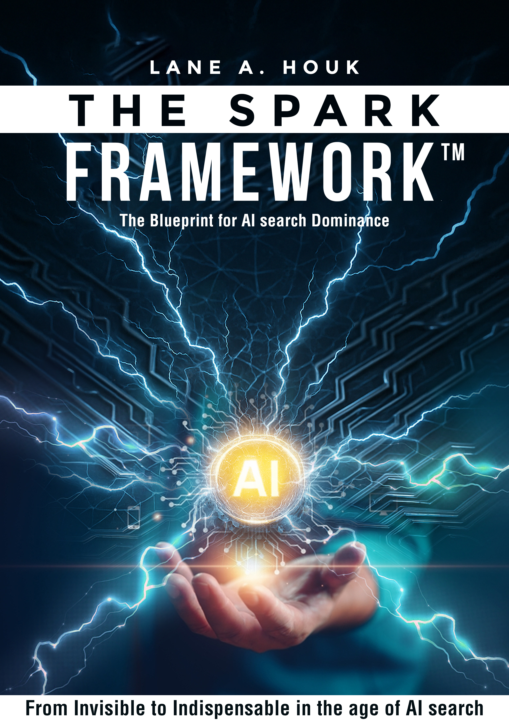
The 48-Hour Emergency Protocol Explained
One of the most valuable components of the SPARK Framework™ is the 48-Hour Emergency Protocol. This is designed for businesses that need immediate improvements in AI citation potential. The protocol focuses on rapid-deployment strategies: optimizing your most visible pages with structured data, ensuring your brand entity is clearly defined, fixing critical technical issues that prevent AI crawling, and creating answer-ready content for your most important queries. While the full framework is a 12-month journey, the emergency protocol can deliver measurable improvements within days. It's about prioritizing the highest-impact changes first. Question for the community: If you had to improve AI search visibility in 48 hours, what would be your first three actions?
0
0
1-10 of 502

@lane-houk-2084
Lane is a US Army veteran and a recognized expert in the digital marketing and SEO industries.
Active 4h ago
Joined Sep 11, 2024
Colorado
Powered by