
Write something

10d •
START HERE: The Director’s Intent
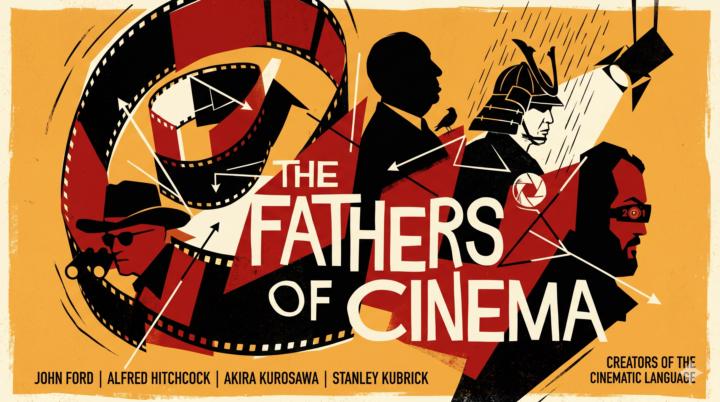
Most creatives today are drowning in the 'How.' How do I learn the latest software update? How do I fix this shot? How do I keep this Fortune 500 client happy when the brief changes at the 11th hour? In this community, we focus on the 'Why. I spent years in academia and more in the trenches of Hollywood and corporate boardrooms. The tools always change, but the principles of the Grand Tradition, the visual language used by Hitchcock, Ford, and Pyle, never do. You are here to stop being a technician and start being a Director. I’m Wayne H Johnson Jr. I’ve chaired film departments, produced VFX for major studios, and currently direct creative for some of the world's largest brands. My goal is to give you the ultimate competitive advantage: 30 years of classical fundamentals translated into practical, real-world visual problem-solving. Your First Mission (Do This Now) Go to the 'Fathers of Cinema' module. Don't just watch the lectures. Open the interactive Director's Research Database I’ve built for you. Use it to find one compositional principle from a Master that you can apply to a project you are working on today. Post that insight in the 'General' tab. We value 'Action Economy.' Don't just lurk. If you find a solution to a visual problem, share it. If you’re stuck on a 'Pressure Psychology' concept, ask. We are building a unified creative language here.
1d •
Our first test taker was Ben!!!
And he scored 100%. The Grand Tradition is not just theory. It is a measurable craft. Massive shoutout to Benjamin Watkins, the very first member to officially crush a test inside our Notes from the Director community. He didn't just pass; he scored a flawless 29/29 on "The Director's Intent," diving deep into the structural architecture of the Fathers of Cinema—Hitchcock, Kurosawa, and Kubrick. We aren't just sitting around talking about movies in this community. We are rigorously breaking down the mechanics of Cinematic Language, Visual Geometry, and Narrative Structure. By integrating AI tools like NotebookLM into the Skool platform, we are building interactive environments where professionals can actually test their eye and validate their understanding of the craft. Benjamin put the reps in. He proved he understands the underlying rules of the game. — Notes from the Director
2d •
The Architect of a Predictable Universe
We love to sanitize the history of our greatest minds. We picture Isaac Newton sitting peacefully under an apple tree, waiting for inspiration to strike. The brutal reality is far more compelling. In this presentation, The Spectrum of Genius, we deconstruct how formative childhood trauma and the extreme isolation of the Great Plague forced Newton into a state of obsessive focus. He didn't just invent calculus and map planetary motion. He fundamentally rewired how we perceive reality. Here is what most visual artists don't realize: When Newton published Opticks, he didn't just break down white light. He codified the modern color wheel, intentionally slicing the spectrum into seven distinct segments to perfectly match the Dorian diatonic musical scale. But he was not just a theorist. He was an operator. As the Master of the Royal Mint, Newton stabilized the British economy and hunted counterfeiters in London’s criminal underworld with empirical ruthlessness. And in secret, he spent 30 years engaged in alchemical research, using the "active principles" of the occult as the structural scaffolding to conceptualize how gravity could act at a distance. Newton permanently bridged classical physics, the visual arts, and modern industry because he understood one absolute truth: To command the universe, you first have to decode its mechanistic language. Flip through the attached deck for a deep dive into the architecture of a predictable universe. — Notes from the Director
2d •
Stop guessing your palettes. Here is how you match any color by sight.
Over my three decades as a creative director and educator, I’ve found that most artists simply guess at color. They rely on software pickers, digital algorithms, or "feeling" to find the right shade. That is exactly how you end up with muddy, unreadable designs. You do not need a mountain of textbooks to master color. In fact, you can learn more about the actual mechanics of light and pigment from one 80-page book, Faber Birren’s Principles of Color, than you will in an entire college-level theory class. Birren breaks down the "color triangle," which is the absolute structural key to understanding how color actually behaves in the real world. This is the kind of foundational working guide that belongs in the trenches, not sitting pristine on a shelf. You use it. You reference it. As my torn-up copy proves, if you want to master the Grand Tradition, you have to "eat the books." In the latest episode of my What Books? series, I flip through my well-worn copy and explain exactly why this tiny resource is a mandatory weapon in your arsenal. Watch the full breakdown here: https://youtu.be/XDxTYWnZPbo — Notes from the Director
1
0
1-30 of 82
powered by
skool.com/racons-academy-4096
Helping professional creatives master the craft and taste of world-class visual storytelling.
Suggested communities
Powered by