
1h • 🛠️ Show Your Work
The Wrong Layer: (The Trap)
First writeup in a series. This one lays out the practical framework. The later ones go deeper into posture, witness, and truth, so yes, it gets a little esoteric — but it’s still grounded in real workflow pain.
----
# The Trap
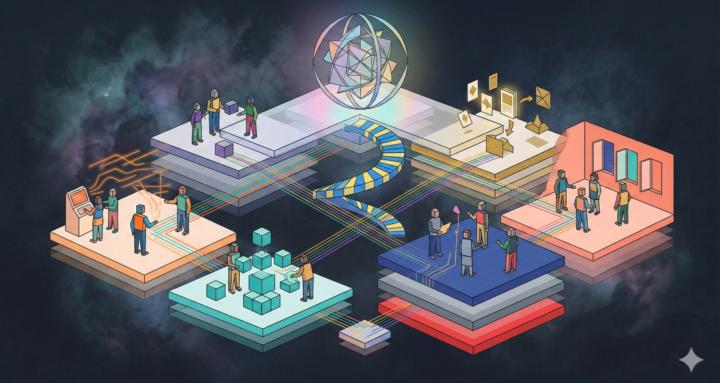
I had these images. Consistent. Striking. Exactly the aesthetic I’d been chasing.
They came out of a session with Gemini, and they were fire. But no matter what I did, I couldn't get my agents to reproduce the style.
I had the project artifacts. So, I did what I always do.
I compared them.
Zoomed in.
Extracted the style.
Reverse-engineered the process from the evidence left behind.
and...
it was still ass.
The more I studied outputs, the less I understood what even made them good. I could describe the style, but I couldn't control it.
I wasn’t missing data. I was interrogating the wrong surface.
Then, I asked Gemini one simple question: To generate this consistently, what parameters do I actually need to control?
It answered: Geometry. Substrate. Atmosphere. Luminance. Optics. Compression.
Click.
The prompt wasn’t a feeling; it was a formula. What looked like intuition was architecture. It just lived somewhere I hadn’t looked. I had routed _myself_ to the wrong layer.
## The Practical Move
Jake has a story for this.
A guy brings a drill to a repair shop. "It's not working well. Make it better." The repairman tunes it up and sends it back. Next day, the guy returns. "Still not working."
This cycle could go on forever.
But if the repairman had asked first—"What do you need it for?"—and the guy said, "Hanging a picture," the repairman could’ve just handed him 3M strips and said, "You don’t need a drill."
That’s the ICM answer: Ask why first. Get to the intention before optimizing the procedure.
But why do people keep bringing the drill back? Why do we keep interrogating the same surface, expecting it to confess?
## The Surfaces
ICM tells a system where to load context. Surfaces tell a person what kind of truth they are looking for. They aren't a checklist; they are dimensions.
And they aren't just where truth lives. They're what truth starts to look like depending on how you approach it.
The surfaces:
- **Artifact:** What exists right now (the file, the image). The trap is believing the output can fully testify to its origin.
- **Process:** The sequence. The trap is thinking repeating the steps equals understanding the result.
- **Model:** The underlying logic. The trap is believing that once the explanation makes sense, you have the whole picture.
- **Witness:** The living source or maker. The witness trap is thinking presence equals transfer. Just because the source knew does not mean you know now.
- **Intent:** What is this actually for? Intent is the anchor. It tells you what the other surfaces are supposed to serve.
## The Pressures
As you navigate these layers, other pressures push against you:
- **Timing:** When was this true?
- **Authority:** Why should I trust this?
- **Scope:** Where does this apply?
- **Friction:** The dashboard light blinking that your current route is dead.
## Close
This framework isn't here to make you more abstract. It’s to help you notice where you are standing.
Next time you get stuck, ask:
- What kind of truth am I trying to access?
- What surface am I interrogating?
- What question would route me onward?
The point isn't just to ask better questions. It's to stop asking the wrong surface to give you a kind of truth it can never carry.
Stop interrogating the wrong layer. Route to the intention, and the procedure will solve itself.
---
yucky
1
2 comments
The Wrong Layer: (The Trap)
skool.com/quantum-quill-lyceum-1116
Jake Van Clief, giving you the Cliff notes on the new AI age.
Leaderboard (30-day)
1
+763
2

+681
3

+461
4

+394
5

+387
Powered by