
🔥
14d (edited) • Announcements
PWS vs WordCrafter.Pro Clarification
If you've been around this community for more than five minutes, you've probably heard both terms — the Professional Writing System and WordCrafter.Pro — used almost interchangeably. They're not the same thing. Understanding the difference will help you decide exactly how you want to work, and why the app exists in the first place.
The Professional Writing System Is a Pipeline, Not a Single Tool
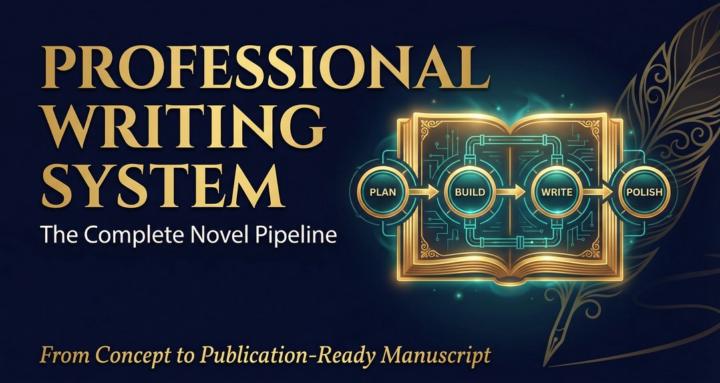
The Professional Writing System is a structured, multi-phase fiction writing pipeline made up of individual AI-powered skills — each one a specialist environment staffed by named expert personas who collaborate with you on a specific part of your writing process.
There's a skill for story development, where a team of story architects help you build your concept, world, plot structure, and full story bible from the ground up. There's a skill for character creation, where specialists help you develop psychologically complex characters with distinct voices, backstories, and emotional arcs. There's a writers room skill where prose coaches work with you chapter by chapter as you draft your manuscript. There's an editorial room where your finished draft gets a full developmental, line, and consistency edit. And beyond those four core phases, there are auxiliary skills for book marketing, merchandise design, short story writing, erotic fiction, market research, and more.
Each skill is a purpose-built tool. Each one is powerful on its own.
Running PWS as Individual Skills
When you use PWS through Claude directly — the way most community members started — you're working with individual skills inside a Claude Project. You load the skill you need for the phase you're in, work through that phase, and then carry your documents forward to the next skill when you're ready.
This works extremely well. The skills are designed to pass documents from one phase to the next — your Story Bible travels from Story Development into Character Creation, then into the Writers Room, then into Editorial. Each phase builds on what came before.
But there's something the individual skill approach asks of you: you have to manage the pipeline yourself. You have to know which skill to open, when to move between phases, and how to carry your documents forward. For experienced users who know the system well, that's no problem. For writers who are newer to PWS — or who just want to sit down and write without thinking about system architecture — it adds friction.
WordCrafter.Pro Is the Pipeline in an App
WordCrafter.Pro exists to remove that friction entirely.
It takes every skill in the Professional Writing System — all four core pipeline phases, all the auxiliary skills, all the genre expansion packs — and bakes them into a single application with the pipeline already built in. You don't set anything up. You don't manage document handoffs manually. You don't have to know which skill comes next. You open the app, start your project, and the right expert team is waiting for you at every stage of your manuscript.
The engine is powerful, precise, and capable of extraordinary things. But not everyone wants to build their own car around it. WordCrafter.Pro gives you the full power of the PWS engine inside a vehicle that's ready to drive the moment you sit down.
Which One Is Right for You?
If you're a hands-on writer who enjoys working directly in Claude, building your own project environment, and customizing how you load and use each skill, the individual PWS skills give you maximum control and flexibility. That's what the community is built around, and it remains a fully supported way to work.
If you want the complete PWS pipeline without the setup — one app, one login, every skill available, every phase connected — WordCrafter.Pro is built for you. It's $20 a month or $180 a year, with a 21-day free trial so you can work through a full writing phase before you commit to a thing.
Either way, the system is the same. The expertise is the same. The only difference is how much of the architecture you want to manage yourself.
**This post was written with the Nonfiction Room Skill
8
14 comments
PWS vs WordCrafter.Pro Clarification
skool.com/pws-community-for-writers-8447
The Home for AI-Powered Authors. Master story,prose, and marketing with expert AI personas to finish and sell your book fast. Never write alone again
Leaderboard (30-day)
1

🔥
+429
2

🔥
+379
3

+324
4

+276
5

🔥
+254
Powered by