Activity
Mon
Wed
Fri
Sun
May
Jun
Jul
Aug
Sep
Oct
Nov
Dec
Jan
Feb
Mar
Apr
What is this?
Less
More
Memberships
ChatGPT Users
12.7k members • Free
Entrepreneurship Over 50
30 members • Free
Female Entrepreneur Community
2.6k members • Free
⭐️ The Writers Academy ⭐️
40 members • Free
PWS Writers Room
15 members • Free
Main Way to Wealth
17.5k members • Free
17 contributions to PWS Writers Room

2d •
Touchpoint Tuesday - What is everyone working on today?
Two days into the week and where are we at. What can i or anyone else reading this do to help you point the needle a little more forward? I was up until 5 AM, at work by 8:45, was working on getting the PWS updates finished and tested so all will be available, I think I finalized the graphics for he second Story structure book and did some testing on the PWS-Studio App. It currently is local only and is only being tested with Windows right now but when released will be Mac/Windows/Linux. Due to screensize issues and how much is there I feel like a phone formatted version might be countr productive but here I am writing this on my Samsung phone hooked up to a monitor in Dex mode (looks like Windows on a bigger screen) The current top 3 contenders for Ai writing ar RaptoWrite, SudoWrite and Novelcrafter and all are online only. What I have developed is a local app. All of your files stay on your local machine and you can use your AI of choice, but currently only Openrouter to access them (this will change) OR you can run Ollama or LMStudio on your local laptop and use a local only model like Gemm-4 (There are many choices) The limitation on abilities of them is more based on your hardware specs. Disadvantage usually slow and not as polished in prose, Advantage is that NOTHING goes to the web, all of your work is private. My question for you is this: Since most of us do not have hefty hardware budgest and som eare still using at least ten year old computers to work on. Is this that important? I'm starting to lean to a web app model for a number of reasons, the biggest is that I could give everyone an access code almost immediately to try it out. Let me know your feelings on the tools.


3 likes • 2d
Today I am trying to organize ideas for my next book, so super challenging, keeps my brain engaging continuously... I am also trying to make my services clearer and easier for people to understand because I have learned that confusion costs business. As far as your question, I do think privacy matters, especially for writers working on books, client work, personal stories, legal situations, or sensitive content. I'm also wanting to switch over to Linux from Microsoft. Because privacy is paramount for us these days with big tech butting in everyone's business. That said, I think ease of use matters too. And yes people do not have newer computers, large budgets, or the patience to set up a lot of complicated local tools. If a web-based option is easier, faster, and gets more people using it, I think that probably makes sense for growth. Maybe the ideal long-term option is giving people both: - Web-based for simplicity and quick access - Local version for people who want privacy and more control That way people can choose what matters most to them. Good post for 5am Michael. Love this... Stacey Brooks Thego2writer
1 like • 2d
@Michael Culp these things? Lol
4d •
Sunday Funday!
What's everyone up to today? Hopefully something fun! I'm broken today and everything hurts from spending 14 hours in old shoes on hard pacement at a craft fair with my lovely and wonderful wife @Amanda Curry Culp. We had our best day ever and sold most of what we brought to the show. She makes Resin Jewelry, art and Knickknacks from dried or preserved flowers. While there i did some crazy stuff on my phone, and on my home machine via remote link on my teeny tiny screen. Scrolling around a 4K monitor from a phone screen is a bit geeky even for me, but I did it. Thinking over a post on another skool site about how to store all the cool stuff we share here and stay organized with everything. Ive been using a combination of Google keep with tags and an app called getrecall that is essentially a bookmark utility but is also my replacement for pocket(read it later) after it shutdown. Its huge advantage is you can store docs or bookmarks that you can tag but it also creates an ai summary and saves the full text of the article. Their constantly adding and iterating. I have something like 50,000 or so links in it and it's a breeze to find what I'm looking for. Evernote used to be my second brain with pocket as my TBR pile now it's all in one place. My biggest hangup with them is you can only import 2000 links at a time and I have far more than this so I had to write a routine to split them into 2000 link files and import the manually one at a time. Ive debated about just creating my own tool, but haven't pulled that trigger yet. My writing app project has to be finished first for the folks here.. Welllllll...... I've now halfway written a replacement for getrecall that solves all the issues I dislike about it, runs local with a free local llm or openrouter link and solves a tagging issue and import issue I have with getrecall....even though currently it's the best tool I've found. What I've got so far seems to work but there's only so much I can do working on my phone sitting in a tent with only remote access to my home machine on the tiny screen. Whew. I'll work on a chrome plug-in to grab selected text or the whole page you are on later which is the final piece to it
2 likes • 4d
@Michael Culp Sounds like y'all had an incredible day... Selling most of what you brought, and getting to do it alongside your wife is a huge win. Building software from a phone in a tent while controlling a 4K monitor is peak geek energy 😂. The organization system actually sounds really smart. Google Keep, Recall, AI summaries, tagging, local LLMs, and now building your own version because the existing tool still is not good enough, that is exactly the kind of thing writers and creators need. A true second brain setup. Fantastic story idea. “It’s not a memory palace, it’s a wormhole that leads to a labyrinth inside.” That sounds like the kind of line that sticks with people. It already feels cinematic. You definitely earned the new shoes and hot tub today. After 14 hours on pavement in old shoes, your feet probably need their own recovery arc.
2 likes • 3d
@Michael Culp
3d •
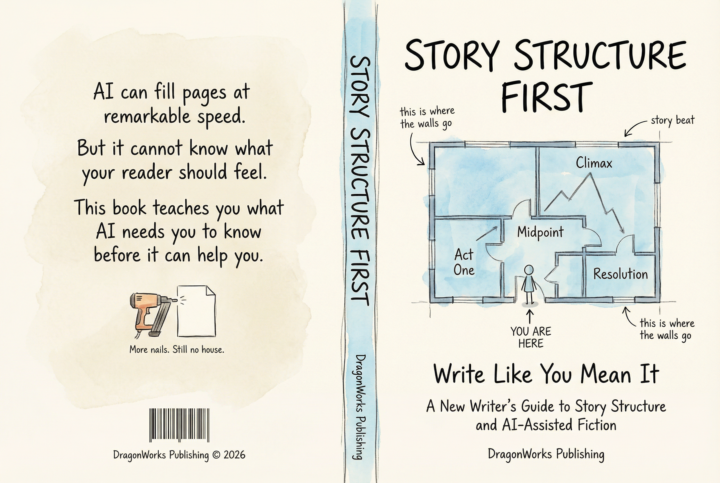
Story Structure Book 1 Cover Poll
I spent most of last night Building the Non-Fiction Writers Room with a whole new cast of characters and tested it with writing two very different books on the same subject. I had all of the research ready and built a researcher into the tool to fill in the gaps. The following is the news release created for the two books - Please stay till the bottom of this post. ****** Two Books. Same Nine Structures. Completely Different Books. DragonWorks Publishing has just released two companion volumes on story structure for fiction writers using AI assistance. They cover the same nine structural frameworks. They approach them from completely different angles. Here's what each one does and how they work together. "Structure First: Write Like You Mean It A New Writer's Guide to Story Structure and AI-Assisted Fiction" This is the foundation book. It's written for any fiction writer — with or without the Professional Writing System — who wants to understand how story structure works and how to use AI as a collaborator rather than a ghostwriter. The book opens with an honest argument: AI is a nail gun, and a nail gun doesn't know what a house is. You do. Before you prompt anything, you need to understand what readers come to fiction to feel, what structure actually delivers, and where AI fits in a human-led creative process. From there, it teaches all nine structures from the ground up — plain-English concept explanations, emotional contracts with the reader, worked examples from recognizable stories, fill-in worksheets to complete before prompting, simplified prompt libraries, and quick-start prompts ready to paste. Reading level is deliberately accessible. Every term is defined. Nothing is assumed. Best for: First-time fiction writers, writers new to AI assistance, anyone who wants a complete standalone craft reference they can use with any AI tool. "The Anarchist's Guide to Story Structure For Writers Using the Professional Writing System" This is the decision book. It covers the same nine structures — but doesn't re-teach them. Instead it asks a different question: given your story, your working style, and your reader's needs, which structure do you actually choose — and what are you agreeing to by choosing it?
Poll
4 members have voted
3 likes • 3d
@Michael Culp This is a really smart way to approach it because a lot of writers understand structure in theory, but still struggle when it comes time to decide which structure actually fits the story they are trying to tell. I also like that you separated the "how structure works" side from the "how to choose structure" side because those are really two different problems. The trade-off angle sounds especially useful because every structure really does create different expectations, pacing, and emotional payoff. AI can absolutely help speed things up, organize ideas, and fill in gaps, but if the writer does not understand the emotional experience they are trying to create, the tool is just building random walls with no blueprint. Really excited to see where this goes because it sounds like you are building something practical instead of just theoretical, and I think a lot of writers need that. Stacey Brooks Thego2writer
5d •
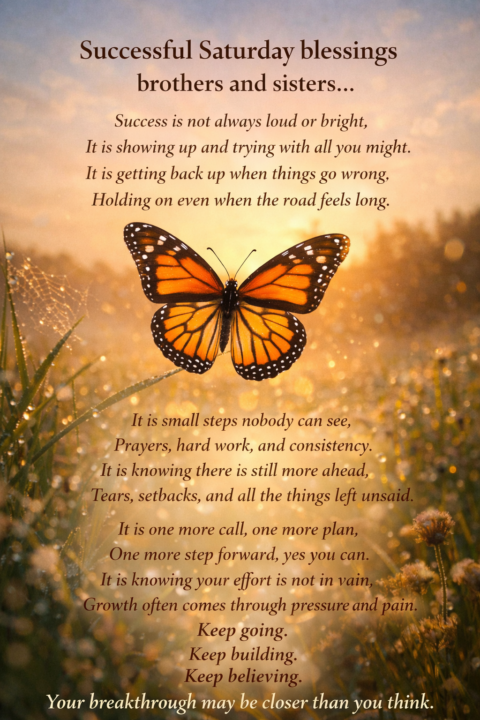
Successful Saturday blessings brothers and sisters...
Success is not always loud or bright, It is simply showing up and trying with all your might. It is getting back up when things go wrong, And holding on even when the road feels long. It is small steps nobody can see, Prayers, hard work, and consistency. It is knowing there is still more ahead, Tears, setbacks, and all the things left unsaid. It is one more call, one more plan, One more step forward, yes you can. It is knowing your effort is not in vain, Growth often comes through pressure and pain. Keep going. Keep building. Keep believing. Your breakthrough may be closer than you think.
3 likes • 5d
@Nikola Djokovic you are so very welcome dear. Glad you liked it. It has accomplished exactly what I intended it to do... Big hugssssssss God bless you
2 likes • 5d
@Michael Culp thank you brother.
7d •
Throwaway - Thursday
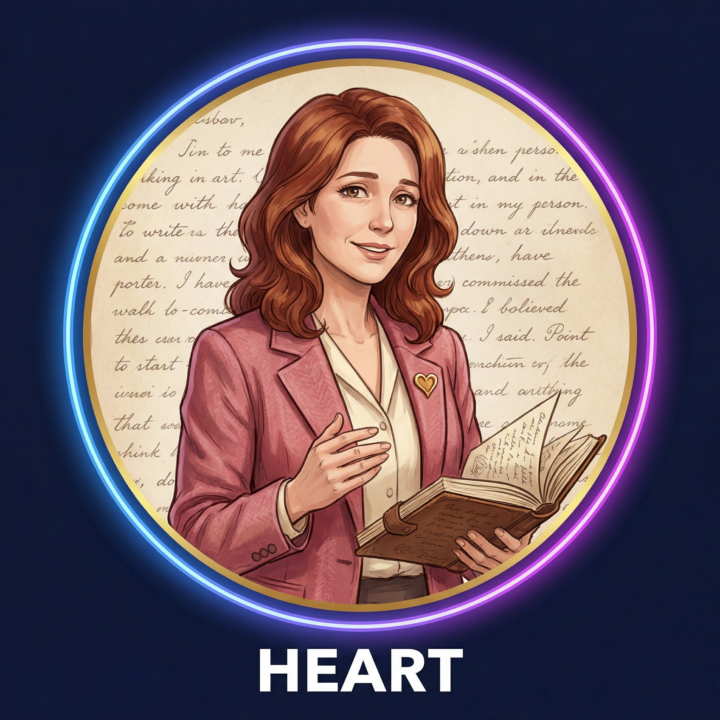
Throwaway Thursday! I thought I do something fun and show off a conversation with the /story-development-room skill (I'm truly hating the lack of formatting options in Skool). In general I have an idea or a fully written scene in mind when I'm really geared up for writing, but as i iterate and update the skills and the capabilities of the personas I do teste like this. Usually only in one genre so this is first. Feel free to run with any of these if they appeal to you. I'll be doing this every Thursday from now on and we might do a little competition later using only ONE genre idea to have a group use to all write their own stories. The most original may win something like a mug or a Tee shirt. Phillips did a competition back in 2011 called Parallel lines that had the same script sent to each director to create a short movie. The theme was "while there are many ways to tell a story, there is only one way to watch them: On a Phillips television". You can still find the finalists and the winner on youtube. They are worth a watch. the script was simple that they all shared: "What is that?" "It's a unicorn." "Never seen one up close before." "Beautiful." "Get away. Get away." "I'm sorry." If you have the PWS system you can copy and paste one of the below or edit to your choosing and discuss it with the Story Development room cast of Personas until you get it just right. Check out the plots below and comment ***** I opened up a claude chat and sent the following prompt: /story-development-room Can we come up with ten detailed story ideas in ten genres? And this is the reply: I'll load the story development room skill to give you properly-structured ideas. Load story development room skill Got it. This is a Throwaway Thursday brainstorm — ten rapid-fire concepts across ten genres, not a full Phase 1 workup on any single one. I'll skip the seven-phase protocol and instead let the core team (FELIX, RUBY, MAVERICK, HEART, EDNA) pitch one solid concept per genre, each detailed enough to be a real seed you could pick up later.
2 likes • 7d
This is such a interesting and fun idea. A few of these could easily become full books i think... The one that grabbed me the most was The Undertaker's Telegraph. That one feels incredibly original and atmospheric. A female undertaker getting Morse code messages from the dead is the kind of idea that immediately makes you want to know more. I can already picture the dusty Arizona setting, the funeral parlor, the strange tapping sounds, and the tension of trying to prove something nobody would believe. I also really liked The Last Marigold because the funeral flower shop and forensic botany angle feels fresh. Small-town mysteries with a very specific skill set or trade always seem to stand out. The Cartographer of Broken Roads also feels like something romantasy readers would absolutely love. The map magic tied to emotions and relationships is really clever. This would honestly be a fun challenge for a writing group because it shows how much the same basic idea can change depending on who is writing it. Everybody would bring something different to the same concept. Also, I love the Parallel Lines reference. It is a great reminder that the same prompt can create completely different stories depending on the writer behind it. This was very interesting to read. Thank you so much for sharing... Stacey Brooks | TheGo2Writer
1-10 of 17

@stacey-brooks-7290
Published author and founder of TheGo2Writer helping people turn complex situations into clear, professional writing.
Active 33m ago
Joined Apr 4, 2026
Kimberling City Missouri
Powered by