
🔥
Apr 4 • PWS Skills Help
Best Practices for Writing with AI
The following is a Lead magnet page I wrote awhile back I thought I'd share with the class.
From the Professional Writing System:
Artificial intelligence is the most powerful tool a writer has ever had. But like any tool, its effectiveness depends on the skill of the person using it. Simply asking an AI to "write a story" will produce generic, soulless prose. The key to unlocking its true potential is to stop thinking of it as a vending machine and start thinking of it as a collaborator.
This guide outlines the core principles we use in the Professional Writing System to transform AI from a simple tool into a powerful creative partner.
--------------------------------------------------------------------------------
1. You Are the Creative Director, Not the Audience.
Your job is to have the vision. The AI’s job is to help you execute it. Never give the AI a blank page. Always provide it with the context, constraints, and goals it needs to do its job effectively.
- Bad Prompt: "Write a scene where two characters argue."
- Good Prompt: "Write a 300-word scene where Captain Eva Rostova confronts her brother, Jax, on the bridge of her starship. The goal of the scene is for Eva to try and convince Jax to help her, but he refuses. The tone should be tense and filled with years of unspoken resentment. Eva’s voice is formal and clipped; Jax’s is sarcastic and informal."
2. Garbage In, Garbage Out.
The quality of the AI’s output is directly proportional to the quality of your input. The more detailed and specific your instructions, the better the result will be. This is why the Professional Writing System is built on a foundation of detailed Story Bibles and Character Profiles. These documents are the ultimate input, giving the AI everything it needs to know about your world, your characters, and your voice.
3. The Power of the Persona.
Don’t just talk to a generic chatbot. Give your AI a job title, a personality, and a specific area of expertise. This is the core philosophy of the PWS. When you ask for feedback on your plot, you’re not talking to a language model; you’re talking to Felix, the master of plot architecture. When you need to write an intimate scene, you’re collaborating with Sable, the erotic prose specialist. This allows you to get targeted, expert-level feedback and collaboration.
4. Iterate, Don’t Accept.
Your first AI-generated output is a first draft, not a final product. The real magic happens in the process of revision and refinement. Treat the AI as a tireless assistant. Ask it for variations. Tell it what you like and what you don’t. Push it to do better.
- Good Follow-up Prompt: "That’s a good start, but let’s make Jax’s dialogue more biting. And can you add a detail about the ship’s alarm system blaring softly in the background to increase the tension?"
5. The AI is a Tool, Not the Artist.
The AI can generate prose, but it cannot create meaning. It can structure a plot, but it cannot have a vision. It can write dialogue, but it cannot feel emotion. Your voice, your experiences, and your unique perspective are the soul of your story. The AI is a powerful instrument, but you are the one who must make it sing.
--------------------------------------------------------------------------------
Ready to Build Your Own AI Writing Team?
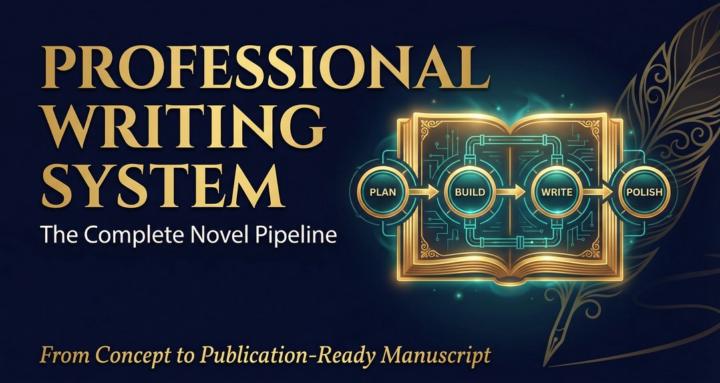
These best practices are the foundation of the Professional Writing System, the world’s most advanced, collaborative, AI-powered ecosystem for fiction writers. With a team of over 40 specialized AI personas, you can move beyond generic prompts and build a true creative partnership.
Learn more about the full Professional Writing System and start writing better, faster, today!
8
3 comments
Best Practices for Writing with AI
skool.com/pws-community-for-writers-8447
The Home for AI-Powered Authors. Master story,prose, and marketing with expert AI personas to finish and sell your book fast. Never write alone again
Leaderboard (30-day)
1

🔥
+471
2

🔥
+379
3

+352
4

+296
5

🔥
+255
Powered by