User
Write something
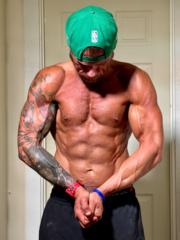
🧬💉 Day 50 Photo Update 💉🧬
Hey everyone! It’s been 50 days on this protocol, and today’s picture update shows some real transformation—especially over the last 7-8 days. I’ve never looked or felt like this before, but it is amazing! Starting from November 7 (left) to December 27 (right), the changes in leanness and muscle definition are finally kicking in strong. I’m dropping fat steadily while holding onto muscle, which is exactly what these peptides aim for. For context, retatrutide (a GLP-1/GIP/glucagon agonist) has been key here—trials show it can lead to 15-20% body weight loss over 26 weeks by curbing appetite and boosting metabolism, making calorie deficits easier without extreme hunger. Combined with GH peptides like tesamorelin and hexarelin, which pulse growth hormone to preserve lean mass (studies report 5-10% muscle retention during cuts), it’s creating that “recomp” effect where fat melts but strength holds. If you’re new to peptides, this combo mimics natural hormone signals to optimize body composition—safe when monitored, but always start low and get bloodwork. I’m surprised how lean it’s getting me—visceral fat down, abs emerging—but I want accurate metrics. Planning a DEXA scan soon to confirm body fat (aiming for 10% or less, as research suggests that’s where health benefits peak, like lower inflammation and better insulin sensitivity). Once there, I’ll ease off to maintain. What do you think of the progress? Share your protocols or questions below—let’s discuss!
🧬💉 Day 50 Photo Update 💉🧬
💪🏻💉🧬 IGF-1 LR3 & PEG-MGF
https://youtu.be/ao0kdUySw_s?si=zahaiVdupYgB0A1A IGF-1 LR3 and PEG-MGF Injection Demo: Targeting Biceps and Delts for Growth Hey Peptide Bio Hack Research Hub community! In this video, I’m sharing my site-specific injection routine with IGF-1 LR3 and PEG-MGF, focusing on biceps and delts to test localized muscle growth. As always, these are research peptides—not for human use—so this is for educational purposes only. If you’re new to peptides, let’s break down what they do, why they might help, how they work, and the realities from studies. I’ll tie in my experience over the past month-plus. What is IGF-1 LR3 and Why Use It? IGF-1 LR3 is a modified version of insulin-like growth factor-1, a natural hormone the body produces in response to growth hormone (GH). The “LR3” extension makes it last longer (up to 20-30 hours vs. natural IGF-1’s minutes), allowing sustained effects. It promotes muscle growth by activating satellite cells (stem-like cells that fuse to muscle fibers for repair and enlargement) and boosting protein synthesis—the process where cells build new proteins for tissue. Studies in animal models show IGF-1 LR3 increases muscle mass by 10-20% over 4-6 weeks when injected locally, as it enhances nutrient uptake and cell proliferation right at the site. In human research (limited, mostly anecdotal from bodybuilding), it’s used pre/post-workout to amplify training gains without systemic sides like low blood sugar at low doses (20-50 mcg). Why? It mimics the body’s response to heavy lifting, potentially speeding hypertrophy (muscle size increase) in targeted areas—ideal if you’re addressing imbalances, like my right bicep lagging from a February car accident that sidelined it for months. What is PEG-MGF and Why Use It? PEG-MGF (pegylated mechano growth factor) is a variant of IGF-1 released during muscle stress, like after workouts. The “PEG” attachment extends its half-life (days vs. hours), making it more effective for recovery. It works by stimulating myoblast (young muscle cell) proliferation and reducing inflammation, helping repair micro-tears from training. Preclinical studies on rodents show PEG-MGF accelerates muscle healing by 15-25% post-injury, promoting fiber regeneration through pathways like PI3K/Akt for cell survival. In human contexts (mostly from athlete reports), it’s injected post-workout to localized sites for better rebuild—doses like 100-300 mcg per muscle support this without broad effects. Why? It targets mechanical damage, complementing IGF-1 LR3 for a “repair and grow” combo, potentially yielding 20-30% better gains in stacked protocols per muscle biopsy research.
1
0
🧬💉🧪Reconstituting IGF-1 LR3💪💉🧬
VIDEO —> https://youtu.be/NiE7I3Bjp9U?si=xAv3_op2Adus6qfB In this in-depth video tutorial, I walk you through the complete process of reconstituting a 1mg vial of IGF-1 LR3 (Insulin-like Growth Factor 1 Long R3), a synthetic peptide analog of human IGF-1 with an extended half-life due to its arginine substitution at position 3 and a 13-amino acid extension at the N-terminus. This peptide is widely discussed in scientific research, bodybuilding, and biohacking circles for its potential roles in promoting muscle hypertrophy, enhancing recovery from exercise, supporting fat loss, and aiding in cellular repair and growth factor signaling pathways. However, it’s important to note that IGF-1 LR3 is strictly for laboratory and research use, not approved for human consumption by regulatory bodies like the FDA. We use a combination of 0.6% acetic acid (AA) for initial dissolution—since IGF-1 LR3 is sensitive to neutral pH and can degrade in plain water—followed by bacteriostatic water (BAC) for dilution and preservation, which contains benzyl alcohol to inhibit bacterial growth. This method ensures stability and sterility, resulting in a final concentration of 500mcg/mL in a total volume of 2mL, making it easier for precise dosing in research settings. Key steps covered in detail: - Preparation and Supplies Gathering: Start by assembling all necessary items in a clean, sterile workspace. You’ll need a 1mg vial of lyophilized (freeze-dried) IGF-1 LR3 powder, 0.6% acetic acid solution, bacteriostatic water, large 3 mL syringess, alcohol wipes or isopropyl alcohol for sanitizing and gloves to maintain hygiene. Double-check expiration dates and ensure everything is stored at appropriate temperatures—peptides like this should be kept frozen or refrigerated until use. - Calculating the Dilution Ratio: For a 1mg vial aiming for 500mcg/mL, we’ll use 0.5mL of AA initially to dissolve the powder, followed by 1.5mL of BAC, totaling 2mL. This concentration allows for easy micro-dosing; for example, 0.1mL would deliver 50mcg. Always verify your math based on your specific research needs—adjust volumes if targeting a different strength, but avoid over-diluting to prevent instability. - Initial Dissolution with Acetic Acid: Sanitize the vial tops with alcohol wipes. Using a sterile syringe, draw up exactly 0.5mL of 0.6% AA. Insert the needle into the vial at angle along the side of the IGF-1 LR3 vial to let the liquid trickle down gently—do not inject directly onto the powder to minimize foaming or agitation, which could denature the peptide and reduce its potency. Allow the powder to dissolve naturally at room temperature for 1-2 minutes; gently roll or swirl the vial if needed, but never aggressively shake as this can break peptide bonds. - Adding Bacteriostatic Water for Final Dilution: Once fully dissolved (the solution should be clear with no visible particles), draw up 1.5mL of BAC water with a new sterile syringe. Inject it slowly into the vial in the same gentle manner. The AA helps with solubility, while BAC extends shelf life by preventing microbial contamination. Swirl lightly to mix—again, no shaking—and let it sit for a few minutes to ensure homogeneity. - Final Mixing, Inspection, and Storage: Inspect the solution for clarity; if cloudy, it may indicate improper handling. Label the vial (or write down) with the date, concentration, and contents. Store in the refrigerator at 36-46°F to maintain stability Reconstituted IGF-1 LR3 typically lasts 4-5 weeks under these conditions, though some sources suggest potentially longer. Discard if any discoloration or odor develops. It’s best practices for safety and efficacy to use fresh syringes to avoid cross-contamination, and understanding the peptide’s sensitivity to temperature, and aggressive handling.
2
0
1-3 of 3
powered by
Peptide Biohack Research Hub
skool.com/peptide-biohack-research-hub-9880
🧬Join Peptide Biohack Research Hub🧬Explore cutting-edge peptide research, biohacking strategies & protocols.Connect, learn, & optimize your health!
Build your own community
Bring people together around your passion and get paid.
Powered by