Activity
Mon
Wed
Fri
Sun
Jan
Feb
Mar
Apr
May
Jun
Jul
Aug
Sep
Oct
Nov
Dec
What is this?
Less
More

Owned by Lincoln

🧬Join Peptide Biohack Research Hub🧬Explore cutting-edge peptide research, biohacking strategies & protocols.Connect, learn, & optimize your health!

Memberships

Skoolers

179.1k members • Free

Peptides4Power

953 members • Free

Pep Talk - For Better Health

2.3k members • Free

Peptides & Pump Knowledge Base

535 members • Free

RP
Roco's Peptide Community

315 members • Free

17 contributions to Peptide Biohack Research Hub
🧬💉 Day 50 Photo Update 💉🧬
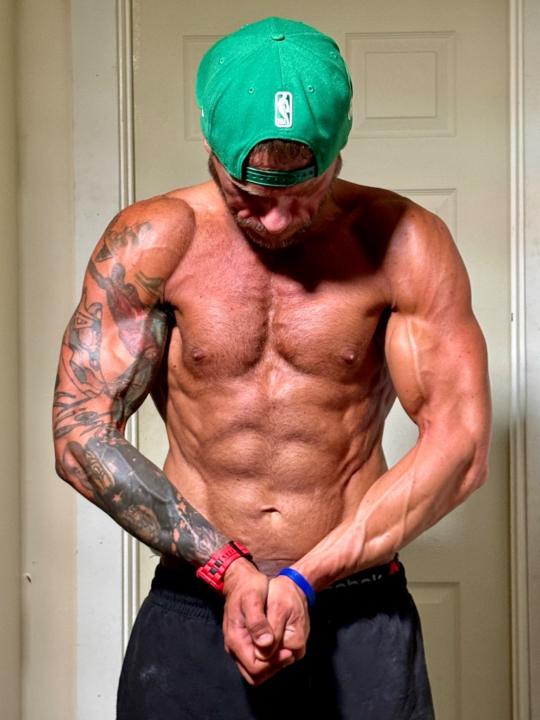
Hey everyone! It’s been 50 days on this protocol, and today’s picture update shows some real transformation—especially over the last 7-8 days. I’ve never looked or felt like this before, but amazing! Starting from November 7 (left) to December 27 (right), the changes in leanness and muscle definition are finally kicking in strong. I’m dropping fat steadily while holding onto muscle, which is exactly what these peptides aim for. For context, retatrutide (a GLP-1/GIP/glucagon agonist) has been key here—trials show it can lead to 15-20% body weight loss over 26 weeks by curbing appetite and boosting metabolism, making calorie deficits easier without extreme hunger. Combined with GH peptides like tesamorelin and hexarelin, which pulse growth hormone to preserve lean mass (studies report 5-10% muscle retention during cuts), it’s creating that “recomp” effect where fat melts but strength holds. If you’re new to peptides, this combo mimics natural hormone signals to optimize body composition—safe when monitored, but always start low and get bloodwork. I’m surprised how lean it’s getting me—visceral fat down, abs emerging—but I want accurate metrics. Planning a DEXA scan soon to confirm body fat (aiming for 10% or less, as research suggests that’s where health benefits peak, like lower inflammation and better insulin sensitivity). Once there, I’ll ease off to maintain. What do you think of the progress? Share your protocols or questions below—let’s discuss!
🧬💉 Day 50 Photo Update 💉🧬
1 like • 4h
@Alex Carroll 🤣😂 I like the gif
Welcome! Introduce yourself + share your stack 🧬💉🧬
Let's get to know each other! Comment below sharing where you are in the world and why you’re here. If you’re already using peptides, what does your stack look like?
0 likes • 6h
@Judy Jay what did it do follow you? Cartalax was a game changer for me.
1 like • 5h
@Judy Jay I May give that a try as well
🧬💉Peptide of the Day: GHK-Cu – The Ultimate Regenerator! 💉🧬
For today’s “Peptide of the Day,” we’re diving deep into GHK-Cu (also known as Copper Peptide or Gly-His-Lys-Copper). This powerhouse has been buzzing in the anti-aging and wellness world for its regenerative magic. Whether you’re into skin glow-ups, hair hacks, or faster healing, GHK-Cu might just be your new bestie. Let’s break it down step by step – based on solid literature and research. What is GHK-Cu? 🤔 GHK-Cu is a naturally occurring tripeptide (a tiny chain of three amino acids: glycine, histidine, and lysine) bound to a copper ion. It’s found in your body’s plasma, saliva, and urine, but levels drop by over 60% as you age (starting around 60, per studies). Discovered in the 1970s by Dr. Loren Pickart, it was first noted for making old liver cells act young again. Today, it’s a star in cosmetics, injectables, and therapies for its protective and rebuilding properties. Think of it as your body’s built-in repair kit! How Does It Work? 🧬 GHK-Cu is a gene-modulator extraordinaire. It flips switches in your cells to promote healing and regeneration. Here’s the science: - Stimulates growth factors: Boosts collagen, elastin, and glycosaminoglycan production (the stuff that keeps skin plump and joints healthy). - Promotes angiogenesis and nerve outgrowth: Helps form new blood vessels and nerves for better tissue repair. - Anti-inflammatory and antioxidant: Suppresses inflammation genes, fights free radicals, and resets damaged cells. - Tissue remodeling: Activates genes for repair while shutting down ones linked to breakdown and aging. From NIH-backed research (like a 2018 review in Frontiers in Pharmacology), it supports fibroblast function (skin-building cells) and even reverses some age-related gene changes. It’s like giving your body a “reset” button at the cellular level! Main Effects & All the Benefits from Literature 💪 The hype is real – GHK-Cu has been studied extensively for decades. Here’s a roundup of its top benefits, pulled from peer-reviewed lit (e.g., PubMed, animal/human trials, and reviews):
1
0
🧬💉Peptide of the Day: GHK-Cu – The Ultimate Regenerator! 💉🧬
🧬💉🧪Reconstituting IGF-1 LR3💪💉🧬
VIDEO —> https://youtu.be/NiE7I3Bjp9U?si=xAv3_op2Adus6qfB In this in-depth video tutorial, I walk you through the complete process of reconstituting a 1mg vial of IGF-1 LR3 (Insulin-like Growth Factor 1 Long R3), a synthetic peptide analog of human IGF-1 with an extended half-life due to its arginine substitution at position 3 and a 13-amino acid extension at the N-terminus. This peptide is widely discussed in scientific research, bodybuilding, and biohacking circles for its potential roles in promoting muscle hypertrophy, enhancing recovery from exercise, supporting fat loss, and aiding in cellular repair and growth factor signaling pathways. However, it’s important to note that IGF-1 LR3 is strictly for laboratory and research use, not approved for human consumption by regulatory bodies like the FDA. We use a combination of 0.6% acetic acid (AA) for initial dissolution—since IGF-1 LR3 is sensitive to neutral pH and can degrade in plain water—followed by bacteriostatic water (BAC) for dilution and preservation, which contains benzyl alcohol to inhibit bacterial growth. This method ensures stability and sterility, resulting in a final concentration of 500mcg/mL in a total volume of 2mL, making it easier for precise dosing in research settings. Key steps covered in detail: - Preparation and Supplies Gathering: Start by assembling all necessary items in a clean, sterile workspace. You’ll need a 1mg vial of lyophilized (freeze-dried) IGF-1 LR3 powder, 0.6% acetic acid solution, bacteriostatic water, large 3 mL syringess, alcohol wipes or isopropyl alcohol for sanitizing and gloves to maintain hygiene. Double-check expiration dates and ensure everything is stored at appropriate temperatures—peptides like this should be kept frozen or refrigerated until use. - Calculating the Dilution Ratio: For a 1mg vial aiming for 500mcg/mL, we’ll use 0.5mL of AA initially to dissolve the powder, followed by 1.5mL of BAC, totaling 2mL. This concentration allows for easy micro-dosing; for example, 0.1mL would deliver 50mcg. Always verify your math based on your specific research needs—adjust volumes if targeting a different strength, but avoid over-diluting to prevent instability. - Initial Dissolution with Acetic Acid: Sanitize the vial tops with alcohol wipes. Using a sterile syringe, draw up exactly 0.5mL of 0.6% AA. Insert the needle into the vial at angle along the side of the IGF-1 LR3 vial to let the liquid trickle down gently—do not inject directly onto the powder to minimize foaming or agitation, which could denature the peptide and reduce its potency. Allow the powder to dissolve naturally at room temperature for 1-2 minutes; gently roll or swirl the vial if needed, but never aggressively shake as this can break peptide bonds. - Adding Bacteriostatic Water for Final Dilution: Once fully dissolved (the solution should be clear with no visible particles), draw up 1.5mL of BAC water with a new sterile syringe. Inject it slowly into the vial in the same gentle manner. The AA helps with solubility, while BAC extends shelf life by preventing microbial contamination. Swirl lightly to mix—again, no shaking—and let it sit for a few minutes to ensure homogeneity. - Final Mixing, Inspection, and Storage: Inspect the solution for clarity; if cloudy, it may indicate improper handling. Label the vial (or write down) with the date, concentration, and contents. Store in the refrigerator at 36-46°F to maintain stability Reconstituted IGF-1 LR3 typically lasts 4-5 weeks under these conditions, though some sources suggest up to potentially longer. Discard if any discoloration, precipitation, or odor develops.
2
0
🧬💉Understanding Peptides: A Beginner’s Guide💉🧬
Peptides are short chains of amino acids, the same building blocks that make up proteins in your body. They’re naturally produced and play key roles in many processes, like signaling between cells or supporting tissue repair. Found in foods like meat and dairy, as well as in medical treatments, peptides have been researched for decades to understand their effects on health. They’re not mysterious substances but part of everyday biology, and supplements or therapies using them aim to enhance what your body already does. How Peptides Work Peptides function as signaling molecules, binding to receptors on cells to trigger specific responses. For example, they can stimulate hormone release or promote cell growth by interacting with pathways like those involving growth factors. Their small size allows them to be absorbed efficiently, often leading to targeted effects with fewer widespread disruptions compared to larger molecules. Scientists modify peptides to improve stability, such as adding groups to prevent quick breakdown by enzymes, extending their activity from minutes to hours. This makes them useful for conditions where natural processes need a boost, backed by studies showing they influence gene expression and protein production for repair and regulation. What Peptides Do Peptides support a range of body functions, including healing, metabolism, and immune response. They can accelerate tissue repair by increasing collagen production, which strengthens skin and joints, as seen in wound-healing research where peptides reduced recovery time. In metabolism, they help regulate blood sugar and appetite, with clinical trials showing reductions in HbA1c levels for better glucose control. Anti-inflammatory effects come from modulating cytokines, easing conditions like arthritis, while antioxidant properties protect cells from damage. Overall, studies link peptides to improved energy, muscle maintenance, and resilience against age-related decline, making them a natural ally for wellness.
4
0
🧬💉Understanding Peptides: A Beginner’s Guide💉🧬
1-10 of 17
Lincoln Horsley
3
19points to level up
@lincoln-horsley-7512
40 year old husband and dad working on getting to 10% bf. And I love peptides!!

Active 37m ago
Joined Dec 22, 2025