
Write something
🔥
4d •
Grafting Fruit Trees Nearly 600 Years Ago
Around 1440, an English gardening poem attributed to Jon Gardener described how to grow vegetables and herbs, save seed, propagate plants, and graft fruit trees. In The Feate of Gardening, Gardener gives surprisingly practical instructions for grafting. He describes cutting the tree stock with a saw, smoothing it with a knife, preparing the scion, fitting the pieces together, and protecting the graft afterward. For those of us growing grafted pawpaws, apples, pears, or other fruit trees today, the basic idea is familiar. A seed-grown fruit tree is a new genetic individual. If we want to preserve a particular variety, grafting allows us to keep that variety growing by joining living tissue from the plant we want to another compatible plant. Gardener was writing about apples and pears, not pawpaws, but the underlying principle has carried forward for centuries. What interests me just as much is how much observation sits behind a skill like this. Someone had to notice that cut plant tissues could join, learn which combinations worked, determine when the timing was right, and then pass that knowledge forward. The Feate of Gardening did exactly that. It preserved practical gardening knowledge in English at a time when books were still copied by hand. The surviving manuscript is considered the earliest existing English account devoted to gardening. There is much more in this little work that we can come back to. Gardener discusses seed saving, seasonal planting, propagation, and a long list of useful herbs. Even his planting dates raise an interesting question for us today. Rather than simply copying a date from fifteenth-century England, we can ask what seasonal conditions and signs in nature surrounded that date. The calendar changes with place and climate although our relationships between plant growth, season, and timing remain. If you are growing a grafted fruit tree, what are you growing?
7d •
Life lessons learned this year (so far)
Never presume you know what is going to happen, you can guess, based on knowledge and experience, and hope they give a good idea . Almost everything this year is surprising and more than anticipated, not necessarily in a good or bad way, in unusual ways. So now I'm going to sit down with a case of beer and a big bag of potato chips and dream of an easy, uncomplicated life . No, that's not true , I'm contemplating a strategy to adapt and incorporate this year's twists and turns into the future path .

9d •
🔥 Why Am I Planting Comfrey When Pokeweed Does It for Free?
Comfrey is one of the most recommended chop-and-drop plants in food forests, but pokeweed deserves more credit than it gets. They aren’t really competitors—they’re good at different jobs. Comfrey wins as a dedicated biomass plant: predictable, intentionally placed, and excellent for repeated cutting. Pokeweed wins as a pioneer: it volunteers on disturbed ground, grows extremely fast, creates substantial shade and biomass, and costs nothing to establish. Manage the berries if you don’t want it spreading. Neither is a magical “mineral miner,” but both have substantial root systems that can cycle nutrients from deeper soil into above-ground biomass. 🌿 Comfrey = reliable long-term biomass 🌱 Pokeweed = fast, free pioneer biomass Comfrey is one I can pay for and pokeweed is free from nature. Maybe the real hot take is that we don’t always need to plant a soil-building plant when nature is already growing one.
1-3 of 3
powered by
skool.com/oasis-builders-8012
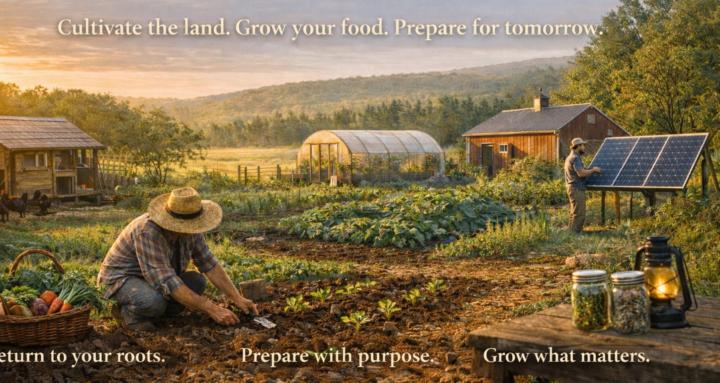
Oasis Builders helps families grow healthy food, use herbs wisely, understand living systems, and build calm confidence for everyday resilience.
Suggested communities
Powered by