

20h •
Understanding gaslighting
Gaslighting That never happened You're imagining things Why are you so sensitive If these sound familiar you might be experiencing gaslighting . You remember the conversation you know what you saw you know what they said but they deny it. They calmly and confidently look at you with eyes that say are you OK? You start questioning yourself. Did I really hear that? Maybe I just misunderstood. That's exactly what they want. Gaslighting isn't just lying. It's getting you to wonder whether you can even recognize lies anymore. The gaslighters goal is to make you feel dependent on them for your sense of reality.
0
0
2d •
7 Principles to change your mindset
7 Principles to change your mindset These seven principles are a guide for changing your mindset to let your goals come to you. This isn’t the only way but it is one way to get to the top of the mountain. 1. Remove Inner Walls Stop arguing with your problems in your head. Stay still and quiet instead of complaining to let a higher power solve things 2. Expectancy Reveals Faith Act like you already have what you want. Your expectation shows your true level of faith 3. Prepare for What You Believe Do small, practical things today that show you are getting ready for your future success, like "digging ditches" in the desert to wait for rain 4. Watch Your Words Be careful what you say, because your words shape your subconscious. Use your speech to talk about your future success, not your current struggles 5. Follow Divine Guidance Treat prayer like a "phone call" for help, and listen for the "return call" through your intuition or hunches when making decisions 6. Work with the Miraculous Release your need to control how things happen. Letting go creates the space for miracles to work in your life 7. Continue Forward in Faith Keep going toward your goals even if the path looks blocked. Stay loyal to your direction until you reach the finish line
Jun 17 •
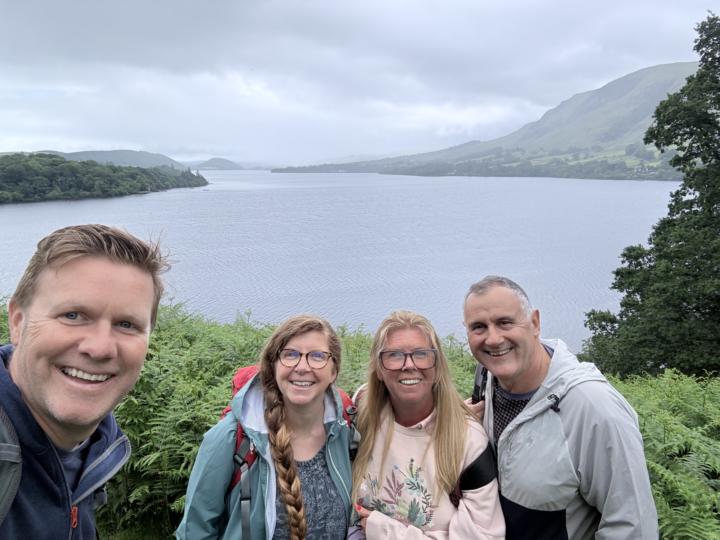
Our walk and talk
A brilliant day today with an incredible group of people. We walked, talked, coached, and connected in the Lake District — one of my favourite places to reset my mind and open up new perspectives. A few people asked me to share the simple framework I use every time I head out for a walk. It turns an ordinary walk into a powerful NLP‑infused reset. Feel free to use it on your next solo walk or group adventure. I’ll be organising another one in a few months, so keep an eye on the calendar and the posts here. Before I Start — Leaving the Baggage Behind What am I choosing to leave in the car park today? Stress? To‑do lists? Family pressures? Old stories? I like to pick up a small stone, imagine the “baggage” being absorbed into it, and then throw it into the lake or leave it behind. A symbolic pattern interrupt. As I Get Moving — Acknowledging a WIN What’s a recent win I haven’t properly acknowledged? Something I brushed past? Something I achieved but didn’t celebrate? If I’m with others, I talk it through. If I’m alone, I let it roll around in my mind. A moment of mindfulness. Intention for the Walk What clarity would I like to gain today? What question is quietly waiting for attention? If nothing comes to mind, I use one of the prompts below. Pick one or two to “chew on” as you walk if you need inspiration: • Advice you give clients — What do you regularly coach others on that you’re avoiding in your own life? • Playing it safe — Where are you currently choosing comfort over growth? • Radical simplification — If you had to simplify your life over the next 3 months, what would you cut? • Unlearning old beliefs — What outdated belief about yourself are you in the process of releasing? Towards the End — The Silent Stretch Around 20 minutes of silent walking. No talking. Just allowing the unconscious mind to wander, reorganise, and offer up insights. 💖 Lunch — Reflections Sharing insights with others or simply contemplating them myself. Is there anything else I’d like to gain accountability on?
May 30 •
Does NLP work?
Before I answer that, let me explain why every NLP intervention needs a “control”, and what science teaches us about measuring change… In science, nothing is taken at face value. If you want to know whether something works, you don’t just test it — you compare it. You measure it against a control. A control is the baseline, the “normal,” the standard set of conditions you already understand. Without it, an experiment becomes guesswork. You might get a result, but you have no idea whether that result is meaningful. And this principle applies far beyond laboratories and test tubes. It applies directly to NLP, personal change work, and the question people love to ask: “Does NLP actually work?” Let’s break this down. The Science Analogy: Why Controls Matter Imagine I’m testing a new polymer additive in asphalt in my business (MacRebur Limited). I want to know whether a new additive improves strength, flexibility, durability — whatever my goal is. So I create two samples: • Control asphalt — the standard mix that’s always used • Experimental asphalt — the same mix, but with my polymer additive included I test both to a set of criteria and standard. I compare the results. If the polymer works, my experimental asphalt should outperform the control. If I didn’t have the control asphalt, I’d have no idea whether the polymer made any difference at all. Maybe the asphalt was always that strong. Maybe it was always that weak. Without comparison, the experiment is pointless. NLP Works the Same Way… When we use NLP tools — anchoring, reframing, submodalities, timeline work, language patterns — we are essentially running an experiment on human experience. But here’s the key: You cannot measure change unless you know what the experience was before the intervention. This is why NLP questions often presuppose comparison: • “How do you feel differently now, compared to before?” • “What’s different?” • “What’s changed?” • “What’s shifted?” These questions aren’t fluffy. They’re the NLP version of a scientific control.
1-30 of 35
powered by
skool.com/nlp-1250
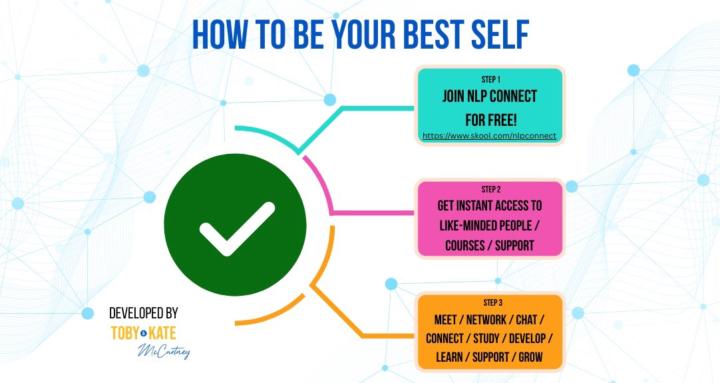
Join NLP Connect! Access free trainings, tutorials, and podcasts for personal and professional growth in a lively community of NLP enthusiasts!
Suggested communities
Powered by