
May 29 • General discussion
How you move matters
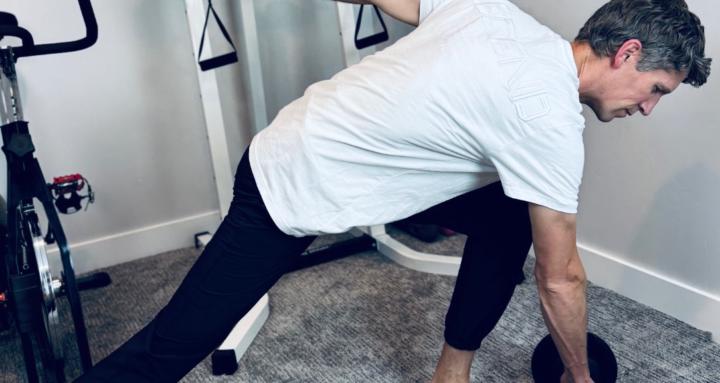
Most strength training happens in straight lines. But the human body was designed to move in spirals, rotations, and diagonals.
Rotational and diagonal movement patterns help activate multiple muscle chains at the same time, improving coordination between the nervous system and the muscular system. This creates better motor control, more efficient force transfer, and stronger movement with less wasted effort.
These movement patterns are commonly used in proprioceptive neuromuscular facilitation (PNF), a method shown to enhance neuromuscular activation, muscular coordination, and functional movement. Research suggests diagonal and rotational patterns stimulate greater neural recruitment and muscle “irradiation,” meaning activation spreads throughout the body instead of isolating a single muscle.
When your body learns to coordinate movement more efficiently:
• joints become more stable
• movement becomes more resilient
• force production improves
• and the body uses less energy to create strength
This is why rotational and diagonal training isn’t just about performance — it’s about teaching the body how to move the way it was designed to move.
Train movement, not just muscles.
The concepts above are supported by research showing that diagonal and rotational movement patterns can increase neural recruitment, improve muscular coordination, and enhance motor control compared with isolated linear movement patterns.
1
1 comment
How you move matters
skool.com/my-abaton-movement-training
DPT-guided movement for adults 50+. Move without pain, build real strength & stay active for life. Modified for every body. Every age. Every level.
Powered by