User
Write something
How you move matters
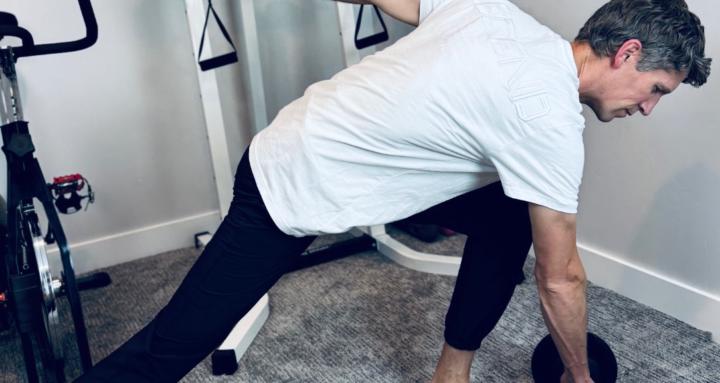
Most strength training happens in straight lines. But the human body was designed to move in spirals, rotations, and diagonals. Rotational and diagonal movement patterns help activate multiple muscle chains at the same time, improving coordination between the nervous system and the muscular system. This creates better motor control, more efficient force transfer, and stronger movement with less wasted effort. These movement patterns are commonly used in proprioceptive neuromuscular facilitation (PNF), a method shown to enhance neuromuscular activation, muscular coordination, and functional movement. Research suggests diagonal and rotational patterns stimulate greater neural recruitment and muscle “irradiation,” meaning activation spreads throughout the body instead of isolating a single muscle. When your body learns to coordinate movement more efficiently: • joints become more stable • movement becomes more resilient • force production improves • and the body uses less energy to create strength This is why rotational and diagonal training isn’t just about performance — it’s about teaching the body how to move the way it was designed to move. Train movement, not just muscles. The concepts above are supported by research showing that diagonal and rotational movement patterns can increase neural recruitment, improve muscular coordination, and enhance motor control compared with isolated linear movement patterns.
Hip, knee and even sometimes low back pain
Struggling with knee pain, hip issues, IT band syndrome, or lower back pain? 👀 It might not be your knee at all — it could be your glutes not firing properly, leaving your knee unstable during movement. When your hips (especially the gluteus medius and maximus) aren’t doing their job, your knee pays the price. This is especially common in runners and walkers. Quick self-test: Try a single-leg squat. Does your knee cave inward or feel wobbly? That’s a sign your hip stabilizers need work. As a Doctor of Physical Therapy, I created these three dynamic functional hip strengthening exercises to build real-world stability: 1. Skater – Explosive lateral movement that wakes up your glutes and improves balance 2. Side Step Down – Controlled single-leg stability drill. Start on a small step or stair and work your way up to higher surfaces. 3. Running Side Plank – Dynamic core + hip activation that mimics real running/walking demands These aren’t your typical boring glute exercises — they’re functional, progressive, and designed to ignite the entire kinetic chain for lasting results. Save this post, tag a friend who needs stronger, pain-free knees, and drop a 🔥 if you’re trying these! #KneeStability #HipStrength #GluteActivation #PhysicalTherapy #RunnerKnee ITBandSyndrome KneePainRelief FunctionalTraining
1
0
Hip, knee and even sometimes low back pain
Modified movement is your best friend
You don’t need extreme movements to get real results. Social media is full of advanced stretches and intense mobility drills—but what often gets overlooked is *how to actually get there safely*. If your body isn’t ready for those positions yet, forcing it can lead to more pain, not less. That’s why I focus on modifying movements. Inside my program and on my website, I break down complex, high-level stretches into simple, accessible versions that *anyone* can start with. Because the truth is: progress doesn’t come from pushing past your limits—it comes from working *within* them. When you train within your current level of function: • You reduce your risk of injury • You build strength and control where you actually need it • You create lasting improvements in mobility and pain Meet your body where it is, not where you think it “should” be. That’s how real, sustainable progress happens. Inside each of my videos is instruction on how to modify your movement and position to meet you where you’re at, and help you progress! If you haven’t started, begin today! If you’ve started, keep going! You’ll be shocked on how quickly you start to feel better
1
0
Have you been avoiding activity and/or exercise recently?
Most people think they need more discipline to have energy, less pain, and stay consistent with exercise… but that’s not the real issue. It comes down to TWO things: 1️⃣ Fuel your body properly If your cells can’t produce energy efficiently, everything feels harder. Improving your nutrition — and supporting it with the right supplementation like ENERGIZED peptide — helps your mitochondria do their job so you actually *have* energy to move. 2️⃣ Move the way your body was designed If your joints don’t move well and your muscles aren’t working efficiently, exercise feels like a struggle (and often leads to pain). Training better movement patterns means using more muscles with less effort — so you can be active without breaking your body down. This is exactly what we teach inside Abaton Movement Training on Skool. More energy. Less pain. Better movement. That’s how you stay consistent. If you’re tired of feeling stuck, it’s time to fix the foundation. Get going on your 30 day movement program and progress into more dynamic movements and training with my full library of joint stretching and functional movement training. For the price of one Physical Therapy session you can have an entire year worth of training. Upgrade after you have completed your 30 day movement training course!
0
0
Why is it called ABATON?
I actually get asked this alot, and it's a great question Abaton is such a great name, and I explain it in the about page. Go to the headings at the top, click on ABOUT and watch the 4th video. It will explain it What do you guys think of the name? If you were naming this program what would you have named it?
0
0
1-23 of 23
Free To Move with Dr. Vance
skool.com/my-abaton-movement-training
DPT-guided movement for adults 50+. Move without pain, build real strength & stay active for life. Modified for every body. Every age. Every level.
Powered by